
You’re standing on the 14th hole, staring at a low-hanging tree branch with a 20 mph wind in your face. The pin sits just 120 yards away, and a standard wedge shot would balloon into the breeze. This is where a punch shot becomes your best friend. Learning how to hit a punch shot in golf gives you a reliable low-trajectory option for windy conditions, tight fairways, and obstructive obstacles. The shot keeps the ball beneath the wind, reduces spin, and lands soft with controlled roll.
This guide breaks down everything you need to execute a punch shot consistently. You will learn proper setup fundamentals, club selection strategy, swing mechanics, and practice drills to build muscle memory. By the end, you will have a go-to shot for any situation requiring precision over power.
Position Your Body for a Low Ball Flight
Every great punch shot begins with a smart setup. Small adjustments to your stance, weight distribution, and hand position tell the club exactly how you want the ball to behave off the face.
Move the Ball Back in Your Stance
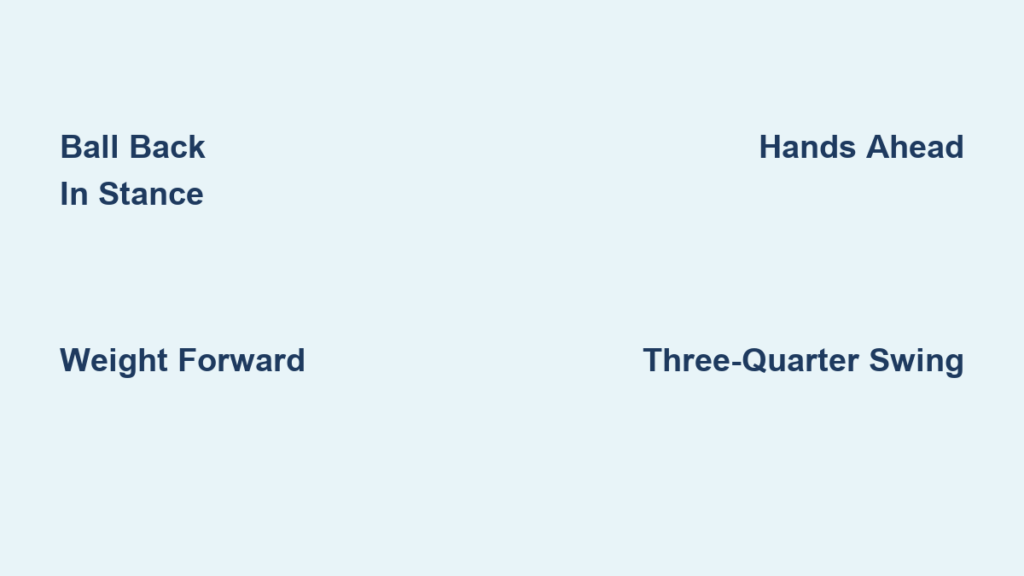
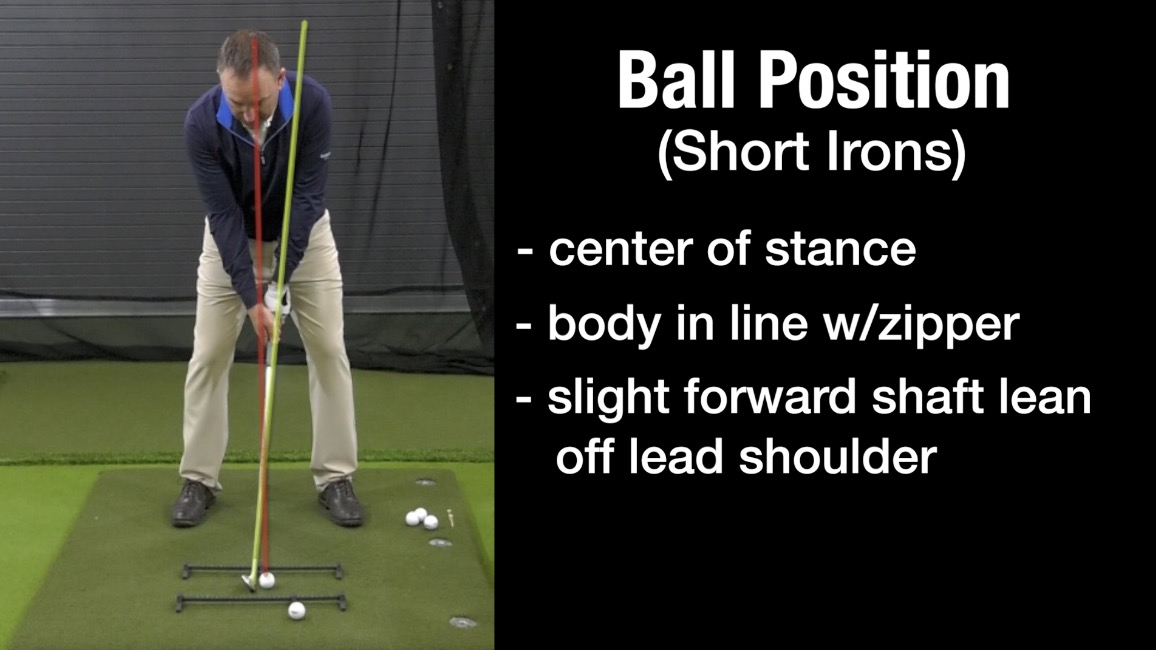
Place the golf ball one to two inches behind your standard position, roughly in the center of your stance. This backward ball position creates a steeper angle of attack, which delofts the club and produces a lower launch. For most mid-iron punch shots, centering the ball works best.
Shift Your Weight Forward
Distribute roughly 60 percent of your weight onto your lead foot at address. For right-handed golfers, this means more weight on your left side. A forward weight bias encourages clean contact and helps compress the ball against the turf. Maintain an athletic posture with a slight knee flex and hip hinge.
Place Your Hands Ahead of the Ball
At address, your hands should sit slightly forward of the clubhead. This forward shaft lean effectively reduces loft at impact, turning a 7-iron into something closer to a 5-iron in terms of flight. Keeping your hands ahead through the entire swing is one of the most important elements of the punch shot.
Select the Right Club for the Situation

Club choice directly affects how your punch shot performs. Picking the wrong iron can turn a controlled knockdown into a sky-high flop.
Choose Mid-Irons for Most Punch Shots
A 6-iron, 7-iron, or 8-iron serves as the ideal starting point for punch shots. These mid-irons provide enough loft to clear short obstacles while still allowing you to keep trajectory low. Avoid using wedges unless you need very short carry, since their high loft tends to launch the ball too high even with a forward press.
Use a Hybrid for Windy Conditions
When facing strong headwinds, consider grabbing a hybrid or 3-wood instead. These clubs naturally produce flatter trajectories and lower spin rates, helping the ball cut through wind more efficiently. They are also excellent when you need extra roll out on firm fairways.
Swing with Control, Not Power
The punch shot rewards smooth tempo over brute strength. A shortened, compact swing ensures you make solid contact and keep the ball beneath the wind.
Shorten Your Backswing to Three-Quarter Length
Take the club back only about three-quarters of your normal swing. This reduces effort and helps you stay balanced throughout the motion. Your lead shoulder should turn only until it points just under your chin, preventing over-rotation that adds unwanted height.
Match Your Follow-Through to Your Backswing
Your finish should mirror your backswing in length and intensity. Let the club stop around hip height, with your hands remaining low and in front of your torso. A compact follow-through reinforces the knockdown trajectory and prevents the clubface from releasing open.
Keep Your Head Steady and Chest Down
Resist the urge to lift up and watch the ball immediately. Keep your head still and your chest pointed at the ground through impact. Staying “behind the ball” maintains forward shaft lean and ensures you strike down on the ball rather than scooping it.
Adjust Your Strategy for Course Conditions
Knowing when to deploy a punch shot makes it a true scoring weapon. These are the scenarios where this shot shines brightest.
Punch Into a Headwind
When the wind blows hard into your face, a punch shot cuts through the air more efficiently than any high-flying approach. The reduced spin and lower apex minimize wind drift, helping the ball hold its intended line and carry a predictable distance.
Hit Under Low Tree Branches
If an overhanging limb blocks your normal swing path, a punch shot lets you scoot the ball underneath. Use a mid-iron, shorten up, and focus on making pure contact. The ball will pop up just enough to clear the obstacle while staying safely below the foliage.
Attack Tight Pin Positions
On firm greens or when the flag sits close to the front edge, a punch shot lands at a shallow angle and releases toward the hole. Use this trajectory when you need the ball to run out or when bunkers guard the green’s front.
Avoid These Common Punch Shot Mistakes
Even skilled players struggle with punch shots when these errors creep in. Identifying the problem early leads to faster fixes on the range.
Hitting the Ball Fat or Thin
Fat shots happen when your weight shifts backward during the downswing. Thin shots occur when your body rises before contact. Solve both by keeping your weight pressed forward and your head steady through impact. Practice with a slightly more upright posture to promote a descending strike.
Watching the Ball Fly Too High
If your punch shot balloons into the air, your hands are likely even with or behind the ball at impact. This position adds loft at the worst possible moment. Focus on maintaining forward shaft lean from setup all the way through contact.
Losing Too Much Distance
Many golfers overswing trying to hit the punch shot far. This usually causes a deceleration or off-center strike that costs distance. Trust your club’s loft and swing smoothly within yourself. A controlled three-quarter swing with solid contact travels farther than a forced, full-effort swing.
Practice Drills to Build a Reliable Punch Shot
Consistency comes from repetition. These three drills train the specific mechanics that make a punch shot work under pressure.
Towel-Under-Arm Drill
Tuck a small towel under both armpits and make three-quarter swings with a mid-iron. This constraint forces your arms to work together as a single unit and prevents your elbows from flaring out. If the towel falls during your swing, you have broken the connection and need to reset.
Tee Gate Drill
Place two tees in the ground about an inch wider than your clubhead, positioned just outside the ball. Swing through the gate without knocking the tees over. This drill reinforces a shallow, on-plane swing path and trains you to avoid excessive lateral movement.
Three-Target Distance Control
Set up three targets on the range at 50 percent, 75 percent, and 90 percent of your normal 7-iron distance. Hit punch shots to each target with progressively longer backswings. This builds feel for distance control and helps you match trajectory to yardage on the course.
Pro Tips to Elevate Your Punch Shot
Learn from the best players in the world to add polish to your technique and course strategy.
Study Tiger Woods’ Forward Press
Tiger Woods has long used an aggressive forward press at address, with his hands well ahead of the ball. He pairs this with an extremely short backswing and a firm chest rotation through impact. Watching his wind-play highlights offers a masterclass in knockdown shot execution.
Try a Driver Punch Shot Off the Tee
Do not limit the punch shot to fairway lies. On tight par-4s with overhanging trees or firm conditions, tee the ball low and hit a controlled driver knockdown. You will sacrifice some height but gain accuracy and avoid penal trouble.
Use a Low Ceiling Visualization
Before swinging, picture a ceiling just 10 feet above the ground. This mental image encourages a flatter swing plane and prevents your body from releasing too early. It is a simple trick that helps groove the knockdown feel under tournament pressure.
Frequently Asked Questions About Punch Shots in Golf
When Should I Use a Punch Shot Instead of a Normal Shot?
Use a punch shot when you face strong headwinds, low-hanging tree branches, or tight pin placements near the front of the green. It is also a smart choice on firm fairways where you want the ball to run out after landing.
Can I Hit a Punch Shot With a Wedge?
You can, but it requires an even more pronounced forward press and a very short backswing. Wedges tend to launch high even with these adjustments, so they work best for extremely short punch shots around the green rather than full-swing knockdowns.
How Far Does a Punch Shot Typically Carry?
A punch shot with a 7-iron typically carries about 75 to 85 percent of your normal 7-iron distance. The exact reduction depends on how much you shorten your backswing and how far forward you press your hands at address.
Do I Need to Change My Grip for a Punch Shot?
Most golfers do not need to adjust their grip significantly. However, moving your hands slightly forward at address and keeping them ahead through impact is essential. A weak grip can cause the ball to balloon, so make sure your hands remain in a neutral-to-strong position.
Is a Punch Shot Hard to Learn for Beginners?
The punch shot is one of the easier specialty shots to learn because it relies on simplification rather than complex mechanics. Focus on ball position, weight forward, and a three-quarter backswing, and you can start hitting effective knockdowns within a few practice sessions.
Final Thoughts on Mastering the Punch Shot
The punch shot is a scoring weapon that belongs in every golfer’s bag of tricks. It combines smart setup adjustments, proper club selection, and a controlled compact swing to produce low, penetrating ball flights. Practice the towel drill and tee gate drill regularly to engrain the mechanics, and use this shot strategically when wind, trees, or tight pins demand precision over height.
Grab your 7-iron, head to the range, and spend 15 minutes working on three-quarter swings with the ball positioned center in your stance. Once you trust the motion, take it to the course and deploy it the next time trouble looms overhead.





