
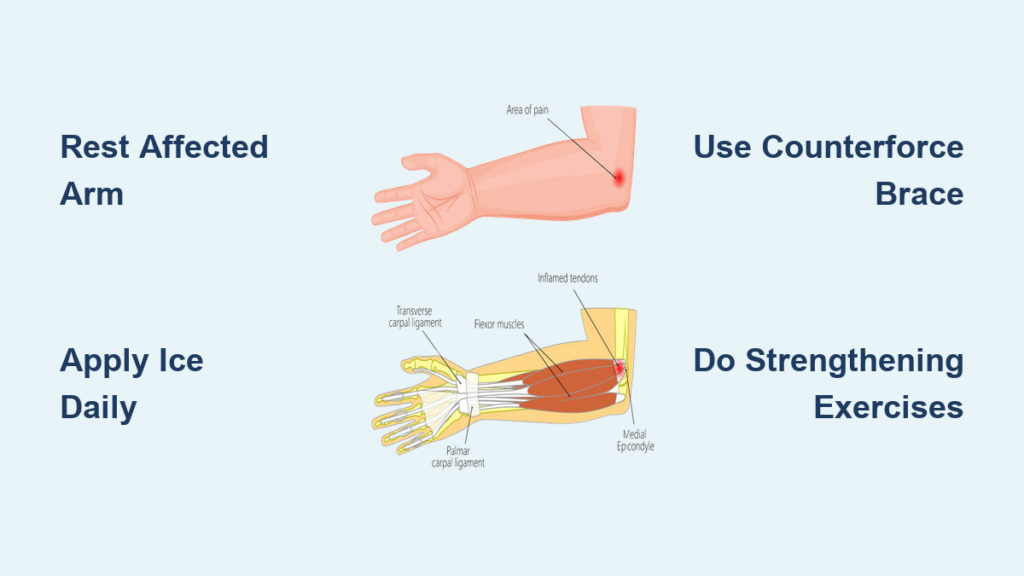
If you are waking up with a dull ache on the inside of your elbow that flares when you grip your coffee mug or type at your desk, you might be dealing with golf elbow, even if you have never swung a club. Medically known as medial epicondylitis, this condition causes pain where the tendons of your forearm muscles attach to the bony bump on the inner side of your elbow. It is not just golfers who suffer. Anyone performing repetitive wrist or arm motions can develop it.
The good news is that most cases of golf elbow heal with simple, consistent self-care. Ignoring the pain or pushing through it can lead to chronic discomfort, weakened grip, and limited range of motion. The key is early intervention focused on rest, targeted exercises, and smart daily habits. In this guide, you will learn how to diagnose, treat, and prevent golf elbow using proven methods. Whether you are a weekend athlete, office worker, or tradesperson, you will find actionable steps to heal faster and stay pain-free.
Stop the Pain with Immediate Relief Strategies
Rest the Affected Arm Completely
The most critical step in learning how to cure golf elbow is stopping the activity that caused it. Continuing to use the injured tendons worsens micro-tears and delays healing. Whether it is golf, typing, hammering, or lifting, avoid any movement that triggers pain.
• Rest duration: at least 4 to 6 weeks of modified activity
• No pain, no gain: do not return to sports or repetitive tasks until pain is gone
• Gradual return: ease back in with low-intensity motions first
Pushing through pain risks turning a short-term injury into a long-term problem.
Apply Ice to the Inner Elbow
Cold therapy reduces inflammation and numbs pain. Apply ice as soon as symptoms appear and after any activity involving the arm.
• Method: use an ice pack wrapped in a thin towel
• Duration: 15 to 20 minutes at a time
• Frequency: 3 to 4 times daily, especially after work or exercise
Avoid placing ice directly on skin to prevent frostbite.
Use Over-the-Counter Pain Relievers
Medications help manage pain and swelling, especially in the early stages. Choose from ibuprofen, naproxen sodium, or acetaminophen based on your needs and tolerance.
• Ibuprofen (Advil, Motrin IB): reduces inflammation
• Naproxen sodium (Aleve): longer-lasting anti-inflammatory effect
• Acetaminophen (Tylenol): pain relief without anti-inflammatory action
Always follow dosage instructions and consult your doctor if you have stomach, liver, or kidney concerns.
Confirm the Diagnosis Before Treating
Recognize the Common Symptoms
Golf elbow pain builds gradually and centers on the inner side of the elbow, but it often spreads. You may experience stiffness or weakness when gripping or twisting objects.
• Pain in the inner elbow, often worse in the morning
• Aching in the forearm or wrist
• Stiffness or weakness when gripping or twisting
• Radiating discomfort down to the hand
Symptoms typically affect your dominant arm and worsen with wrist flexion or gripping.
Rule Out Serious Conditions
Not all elbow pain is tendonitis. Seek emergency care if you notice a misshapen elbow (possible dislocation), swelling with heat and fever (sign of infection), or suspect a fracture after trauma. For persistent pain, see a doctor to rule out arthritis, nerve compression, or ligament injury.
Confirm with a Physical Exam
Doctors diagnose golf elbow through medical history, palpation of the medial epicondyle, and provocative tests. These tests involve flexing your wrist against resistance while your elbow is straight. If symptoms do not improve in 6 weeks, imaging may be needed.
Use Imaging Tests for Stubborn Pain
X-Ray to Rule Out Bone Issues
An X-ray does not show tendon damage but helps eliminate fractures, bone spurs, or arthritis. It is often the first imaging test ordered.
Ultrasound for Real-Time Tendon View
Ultrasound provides dynamic images of tendons and soft tissues. It can show tendon thickening or tears, guide injections, and monitor healing over time. Recommended for persistent or worsening symptoms.
MRI for Detailed Soft Tissue Scans
An MRI gives the clearest view of tendon health and is used when diagnosis is unclear, surgery is being considered, or there is no improvement after months of treatment. It detects chronic degeneration and helps plan advanced interventions.
Support the Elbow with Bracing Techniques
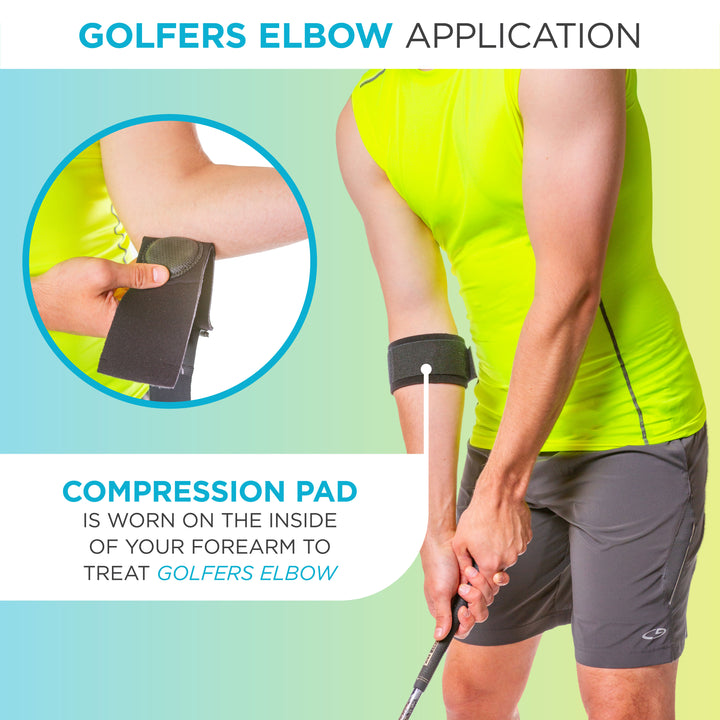
Wear a Counterforce Brace
A medial epicondylitis brace, or golfer’s elbow strap, reduces strain on the tendon by redistributing force during activity.
• Where to wear it: on the forearm, about 1 to 2 inches below the elbow
• When to wear it: during work, sports, or repetitive tasks
• How it helps: limits overuse of forearm flexors
Choose a snug, adjustable strap that does not cut off circulation.
Try Kinesiology Taping
Kinesio tape can provide light support and improve blood flow when applied by a physical therapist. It helps reduce muscle fatigue and may relieve pain during activity. It is not a substitute for rest, but it is useful during rehabilitation.
Rebuild Strength with Physical Therapy Exercises
Why Exercise Matters
After rest, controlled movement rebuilds tendon strength and prevents stiffness. Exercises improve blood flow, stimulate healing, and reduce the risk of recurrence. Start gently and keep pain below a 5 out of 10 during and after exercise.
5 Key Exercises to Cure Golf Elbow
1. Elbow Flex and Extend
• Stand or sit with arms at your sides
• Bend one elbow, bringing your hand to your shoulder
• Hold for 3 seconds, then lower slowly
• Reps: start with 2 to 3, building to 2 sets of 15
2. Palm Up and Palm Down
• Sit and rest the back of your hand on a table
• Rotate your wrist so your thumb points up
• Flip to palm down, then return to the start
• Reps: 2 to 3, increase gradually
3. Wrist Flexion Hold
• Rest your forearm on a table with your palm up
• Make a fist and lift your hand to align with your forearm
• Hold for 3 to 5 seconds, then relax
• Reps: 5 to 8, 2 to 3 times daily
4. Wrist Flexion Strengthening Without Weight
• Support your forearm with your palm up
• Use your opposite hand to bend your wrist up
• Slowly lower it down without help
• Reps: 8 per set, 2 to 3 sets daily
5. Wrist Flexion Strengthening with Light Weight
• Hold a small weight such as a tin of beans
• Use your other hand to lift your wrist up
• Control the downward motion as you lower it
• Start with 1 to 2 lbs and increase slowly
Track Your Progress with a Pain Scale
Rate discomfort during and after exercise. A rating of 0 to 5 is safe to continue. A rating of 6 or higher means you should reduce reps, speed, or weight. Stop and reassess if pain increases during exercise, new pain develops, or morning pain is worse than before. Wait 1 to 2 days, then restart at a lower intensity.
Explore Advanced Treatments When Rest Fails

Shockwave Therapy (ESWT)
This treatment uses high-energy sound waves to target damaged tissue, stimulate healing, and reduce pain. It works best for chronic cases lasting 3 months or more. Sessions are typically done weekly for 3 to 5 weeks. Evidence is moderate, and it is non-invasive and done in-office.
Dry Needling (Percutaneous Tenotomy)
A thin needle punctures the tendon to trigger repair, guided by ultrasound for precision. The goal is to break up scar tissue and promote blood flow. Mild soreness lasts 1 to 2 days.
PRP Injections (Platelet-Rich Plasma)
Your blood is drawn, platelets are concentrated, and injected into the tendon. Platelets release growth factors that speed healing, with ultrasound guidance. Evidence is promising but still being studied. It is typically used after 3 to 6 months of failed conservative care.
Consider Surgery as a Last Resort
When Surgery Is Recommended
Surgery is rare and only considered if there is no improvement after 6 to 12 months of treatment. It may also be needed if pain severely limits daily life. Less than 10 percent of patients require it.
Minimally Invasive Options
The Tenex procedure (percutaneous ultrasonic tenotomy) uses a tiny ultrasonic tool to remove damaged tendon tissue through a small skin incision, guided by ultrasound. Recovery is faster than open surgery with minimal scarring. The TenJet procedure uses pressurized saline to flush out damaged tissue instead of sound. Both are outpatient procedures with quick recovery.
Prevent Recurrence with Daily Habits
Warm Up Before Activity
Cold tendons are prone to injury. Always do 5 to 10 minutes of light cardio such as arm circles, followed by dynamic stretches before sports or work. Focus on wrist and forearm mobility.
Improve Your Technique
Poor form is a major cause, even in non-athletes. Golfers should work with a pro to adjust grip and swing. Typists should keep wrists neutral and use an ergonomic keyboard. Workers should use proper lifting mechanics and switch hands when possible. A physical therapist can analyze your movements.
Strengthen Forearm Muscles
Strong muscles protect tendons. Do wrist flexion and strengthening exercises 2 to 3 times weekly, even after recovery. Use light resistance and focus on slow, controlled motions.
Ice After Activity
Even after healing, ice your elbow for 15 minutes after intense use to prevent flare-ups.
Understand the Recovery Timeline

Weeks 1 to 6: Rest and Protect
Focus on stopping aggravating activities. Use ice, bracing, and OTC meds. Pain should start decreasing.
Weeks 6 to 12: Rehab and Strengthen
Begin exercises and improve flexibility. Start physical therapy and gradual loading. Regain strength and movement.
Months 3 to 6: Return to Activity
Slowly return to sports or work. Monitor pain and use a brace if needed. Most people become pain-free during this phase.
Beyond 6 Months: Advanced Care
If there is no improvement, see a specialist. Consider imaging or advanced treatments. Discuss PRP or surgery if appropriate.
Frequently Asked Questions About Golf Elbow
How long does it take to cure golf elbow?
Most people recover within several months with proper rest and self-care. Healing can take time, and some people may experience ongoing pain or flare-ups even with treatment.
Can golf elbow heal without medical treatment?
Many mild cases improve with rest, ice, and over-the-counter pain relievers. However, if pain persists beyond 6 weeks of self-management, consulting a healthcare professional is recommended.
What happens if golf elbow is left untreated?
Untreated golf elbow can lead to limited elbow range of motion, chronic pain, and weakened grip strength. Early intervention leads to better outcomes.
Do I need surgery for golf elbow?
Surgery is rarely needed. It is only considered when symptoms do not improve after 6 to 12 months of other treatments.
When should I see a doctor for elbow pain?
See a doctor if pain persists despite rest and self-care, or if the elbow looks misshapen, feels hot and inflamed with a fever, or if you suspect a fracture. These could indicate an emergency situation.
Are corticosteroid injections used for golf elbow?
Corticosteroid injections are not often used because they may weaken the tissue and have limited long-term effectiveness. They may occasionally be used for short-term pain relief.
Key Takeaways for Curing Golf Elbow
Curing golf elbow does not require magic. It requires consistency and patience. The tendon heals slowly, but with the right approach, most people recover fully without surgery. Start with rest, ice, and bracing, then add targeted exercises when pain allows. Prevent relapse by improving your technique and maintaining daily care habits.
If pain persists beyond 6 weeks, do not wait. See a healthcare provider for a proper diagnosis and treatment plan. Early physical therapy can shorten recovery time and prevent long-term damage. With the right steps, you can return to your game, your job, and your life, pain-free.





