You’re not just buying a golf cart. You’re investing in mobility, convenience, and a new way to get around. Whether you need transport for a gated community, help hauling firewood across a large property, or a weekend off-road adventure vehicle, the right cart makes all the difference. With so many powertrains, brands, and configurations available, figuring out how to choose a golf cart can feel overwhelming. This guide breaks down every decision that actually matters.
Forget flashy features and misleading specs. We’ll focus on durability, safety, real-world performance, and total cost of ownership so you can pick a cart that truly fits your lifestyle and budget.
Define Your Use Case First
Before you browse models or compare prices, lock in your primary purpose. This single decision shapes everything else.
Match the Cart to Your Real-World Needs
Your intended use determines the powertrain, frame, and features you need.
- Golf course or private community: A standard 2 to 4-passenger electric cart works perfectly
- Neighborhood errands or daily commuting: Prioritize comfort, range, and lithium power
- Farms or large properties: Gas-powered or high-torque electric carts handle long distances and heavy loads
- Off-road adventures: You’ll need a lifted frame, all-terrain tires, and reinforced suspension
- Street access required: Only LSV-compliant models are legal on public roads
Key Questions to Ask Yourself
Clarify these details before shopping:
- How many people will ride regularly?
- Will you drive on hills, gravel, or muddy terrain?
- Do you need weather protection or enclosed cabs?
- Is street legality required in your area?
- How long do you plan to own this cart?
Pro Tip: A cart bought purely for style often becomes a costly mistake. Focus on function first, and aesthetics second.
Pick the Right Powertrain
Your choice of powertrain affects range, maintenance, noise levels, and long-term cost. Let’s compare your three main options.
Gas Carts: Power and Range
Best for: Long distances, steep hills, heavy hauling, off-grid use
Why choose gas?
- 100+ miles per tank, ideal for farms or large properties
- Instant refueling with no charging wait
- Strong hill-climbing torque
- No battery degradation over time
Downsides:
- Noisy and emits fumes
- Requires oil changes, fuel filters, and carburetor maintenance
- Higher long-term operating costs
Ideal user: Farmers, ranchers, or anyone needing maximum range and raw power.
Lead-Acid Electric: Budget-Friendly and Quiet
Best for: Golfers, quiet neighborhoods, short daily trips
Why choose lead-acid?
- Low upfront cost
- Zero emissions
- Quiet operation
- Simple overnight charging
Downsides:
- 15 to 25 mile range, limited for daily drivers
- Batteries last only 3 to 5 years and require water top-ups
- Heavy weight strains suspension and reduces efficiency
- Performance drops noticeably as battery drains
Red flag: Used carts with old batteries may need $1,000 or more in replacement costs soon after purchase.
Lithium-Ion Electric: The Smart Long-Term Choice
Best for: Frequent drivers, street-legal use, tech-savvy buyers
Why lithium wins:
- 30 to 50+ miles per charge
- Charges in just 3 to 6 hours versus 8 to 12 for lead-acid
- 10+ year lifespan with no replacements needed
- Lightweight design improves handling and efficiency
- Zero maintenance, no watering or corrosion
- Consistent power output from full to empty
One upgrade that changes everything: Switching from lead-acid to lithium is the single most impactful improvement you can make. It cuts maintenance by 90%, boosts range, and extends cart life significantly.
Downside: Higher initial cost, but lower lifetime cost than any other option.
Compare Powertrain Performance at a Glance
This table summarizes the key trade-offs:
| Feature | Lead-Acid Electric | Lithium Electric | Gas |
|---|---|---|---|
| Typical Range | 15–25 miles | 30–50+ miles | 100+ miles |
| Max Speed | 14–19 mph | 19–25 mph | 19–25+ mph |
| Charging/Refuel Time | 8–12 hours | 3–6 hours | Minutes |
| Battery/Component Lifespan | 3–5 years | 10+ years | Engine-dependent |
| Maintenance Level | Moderate | Minimal | High |
| Operating Cost | Low | Lowest | Highest |
| Noise Level | Silent | Silent | Loud |
Check Frame and Build Quality

A cart’s frame is its skeleton. Weak construction leads to rust, cracks, and early failure.
Aluminum vs. Steel Frames
| Feature | Aluminum | Steel |
|---|---|---|
| Rust Resistance | Excellent | Poor (prone to corrosion) |
| Weight | Lighter | Heavier |
| Longevity | 15–20+ years | 5–10 years (if maintained) |
| Cost | Higher | Lower |
Winner: Aluminum frames, used by Club Car and other premium manufacturers, resist rust and last decades, especially in humid or salty environments.
Inspect for Quality Construction
Look for these signs of good craftsmanship:
- Tight, even panel gaps
- Smooth paint and consistent finish
- Clean, organized wiring
- Strong, consistent welds
Walk away if you see:
- Flimsy materials
- Uneven seams
- Poorly aligned body panels
- Haphazard wiring or loose connections
Pro Tip: Many budget import carts are assembled inconsistently with low-grade parts. No brand history, no warranty, and no support are major red flags.
Prioritize Ride Comfort and Stability
A bumpy, shaky ride ruins the experience, especially with passengers on board.
Test Drive Like a Pro
Always evaluate the cart under real conditions:
- Drive it both empty and fully loaded with passengers
- Test on the type of terrain you’ll actually use
- Navigate bumps, turns, and inclines
What to evaluate:
- Does the suspension absorb bumps smoothly?
- Does steering feel tight or loose?
- Do brakes stop firmly without sponginess?
- Are seats supportive for longer rides?
Popular Comfort Upgrades
Consider these additions for a better experience:
- Premium seats with lumbar support
- Enclosed cabs with heaters for cold climates
- Roof liners and windshields
- Cup holders, USB ports, and Bluetooth audio
- LED lighting for improved night visibility
Note: Many low-cost models skip proper suspension tuning, resulting in a harsh, unstable ride.
Ensure Street Legality If Needed
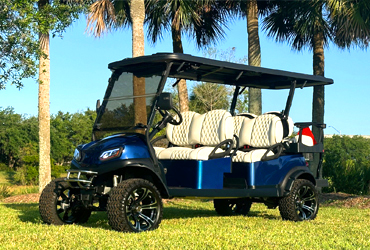
Most standard golf carts are not street legal. Driving one on public roads can lead to fines or impoundment.
What Makes a Cart Street-Legal?
To qualify as a Low-Speed Vehicle (LSV), your cart must have:
- Seat belts (mandatory)
- Headlights, taillights, and brake lights
- Turn signals and side mirrors
- Horn and windshield wiper
- License plate holder
- Registration and insurance
Critical: LSV laws vary by state. Always check your local DMV before buying.
LSV-Compliant Models Worth Considering
These come pre-equipped for road use:
- Club Car Onward Lifted
- E-Z-GO Express S4/S6
- Evolution D5 Maverick
Choose a Trusted Brand
Brand reputation directly affects reliability, parts availability, and resale value.
Legacy Brands: Built to Last
Club Car, E-Z-GO, Yamaha
Why they win:
- 60+ years of engineering experience (Club Car started in 1958)
- Factory warranties ranging from 2 to 5 years
- Nationwide service networks
- Proven durability, with some carts lasting 20+ years
- Real investment in R&D, safety testing, and quality control
Downside: Starting prices at $12,000 or more, with fewer flashy features than imports.
Best for: Buyers who want a cart that lasts a decade or more.
Import Brands: Style Over Substance
Evolution, Bintelli, Icon
Pros:
- Lower price point
- Modern styling with touchscreens and LED lights
- Aggressive, eye-catching looks
Cons:
- Poor build quality
- Limited parts and service availability
- Short lifespan of just 3 to 7 years
- Often not street-legal
- No long-term manufacturer support
Only consider if:
- You inspect the cart thoroughly before buying
- You verify battery age and frame integrity
- You accept it may not last as long
Golden Rule: A $10,000 flashy cart with no support is worth less than a $9,000 Club Car with proven reliability.
Confirm Parts and Service Access
A cart is only as good as the support network behind it.
Ask Before You Buy
Get clear answers to these questions:
- Is there a parts catalog available?
- Can you order parts online easily?
- Is there a local dealer or certified technician nearby?
- What does the warranty cover, and for how long?
No support means no repair. One broken controller or motor could render the entire cart unusable.
Maintenance Requirements by Powertrain
- Gas: Oil changes, fuel filters, spark plugs
- Lead-acid electric: Monthly water top-ups and terminal cleaning
- Lithium electric: Virtually zero maintenance needed
Bottom line: Lithium paired with a legacy brand equals the lowest lifetime hassle.
New vs. Used: Which Is Better?
Buy New If You Want
- Full warranty protection
- Latest technology and safety features
- Known history and condition
- Customization options
Best for: Long-term owners, street-legal needs, and reliability seekers.
Buy Used If You’re Budget-Conscious
Inspect carefully for these critical factors:
- Battery age (lead-acid degrades after 3 to 5 years)
- Frame rust or cracks
- Electrical system condition
- Service history documentation
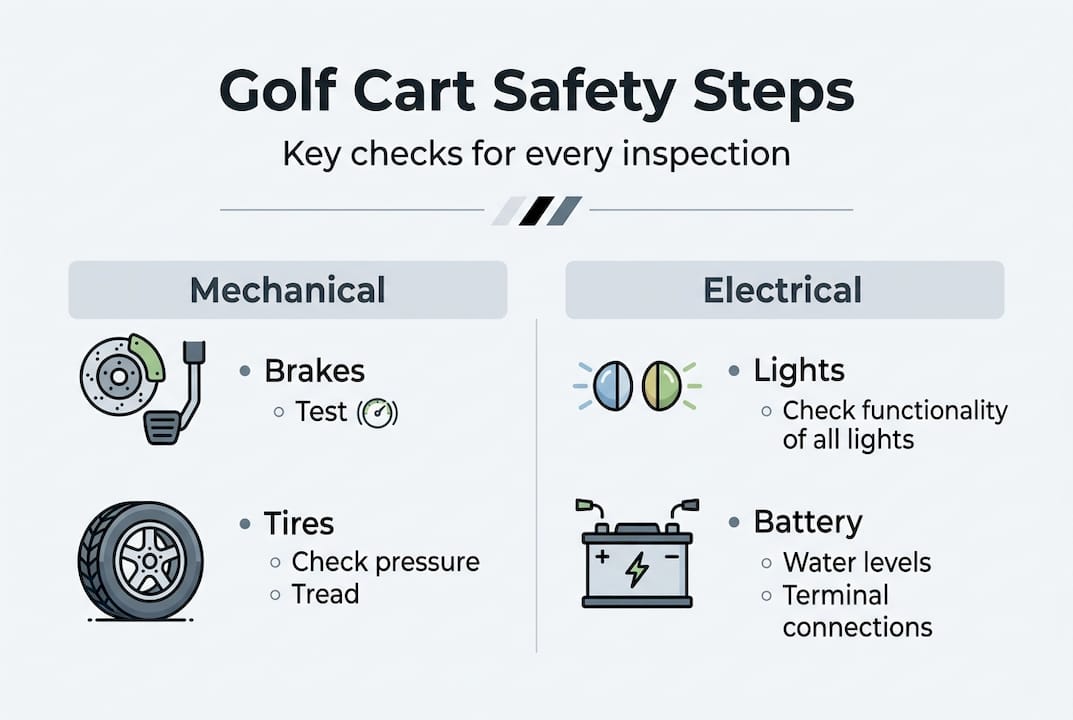
Test drive checklist:
- Do lights, turn signals, and horn work properly?
- Are brakes firm or spongy?
- Does steering stay straight or pull to one side?
- Are there any strange noises?
Golden Rule: If anything feels off during the test drive, walk away.
Understand Speed, Range, and Seating
Speed: Faster Isn’t Always Better
- Standard carts: 14–19 mph
- LSVs: 19–25 mph (street-legal maximum)
Safety note: Slower speeds improve control in neighborhoods and on trails.
Range by Power Source
| Type | Range |
|---|---|
| Lead-Acid Electric | 15–25 miles |
| Lithium Electric | 30–50+ miles |
| Gas | 100+ miles |
Tip: Range drops on hills, with heavy passenger loads, or in cold weather.
Seating Configurations
- 2-seaters: Compact and efficient
- 4-passenger: Ideal for couples or small families
- 6-passenger: Great for groups or commercial use
- Cargo models: Flip rear seats for hauling gear, tools, or firewood
Customize for Your Lifestyle
The best carts grow with your needs over time.
Top Upgrades Worth Considering
- Lithium battery conversion: The single most impactful improvement
- Lift kits: Added ground clearance for off-road use
- All-terrain tires: Better traction on mud, sand, or gravel
- Winch and LED light bars: Essential for hunting or camping
- Backup camera: Improved safety and visibility
- Bluetooth stereo: Added entertainment on the go
Why Customization Matters
- Increases utility for both work and recreation
- Boosts comfort and safety
- Enhances long-term resale value
- Brands offering no customization aren’t built for serious ownership
Off-Road Ready? Look for These Features
Must-Haves for Trail Use
- 6 to 12 inch lift kit
- All-terrain or mud-terrain tires
- Reinforced frame and brush guards
- Heavy-duty shocks and axles
- Winch and front light bar
Top Off-Road Models
- Evolution Forester: Rugged and highly customizable
- Club Car Onward Lifted: Premium build with street-legal capability
- E-Z-GO Express S4/S6: Powerful and farm-ready
- Bintelli Beyond Lifted: Affordable off-road option
- Evolution D5 Maverick: Lithium-powered beast
Powertrain choice for off-road:
- Electric: Quiet and eco-friendly (great for hunting)
- Gas: Longer range, instant refueling, better hill-climbing power
Budget Smart: Look Beyond Purchase Price
Upfront Costs
- Legacy brand new carts: $12,000–$20,000+
- Used or import carts: $4,000–$10,000
- Off-road or lithium models: $15,000+
Hidden Costs to Budget For
- Insurance (required for LSVs)
- Registration and license plate fees
- Charging station installation (for electric)
- Accessories like enclosures, seats, and lights
- Battery replacement (lead-acid: $800–$1,500 every 3 to 5 years)
- Ongoing maintenance (gas: oil and filters; electric: water and cleaning)
Long-Term Value Analysis
- Lithium electric: High upfront, lowest lifetime cost
- Lead-acid: Cheap start, expensive battery replacements
- Gas: Moderate price, ongoing fuel and maintenance costs
Smart move: A reliable Club Car may cost more upfront but lasts three times longer than a cheap import.
Maximize Longevity and Durability
Expected Lifespan by Category
- Quality legacy brands: 10–20+ years
- Import brands: 3–7 years if you’re lucky
- Batteries: Lead-acid (3–5 years), Lithium (10+ years)
Real example: A 2006 Club Car still driven daily by a teenager, passed down from parent to child.
Factors That Extend Cart Life
- Aluminum frame construction
- Clean and organized electrical system
- Regular preventive maintenance
- Available replacement parts
- Brand commitment to long-term quality
Bottom line: A well-built cart isn’t just a vehicle. It’s a family heirloom.
Avoid These 5 Common Mistakes
1. Ignoring Local Laws
Driving a non-LSV cart on public roads can result in fines or impoundment. Check your DMV first.
2. Overlooking Hidden Costs
That $8,000 cart could easily cost $2,000 more once you add accessories, insurance, and batteries.
3. Buying Sight Unseen
Always test drive in person. Never buy online without a thorough inspection.
4. Skipping Service Support
No local dealer means you’re completely on your own when something breaks.
5. Falling for Flashy Features
Touchscreens and neon lights don’t help when the frame rusts or the motor fails.
Final Checklist Before You Buy
Pre-Purchase Verification
- What is the battery age and condition?
- Is there a warranty, and what exactly does it cover?
- Where is the nearest service center (within 50 miles)?
- Is the quoted price all-inclusive (delivery, setup, accessories)?
- Can I test drive with a full load and all accessories?
Test Drive Protocol
- Test both empty and fully loaded
- Check brakes, steering, lights, and signals
- Listen carefully for unusual noises
- Drive over bumps and inclines
- Verify every function works properly
Match Your Cart to Your Use Case
| Need | Best Choice |
|---|---|
| Reliability & longevity | Legacy brand with lithium power |
| Budget & style | Used import (with thorough inspection) |
| Adventure & off-road | Lifted model with all-terrain tires |
| Street use | LSV-compliant with full safety gear |
Frequently Asked Questions About Choosing a Golf Cart
What is the most reliable golf cart brand?
Club Car, E-Z-GO, and Yamaha are the most reliable brands, with over 60 years of engineering experience, factory warranties, and nationwide service networks. Many of these carts last 15 to 20+ years with proper maintenance.
Should I buy a gas or electric golf cart?
Choose gas if you need long range (100+ miles), heavy hauling power, or frequent hill climbing. Choose electric if you want quiet operation, zero emissions, and lower maintenance. Lithium-ion electric offers the best balance of range, speed, and convenience for most buyers.
How long do golf cart batteries last?
Lead-acid batteries last 3 to 5 years and require regular water top-ups. Lithium-ion batteries last 10+ years with zero maintenance. Always check battery age when buying a used cart, as replacement can cost $800 to $1,500.
Are all golf carts street legal?
No. Only Low-Speed Vehicles (LSVs) are street legal. LSVs must have seat belts, headlights, taillights, turn signals, mirrors, a horn, a windshield wiper, registration, and insurance. LSV laws vary by state, so check your local DMV before purchasing.
How much should I budget for a quality golf cart?
Legacy brand new carts start at $12,000 and can exceed $20,000 for premium models. Used or import carts range from $4,000 to $10,000. Off-road and lithium-equipped models typically start around $15,000. Always budget for hidden costs like insurance, accessories, and battery replacement.
What features matter most for off-road golf carts?
For off-road use, prioritize a 6 to 12 inch lift kit, all-terrain tires, a reinforced frame with brush guards, heavy-duty shocks and axles, and a winch with LED light bars. Gas powertrains offer better hill-climbing torque, while electric models provide quieter operation for hunting.
Key Takeaways for Choosing the Right Golf Cart
Choosing a golf cart comes down to matching the vehicle to your actual needs. Start by defining your primary use case, then select a powertrain that fits your range and maintenance preferences. Prioritize aluminum frames from legacy brands like Club Car, E-Z-GO, or Yamaha for long-term reliability. If you need street access, confirm LSV compliance before buying.
Your next step is simple: visit a local dealer, test drive two or three models on terrain similar to what you’ll use daily, and verify warranty coverage and service support. A well-chosen cart will serve you reliably for 15 years or more, making it one of the smartest mobility investments you can make.