Walking up to the first tee only to dig through a disorganized bag for your driver sets a frustrating tone for the entire round. A mismatched carrier can leave your shoulders aching by the back nine or your clubs tangled beyond repair. Your bag is the silent partner in every shot you hit, and choosing wisely makes every hole smoother.
Knowing how to choose a golf bag means matching features to your real habits on the course. The wrong weight can ruin your posture. Too few pockets means fishing for tees mid-swing. Poor dividers can damage expensive woods. The right fit, on the other hand, protects your investment, keeps your gear ready, and lets you focus purely on your swing.
This guide breaks down every factor that should influence your decision. You will learn how to compare bag types, evaluate comfort systems, and spot quality construction. By the end, you will have a practical checklist to find a bag that fits your game today and grows with your skills tomorrow.
Identify Your Primary Playing Style
Before browsing brands or colors, take an honest look at how you actually play. Do you walk the full 18 holes for exercise? Do you ride a cart at your local club? Maybe you do both depending on the weather or your schedule. This single decision narrows your options faster than any spec sheet.
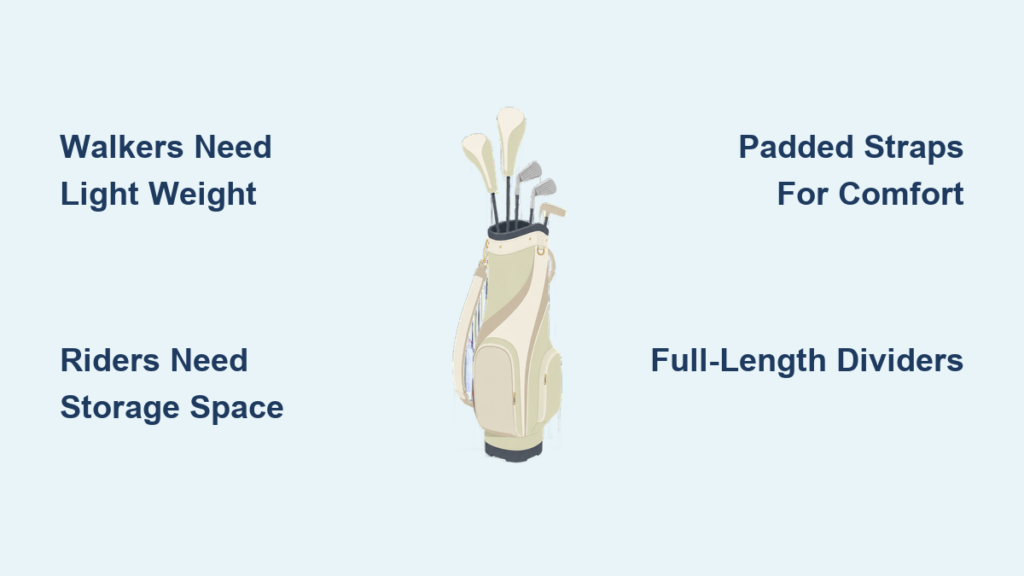
Walkers need to prioritize weight and balance above almost everything else. Every extra pound compounds over thousands of steps, leading to fatigue that wrecks your swing on the final holes. Riders can afford heavier frames because the cart absorbs the load, allowing more focus on storage and accessibility. Players who alternate between the two need a versatile middle ground.
Walking the Course Requirements
Carriers require ergonomic design. You want padded straps, a lightweight frame, and a body that sits high enough to keep clubs off the ground but low enough to avoid straining your neck. Comfort features matter more than fancy logos for this group.
Riding in a Golf Cart
Cart players benefit from rigid structures that stay upright on moving vehicles. Storage capacity becomes the priority since the bag never leaves the cart. Look for models with a specialized base that prevents twisting when the cart turns sharply.
Mixing Carry and Cart Use
Avoid extremes. A featherlight carry bag will lack the structure for frequent cart use, while a bulky cart bag will punish you on the days you decide to walk. Find a hybrid that performs well in both environments without major compromises.
Compare Carry Cart and Stand Bags
The golf bag market divides into three main categories. Each serves a specific purpose, and understanding the differences prevents costly mistakes. Many beginners buy based on appearance alone, then regret the choice after a few rounds.
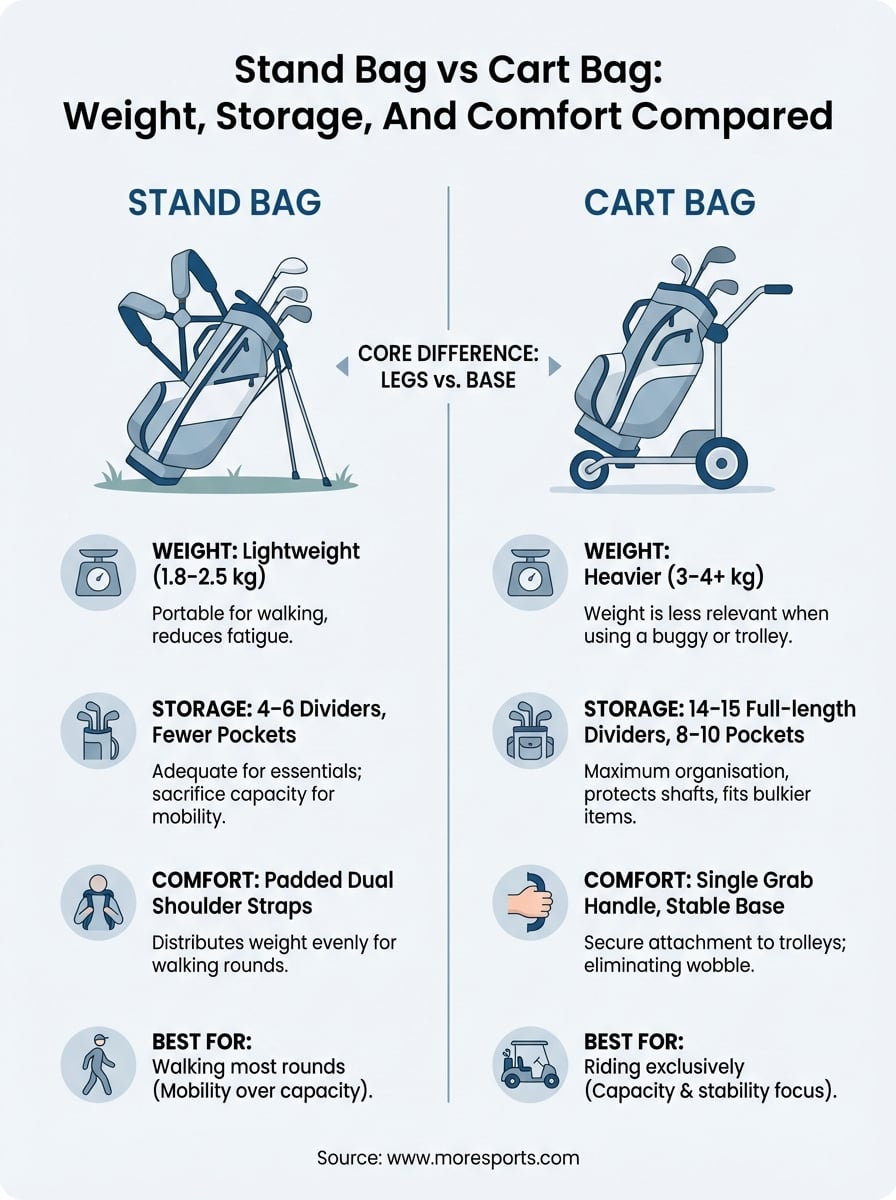
Carry bags are minimalist by design. Cart bags prioritize space and structure. Stand bags bridge the gap with built-in legs that deploy automatically when you set the bag down. Your dominant playing style points directly to the right category.
Benefits of Carry Bags
These models strip away everything nonessential to save weight.
* Lightweight Design: Reduces fatigue during long walks
* Simplified Storage: Fewer pockets mean less clutter
* Easy Transport: Built for shoulder carrying with dual straps
* Best For: Purists who walk every round
Advantages of Cart Bags
Cart bags trade portability for capacity and organization.
* Maximum Storage: Numerous pockets for apparel, accessories, and drinks
* Sturdy Frame: Stays upright on a cart without tipping
* Specialized Base: Shaped to fit securely on cart rails
* Best For: Players who always ride and need extra space
Versatility of Stand Bags
Stand bags adapt to nearly any situation.
* Built-in Stand: Keeps clubs off wet grass
* Hybrid Design: Carries comfortably or straps to a cart
* Balanced Features: More storage than a carry bag, lighter than a cart bag
* Best For: Golfers who walk sometimes and ride other times
Evaluate Weight and Comfort Features
If you carry your bag at all, weight and comfort become non-negotiable. A beautiful bag that digs into your shoulder after six holes is the wrong bag. Comfort goes beyond total weight and includes how that weight distributes across your body.
Shoulder straps deserve close attention. Thin, unpadded straps can cut off circulation and create hot spots. Quality bags feature padded, adjustable dual straps that spread the load evenly across your chest and back. Some models add a waist strap or hip pad that transfers weight from your shoulders to your hips, dramatically reducing fatigue.
Handle placement also matters more than people realize. A reinforced top handle makes lifting the bag out of a car trunk quick and painless. A flimsy handle turns this daily task into a wrestling match.
Importance of Padded Straps
Padded straps prevent nerve compression and skin irritation. Breathable mesh materials improve airflow to keep you cooler on hot days. Adjustable lengths ensure the bag sits at the correct height for your torso.
Using a Waist Strap Support
A waist strap stabilizes the load and prevents swinging as you walk. This stability reduces the energy you spend keeping your balance and protects your lower back from uneven strain across 18 holes.
Testing Bag Balance In-Store
Never purchase a carry or stand bag without testing its balance. Load it with clubs and walk around. A well-designed bag centers the weight close to your spine, making the load feel lighter than the actual number on the scale.
Assess Pockets and Organization Systems

Organization separates a smooth round from constant frustration. A well-designed bag acts as a mobile command center. When evaluating pockets, consider your specific habits. Do you carry extra layers? Do you need quick access to a range finder? Do you drink lots of water on the course?
Pocket placement is as important as pocket count. Pockets should be reachable without removing the bag or twisting awkwardly. Dedicated compartments serve specific purposes. A putter well keeps your flatstick accessible and protected. A valuables pocket with soft lining prevents scratches on your phone or watch.
Small details reveal long-term quality. Cheap zippers fail after a season. Water-resistant zippers or protective flaps keep moisture away from your gear. Internal organization features like fleece-lined pockets for valuables or mesh pockets for wet gloves add real-world value.
Essential Putter Pocket Location
The putter well usually sits on the side, separate from the main club compartment. This placement allows quick access on the green without digging through your other clubs. Confirm the well fits your specific putter head, especially if you use a mallet style.
Cooler Pocket for Drinks
Hydration matters for focus and endurance. Many modern bags include insulated cooler pockets that hold several cans or bottles. Quality insulation keeps drinks cold and prevents condensation from soaking your clothing.
Small Pockets for Accessories
You need designated spots for tees, balls, markers, gloves, and scorecards. Multiple small pockets prevent these items from vanishing into a single large cavity. Internal dividers or elastic loops keep items separated and findable.
Check Durability and Material Quality
Your golf bag faces sun, rain, mud, and constant handling. Durability determines how many seasons you get before the seams weaken or the zippers break. Most quality bags use nylon or polyester, and the specific blend makes a significant difference.
High-denier fabrics offer superior resistance to tearing and abrasion. Denier measures fiber thickness, and higher numbers mean tougher material. Water resistance is equally important because morning dew or unexpected showers can soak unprotected gear.
Construction quality shows in the stitching and zippers. Double-stitched seams add strength at stress points like strap attachments and pocket corners. Quality zippers glide smoothly and feel substantial. Flimsy zippers are usually the first component to fail.
Nylon vs Polyester Fabrics
Nylon offers a high strength-to-weight ratio and soft feel. Polyester provides excellent UV resistance and dries quickly. Both work well when treated with water-repellent coatings. Choose based on the manufacturer’s specific blend and treatment.
Water-Resistant Fabric Benefits
Water-resistant fabric protects pocket contents and the bag interior. This feature keeps your clothes and electronics dry in damp conditions and makes cleaning easier since mud wipes off treated surfaces more readily than untreated fabrics.
Reinforced Stitching and Zippers
Inspect stress points before buying. Areas where straps connect, where the stand mechanism attaches, and pocket corners should show reinforced stitching. Premium zippers from recognized manufacturers signal a bag built to last.
Verify Club Capacity and Dividers
The primary job of any golf bag is holding your clubs securely. Standard bags accommodate 14 clubs, which is the maximum allowed under the rules of golf. The divider system inside the bag determines how well your clubs stay organized and protected.
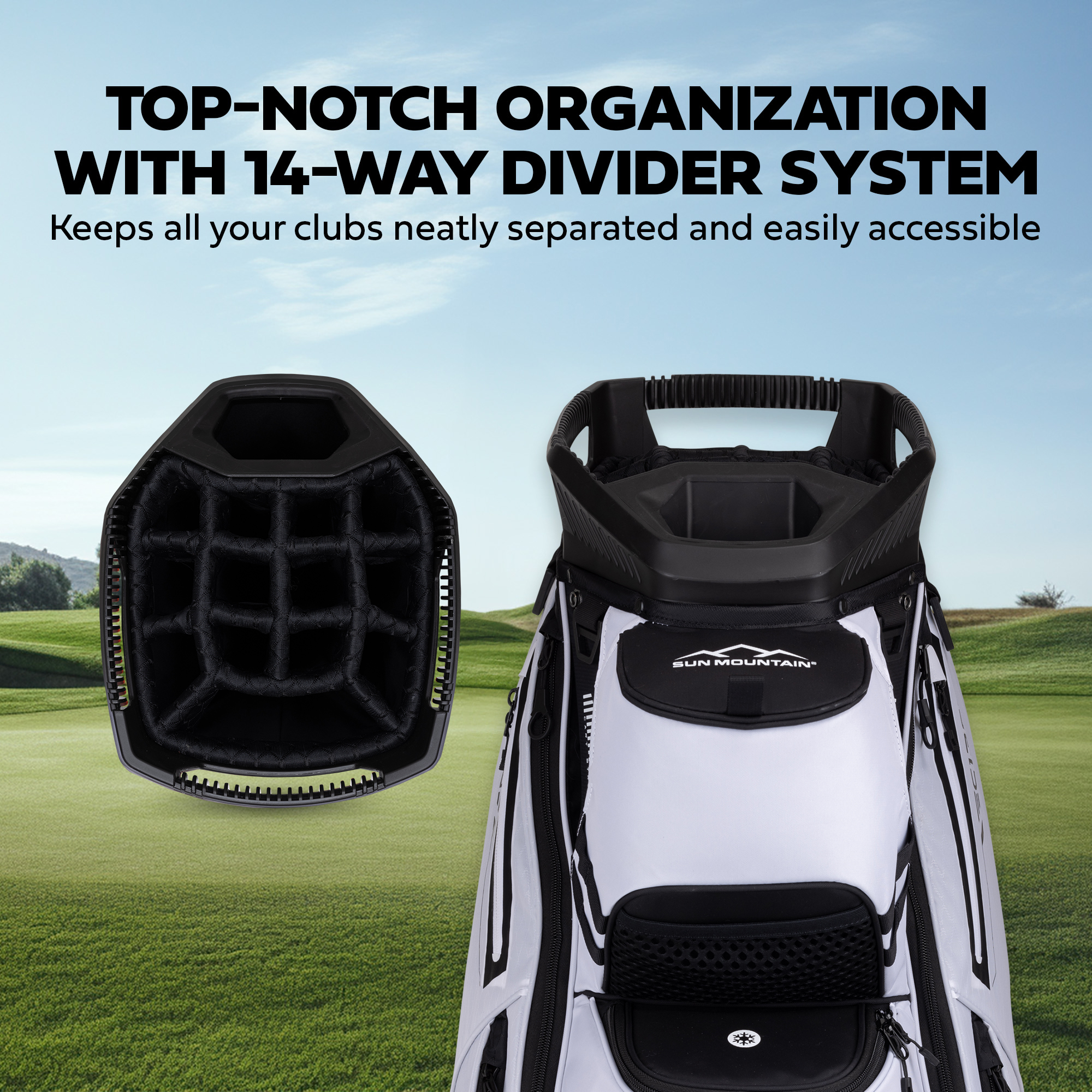
Full-length dividers run the entire length of the bag, keeping each club separated from top to bottom. This design prevents club heads from banging together and stops shafts from tangling. Top-only dividers separate clubs at the mouth but allow them to mix below, creating frustration when you reach for a specific iron.
The top layout also matters. Some players prefer 14-way tops for maximum separation. Others prefer 4-way or 5-way tops with larger slots that make grabbing a club faster. If you use oversized grips or a large driver head, ensure the top opening accommodates them comfortably.
Standard 14-Club Capacity
Confirm the bag explicitly states 14-club capacity. Some minimalist bags hold fewer clubs. Overstuffing a bag designed for less can damage the dividers and make club extraction difficult during play.
Full-Length Divider Benefits
Full-length dividers protect your equipment from the clanking and scratching that occurs when metal shafts rub together. They also make identifying and pulling out a specific club much easier without grabbing three others by mistake.
Preventing Club Tangle Damage
Tangled clubs can ruin a round. When shafts twist together, you risk bending them or scratching clubheads. A good divider system keeps everything vertical and parallel. Test the system by placing your clubs inside and shaking gently.
Review Additional Functional Features
Beyond the basics, certain extras can elevate your experience from good to excellent. These features often become favorites once you start using them regularly. When comparing two similar bags, these additions can tip the balance.
A rain cover ranks among the most valuable accessories. Integrated covers deploy quickly during sudden downpours and protect your grips and pocket openings. Without one, wet grips become slippery and your gear stays damp for the rest of the round.
Trolley attachment systems matter for pushcart users. A dedicated pass-through channel allows the cart strap to secure the bag without crushing your pockets or blocking access. Some cart models include wheels for short-distance transport around the clubhouse or parking lot.
Rain Cover Essentials
A quality rain cover deploys easily and covers the entire top section of the bag. Integrated versions outperform separate covers that require digging through deep pockets to find when the sky opens up.
Trolley Attachment Options
Look for a cart strap pass-through if you use a pushcart. This dedicated tunnel ensures the securing strap tightens without damaging pocket closures or blocking access to your gear during the round.
Top-Loading Club Access
A wide, well-designed top opening allows effortless club insertion and removal. Some designs angle the top slightly for better ergonomics when the bag sits on a cart, reducing strain on your wrist during repeated access.
Wheeled Cart Bag Variants
Some cart bags feature built-in wheels for transport convenience. You still need a cart for the course, but wheels make navigating the garage, loading your car, and moving through the clubhouse much easier.
Consider Brand Reputation and Price
Your budget plays a major role in the final decision, but price does not always equal quality. Established brands like Titleist, Callaway, TaylorMade, and Ping offer reliability and customer support. They typically provide warranties and replacement parts when something eventually wears out.
Many lesser-known brands deliver excellent value. They may use similar materials and designs at lower prices because they spend less on marketing. The key is comparing features within your price range rather than chasing logos. Focus on construction quality, divider systems, and pocket layouts.
Set a realistic budget before shopping. Golf bags range from under $100 to over $300. Determine which features matter most and allocate your money accordingly. A slightly higher upfront investment in durability often saves money over time by avoiding frequent replacements.
Popular Brand Comparisons
Major brands often specialize in specific areas. One brand might dominate the lightweight carry market while another leads in cart bag organization. Research which manufacturers excel in the category you need and read reviews focused on long-term durability.
Setting a Realistic Budget
Decide your spending limit before browsing. Beginners often find mid-range bags with strong reviews sufficient. Experienced players with specific needs may justify premium prices for specialized features. Include accessories like a rain hood in your budget if not included.
Value Beyond Price Tag
Examine the total package. Does the bag include a warranty? Are the zippers branded? Is the material high-denier? A slightly higher price sometimes buys significantly better materials that last twice as long, lowering your cost per round over the bag’s life.
Final Selection and Testing Tips
Specifications tell only part of the story. The tactile experience of a bag matters just as much as the numbers on the product page. Whenever possible, visit a local shop to handle the bags you are considering before committing.
Load the bag with clubs or weight and walk around. Notice whether the strap digs into your shoulder. Check if the bag sways as you move. Confirm the handle feels solid in your grip. Simulate accessing pockets while wearing the bag. These physical sensations cannot be judged from photos alone.
Think about your long-term trajectory. Will this bag suit your needs in three years? If you plan to walk more often, avoid heavy cart bags. If you expect to join a club requiring cart use, skip the ultra-minimalist carry bag. Choose a bag that grows with your game.
Try Before You Buy
Test the bag in person whenever possible. Load it with your actual clubs and pay attention to balance and strap comfort. A bag that feels fine empty may become uncomfortable once loaded with a full set and accessories.
Read Golfer Reviews
Online reviews reveal real-world performance. Look for comments about long-term durability, stand mechanism reliability, and zipper quality after exposure to sand and dirt. Actual usage stories expose flaws that quick store tests miss.
Plan for Long-Term Needs
Consider your future playing habits. Are you getting fitter and planning to walk more? Are you joining a club that mandates cart use? A bag that fits today but fails your future needs wastes money. Choose something adaptable.
Frequently Asked Questions About Choosing a Golf Bag
What type of golf bag do I need if I walk the course?
A carry bag or stand bag works best for walkers. Carry bags offer the lightest weight for purists. Stand bags provide more storage and the convenience of built-in legs that keep your clubs off wet grass.
How many clubs should a golf bag hold?
Standard golf bags hold 14 clubs, which is the maximum allowed under the rules of golf. Always verify the capacity before purchasing, especially if you carry extra wedges or specialty clubs.
Are expensive golf bags worth the money?
Higher prices often reflect better materials, stronger construction, and longer warranties. However, many mid-range bags deliver excellent performance. Focus on features and build quality rather than price alone.
What is the difference between a cart bag and a stand bag?
Cart bags are heavier, more structured, and designed exclusively for riding. Stand bags are lighter with built-in legs and work for both walking and riding. Choose based on your primary transportation method.
How important is a rain cover?
Rain covers protect your club grips and gear during wet weather. They rank among the most valuable accessories for any golfer who plays in variable conditions. Integrated covers offer the best convenience.
Should I buy a golf bag in-store or online?
In-store purchases let you test weight, balance, and comfort before buying. Online shopping offers wider selection and often better prices. If buying online, choose retailers with generous return policies so you can test the bag at home.
Key Takeaways for Choosing Your Next Golf Bag
Start by identifying your primary playing style, since walkers and riders need fundamentally different bags. Test weight distribution and strap comfort in person whenever possible, because numbers on a spec sheet cannot reveal how a bag actually feels on your back. Prioritize quality construction and a divider system that protects your clubs, since a bag that fails after one season costs more than a slightly pricier option built to last.
Your next step is simple: visit a local golf shop with your current clubs and try at least three bags in your budget range. Walk the showroom floor with each one loaded, pay attention to the strap feel, and check pocket accessibility. This hands-on test will reveal the right choice faster than any review or product description.