Your golf cart sputters halfway through the back nine, leaving you stranded with a dead battery. Or maybe it barely makes it up the hill to the clubhouse anymore. These frustrating scenarios almost always trace back to one thing: neglected battery maintenance. Golf cart batteries are a significant investment, and proper care directly determines how long they last.
This guide covers every essential aspect of golf cart battery maintenance, from watering and cleaning to charging habits and seasonal storage. You will learn practical steps to extend battery life, avoid common pitfalls, and keep your cart running at peak performance round after round.
Check Water Levels Monthly

Battery water levels play a critical role in lead-acid battery health. When electrolyte drops below the internal plates, exposed metal begins to sulfate and corrode permanently.
When to Add Water
Always add water after a full charge, not before. Charging expands the electrolyte, and adding water beforehand risks overflow and acid spills. If plates are exposed, add just enough distilled water to cover them temporarily, then top off again after charging.
Use Distilled Water Only
Tap water contains minerals and impurities that accumulate inside battery cells. These contaminants reduce efficiency and shorten battery life. Distilled water is the only safe option for refilling.
How to Check Levels
• Remove cell caps carefully
• Look inside each cell; electrolyte should sit 1/4 to 1/2 inch above the plates
• Use a flashlight if visibility is poor
• Top off as needed with a funnel or battery watering system
Pro Tip: A battery watering kit with a hose manifold speeds up the process and reduces spill risk significantly.
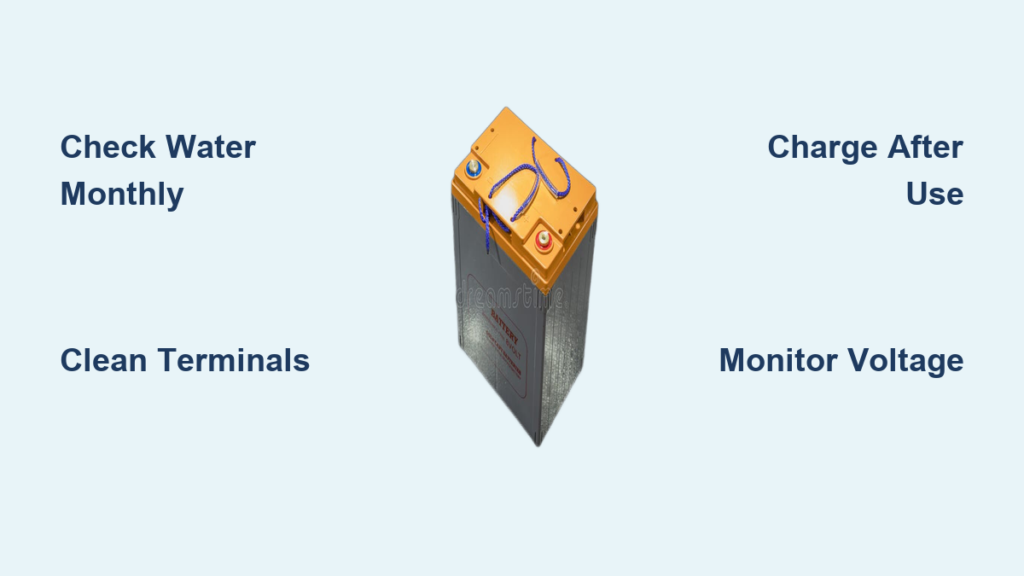
Clean Terminals Every Few Months
Corroded terminals create resistance that robs your cart of power and slows charging. Dirty connections also generate heat, which accelerates wear on cables and posts.
Signs of Corrosion
Watch for white, blue, or green powdery buildup around terminals. Other warning signs include difficulty starting, inconsistent power delivery, or warmth at the connection points during use.
Safe Cleaning Steps
- Turn off the cart and disconnect the battery pack
- Remove cables, starting with the negative terminal
- Mix baking soda with water (1 tablespoon per cup)
- Scrub terminals and cable ends using a wire brush dipped in the solution
- Rinse with clean water and dry everything thoroughly
- Reconnect cables, starting with the positive terminal
- Apply dielectric grease to prevent future corrosion
Warning: Always wear gloves and eye protection. Battery acid is highly corrosive and can cause serious injury.
Charge After Every Use
Inconsistent charging is the fastest path to early battery replacement. Deep-cycle batteries thrive on regular, complete charging cycles.
Why Daily Charging Matters
Lead-acid batteries perform best when maintained at full charge. Allowing them to sit in a partially discharged state encourages sulfation, a buildup that permanently reduces capacity.
Proper Charging Procedure
• Connect it immediately after every use
• Allow the charger to run until it shuts off automatically
• Avoid interrupting the charge cycle once started
• Never leave batteries on the charger for more than 24 hours
Pro Tip: Even short trips drain meaningful charge. Plug in after every outing, regardless of distance.
Avoid Deep Discharges
Running batteries below 50% capacity causes unnecessary stress. If your cart begins to slow noticeably, return and recharge right away. Consistent deep discharges dramatically shorten lifespan.
Inspect Batteries Monthly
Quick visual inspections catch small issues before they escalate into major failures. A five minutes check each month can save hundreds in replacement costs.
What to Look For
• Cracks or leaks in the battery case
• Swollen or bulging sides
• Discoloration or damp spots beneath batteries
• Loose, frayed, or damaged cables
How to Test for Leaks
Wipe the battery clean, then press a dry paper towel around the base and between cells. Any dampness or residue indicates a leak. Leaking batteries are unsafe and must be replaced immediately.
Store Batteries Fully Charged
Improper storage causes more seasonal battery failures than almost any other factor. Whether you store your cart for winter or an extended vacation, preparation matters.
Preparing for Storage
• Fully charge all batteries
• Clean terminals and cable connections
• Top off water levels in each cell
• Disconnect cables, starting with the negative terminal
During Storage
• Store in a cool, dry location between 40°F and 70°F
• Keep batteries away from metal objects and potential sparks
• Recharge every 4 to 6 weeks to counteract self-discharge
Reviving After Storage
Reconnect the cables, check and top off cells as needed, perform a full charge, and test voltage to confirm battery health before heading out.
Use the Correct Charger
An incompatible or outdated charger can damage your battery pack over time. Matching the charger to your battery system is essential.
Match Voltage and Type
Your charger must match the total battery bank voltage (commonly 36V or 48V) and chemistry (flooded lead-acid, AGM, or gel). Mismatched chargers undercharge or overcharge cells, reducing lifespan.
Look for Smart Charging Features
Modern chargers with automatic shut-off and multi-stage charging (bulk, absorption, float) optimize battery health. Avoid older “dumb” chargers that lack voltage regulation.
Check Charger Function Regularly
• Verify indicator lights activate properly
• Listen for normal operating sounds like a hum or fan
• Confirm voltage output with a multimeter when possible
• Replace any damaged cords or connectors immediately
Monitor Voltage Weekly

Tracking voltage helps identify weak batteries before they fail completely. A simple multimeter and ten minutes per week are all you need.
How to Measure Voltage
- Turn off the cart and wait at least 2 hours after charging
- Set your multimeter to DC voltage
- Test each battery by placing the red probe on positive and black on negative
- Record all readings for comparison
Healthy Voltage Ranges
| Battery Type | Fully Charged (Resting) |
|---|---|
| 6V | 6.3–6.4V |
| 8V | 8.4V |
| 12V | 12.6–12.8V |
If one battery reads more than 0.2V lower than the others, it may be failing and pulling down the entire pack.
Identify and Replace Weak Batteries
When one battery fails, replace the entire set. Mixing old and new batteries creates imbalance and reduces overall pack performance significantly.
Prevent Sulfation Buildup
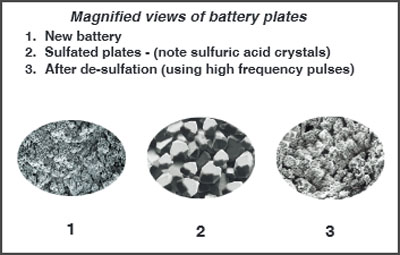
Sulfation is the leading cause of premature failure in lead-acid batteries. Understanding its causes helps you prevent irreversible damage.
What Causes Sulfation
• Leaving batteries in a discharged state
• Infrequent or irregular charging
• Low electrolyte levels
• Long storage periods without recharging
How to Reverse Mild Sulfation
Some smart chargers include a desulfation or reconditioning mode. Running this cycle monthly can break down initial sulfate crystals and restore capacity.
Prevention Tips
• Charge after every use without exception
• Maintain proper water levels at all times
• Avoid deep discharges below 50% capacity
• Keep batteries clean and connections tight
Note: Severe sulfation cannot be reversed. Affected batteries must be replaced to restore performance.
Frequently Asked Questions About Golf Cart Battery Maintenance
How often should I water my golf cart batteries?
Check water levels monthly, and add distilled water as needed after each charging cycle. Hot climates may require more frequent checks.
Can I use tap water in my golf cart batteries?
No. Tap water contains minerals that accumulate inside cells and reduce battery efficiency. Always use distilled water.
How long do golf cart batteries typically last?
With proper maintenance, quality deep-cycle batteries last 5 to 7 years. Without regular care, that lifespan can drop to 2 to 3 years.
Should I leave my golf cart plugged in all the time?
Modern smart chargers can remain connected indefinitely without overcharging. Older chargers should be disconnected once charging completes to prevent damage.
What happens if I store my golf cart without charging it?
Batteries self-discharge during storage and will sulfate if left below full charge. Recharge every 4 to 6 weeks to preserve battery health.
How do I know when my golf cart batteries need replacing?
Signs include reduced range, slow charging, voltage differences greater than 0.2V between batteries, and visible damage like cracks or bulges.
Key Takeaways for Golf Cart Battery Owners
Consistent golf cart battery maintenance can extend battery life by 2 to 5 years, saving significant replacement costs. The most impactful habits include charging after every use, checking water levels monthly, and cleaning terminals every few months. Treat your entire battery pack as one system, since every cell contributes to overall performance.
Start today: inspect your batteries, top off the water with distilled water, and plug in the charger. A few minutes of care now will keep your cart running strong for hundreds of rounds to come.