
A well-maintained putting green sets the tone for every round played on your course. Smooth, consistent surfaces make putting predictable and enjoyable. Rough or neglected turf frustrates players and drives them away from your facility. For superintendents and grounds crews, golf green maintenance is a daily craft that blends the right equipment with proven techniques.
Success comes down to using professional-grade tools designed for precision tasks like aeration, mowing, topdressing, and debris removal. Soil type, weather, and foot traffic all influence turf health, but your equipment determines how well you manage these variables. This guide breaks down the essential tools, daily routines, and expert strategies that keep greens performing at their best in every season. Whether you oversee a championship layout or a community course, these methods help you deliver the conditions players expect.
Core Maintenance Tools Overview
Putting greens demand specialized equipment that generic landscaping gear simply cannot match. Precision cutting, soil management, and surface grooming all require purpose-built tools. Professional golf green maintenance depends on equipment that minimizes turf stress while maximizing efficiency.
Aeration Tools for Turf Health
Compacted soil suffocates grass by blocking the flow of air, water, and nutrients to root systems. Aeration relieves this compaction by opening channels in the turf that restore healthy soil biology.
- Hand aerifiers work well for spot treatments on small trouble areas.
- Spike aerifiers suit sandy soils, while plug aerifiers perform better in clay-dominant greens.
- Schedule aeration 3–4 times per year, timed with peak growth windows.
Pro Tip: Clean tines thoroughly after each use to prevent spreading pathogens between greens.
Precision Mowing Equipment
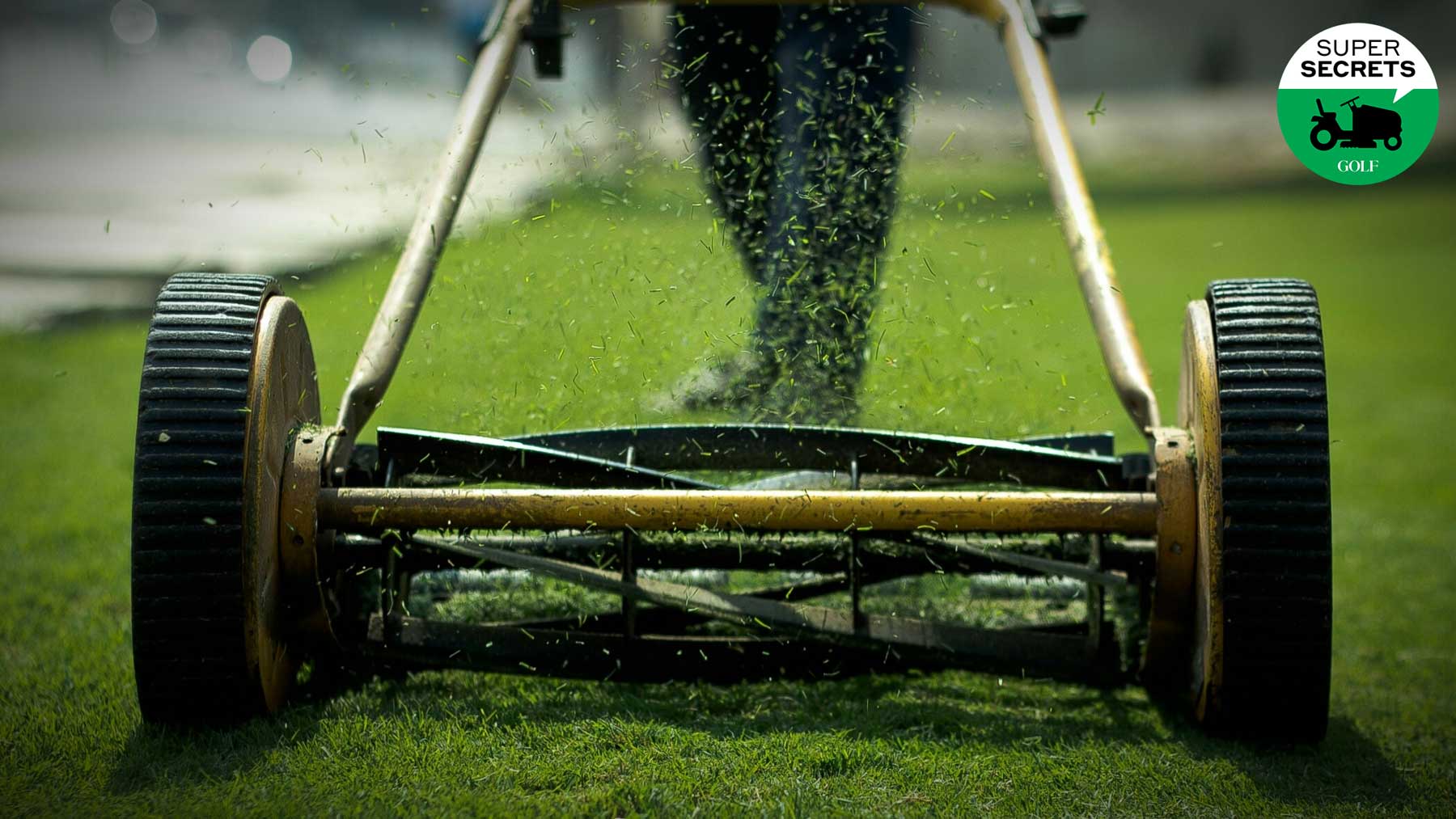
Mowing height directly influences ball roll speed and turf density. Cutting too short scalps the grass and invites stress. Cutting too high produces slow, uneven putting surfaces.
- Calibrate reel mowers to cut between 0.125 and 0.150 inches for tournament-caliber results.
- Mow daily during peak growing season to maintain uniform texture.
- Alternate mowing directions regularly to prevent grain buildup and reduce wear patterns.
Visual Cue: A properly cut blade shows a clean, scissor-like edge with no fraying or tearing.
Topdressing Application Tools
Topdressing smooths minor surface inconsistencies, dilutes thatch, and improves drainage over time. It is a foundational practice in long-term golf green maintenance.
- Use mechanical topdressers to spread sand or soil blends evenly.
- Apply thin layers of 1/8 inch or less every 2–4 weeks during active growth.
- Drag or brush the surface afterward to integrate material into the canopy.
Avoid: Thick applications that smother grass blades and block sunlight.
Daily Green Care Routines
Consistent daily attention catches small issues before they grow into costly problems. A structured checklist keeps your team focused and accountable.
Morning Inspection Walkthrough
Begin every shift with a hands-on evaluation of each green on the course.
- Walk the surface to check for soft spots or uneven firmness.
- Look closely for discoloration, thinning, or fungal rings.
- Scan for insect activity, especially near collar edges and high-traffic zones.
Action Step: Flag any problem areas immediately for follow-up treatment later in the day.
Debris Removal Best Practices
Leaves, clippings, and twigs trap humidity against the turf canopy. This moisture creates ideal conditions for disease outbreaks.
- Use blowers or flexible turf rakes to clear debris without damaging grass.
- Steer clear of metal-tined rakes, which tear tender turf.
- Pay special attention to collars and fringe areas where debris collects.
Time Estimate: Roughly 10–15 minutes per green when using efficient equipment.
Ball Mark Repair Protocols
Every unrepaired ball mark scars the surface and slows healing. Quick action preserves smoothness for all players.
- Encourage golfers to fix every mark they make.
- Use a divot fork to work the edges inward toward the center, never prying straight up.
- Tamp lightly after repair to level the surface with surrounding turf.
Pro Tip: Mount repair tool dispensers near tee boxes to increase golfer participation.
Seasonal Maintenance Strategies
Greens respond to weather shifts throughout the year. Adjusting your golf green maintenance approach to seasonal demands protects turf health in every climate.
Spring Recovery and Prep
Winter leaves compaction and nutrient depletion in its wake. Spring is the time to reset.
- Resume mowing as soon as the soil dries and firms up.
- Apply a balanced fertilizer to jump in root and shoot growth.
- Conduct light aeration early to relieve compaction from freeze-thaw cycles.
Watch For: Poa annua encroachment, which often spikes during cool, wet spring weather.
Summer Stress Management
Heat, drought, and heavy play all converge during summer. Smart cultural practices keep turf resilient.
- Irrigate early in the morning to maximize absorption and minimize evaporation.
- Use syringing (light, frequent misting) during the hottest hours to cool leaf tissue.
- Watch for wilting, footprint retention, and slow recovery as signs of heat stress.
Expert Note: Postpone aggressive aeration or heavy topdressing until temperatures moderate.
Fall Preparation for Winter
Winter survival depends on how well you prepare in autumn. Strong fall conditioning reduces spring damage.
- Boost potassium applications to fortify cell walls against cold injury.
- Perform core aeration to improve late-season nutrient uptake.
- Gradually lower cutting height before dormancy, but never scalp the surface.
Goal: Send greens into winter firm, healthy, and resistant to snow mold and ice damage.
Preventative Disease and Pest Control
Healthy turf naturally resists most pest pressure. Still, prevention remains cheaper and safer than curative treatment. Proactive golf green maintenance supports sustainability and reduces chemical dependence.
Common Turf Diseases to Monitor
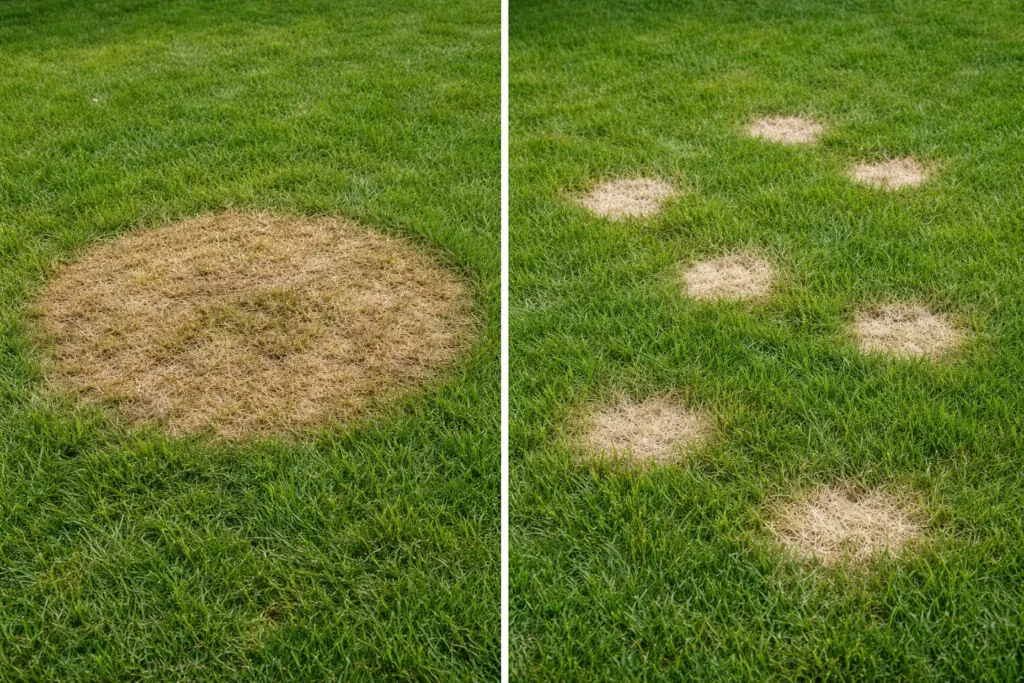
Humid conditions encourage outbreaks that can damage greens quickly.
- Dollar Spot: Small, straw-colored lesions that merge into patches.
- Brown Patch: Circular brown areas with smoky ring borders.
- Fusarium Patch (Snow Mold): Develops under insulating snow cover.
Prevention Tip: Schedule irrigation for early morning so leaf surfaces dry quickly.
Integrated Pest Management (IPM)
Grubs, billbugs, and mites attack roots and crowns, often before symptoms appear.
- Pull monthly soil cores to scout for insect larvae.
- Release beneficial nematodes as a biological control option.
- Treat with insecticides only when pest counts exceed documented thresholds.
Red Flag: Irregular thinning or sudden dead patches often signal below-ground pest activity.
Water Management and Irrigation
Water is essential, but too much causes more harm than too little. Smart irrigation is a core pillar of golf green maintenance.
Signs of Overwatering
Saturated soil starves roots of oxygen and encourages fungal growth.
- Spongy turf that holds footprints long after walking.
- Algae or black slime forming on the surface.
- Slow drying following rainfall or scheduled irrigation.
Fix: Adjust watering based on evapotranspiration rates and real-time soil moisture data.
Irrigation System Checks
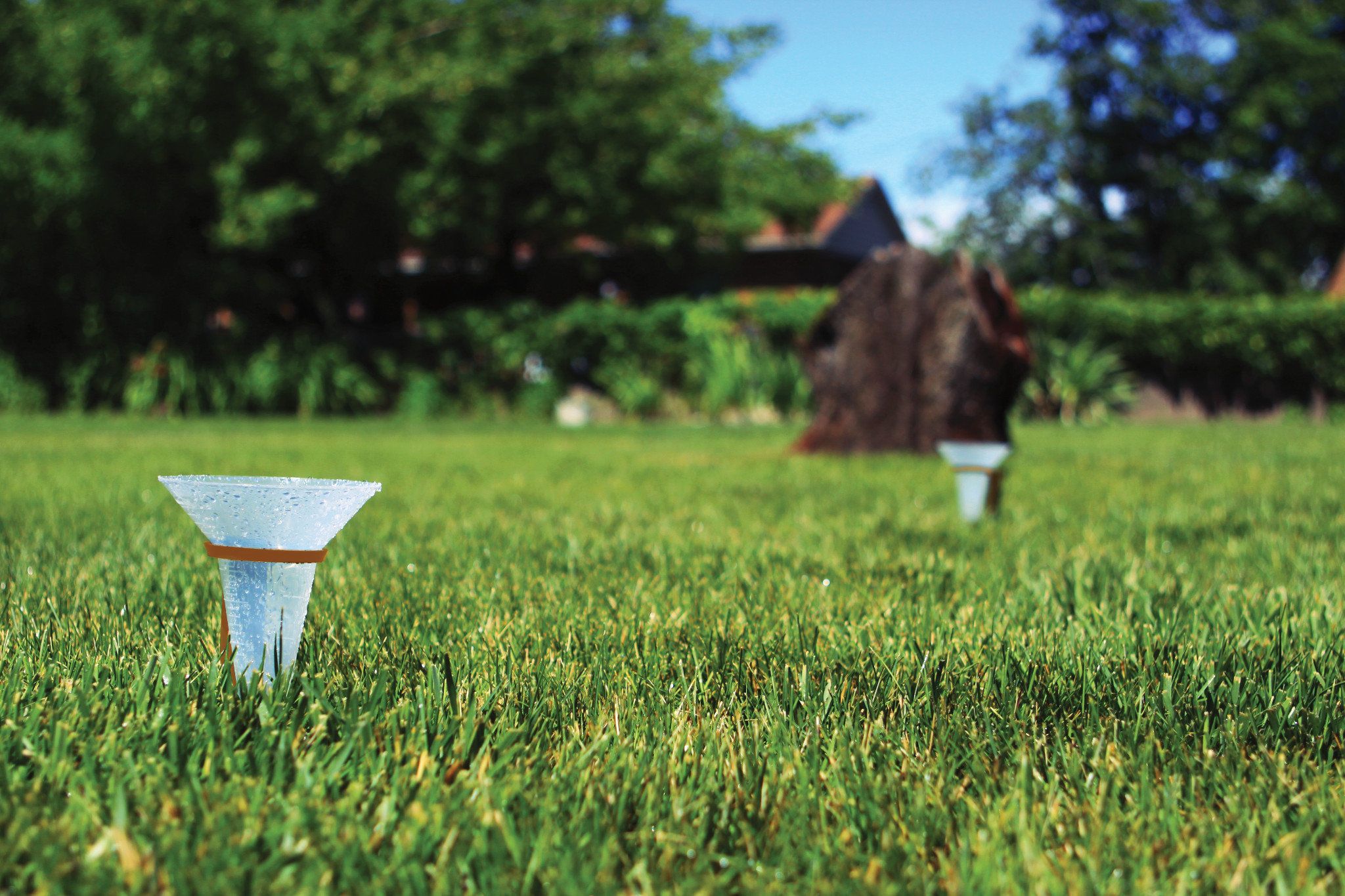
Even coverage prevents dry spots and eliminates wasteful runoff.
- Run monthly catch-can tests to measure distribution uniformity.
- Clean and align sprinkler heads for consistent output.
- Audit the system at night to spot leaks or pressure losses.
Time Saver: Install a weather-based smart controller to automate adjustments throughout the day.
Tool Selection and Care
Your tools are an investment. Keeping them sharp, clean, and properly stored extends their lifespan and improves results.
Choose Turf-Safe Materials
Hard edges and metal parts can scar delicate putting surfaces. Material selection matters.
- Pick polymer or composite rakes with rounded, flexible tines.
- Use lightweight leaf blowers rather than stiff brooms.
- Choose mowers with sharp, well-balanced reels for clean cuts.
Warning: Keep string trimmers away from green perimeters. Use hand edgers instead.
Clean and Store Tools Properly
Dirty equipment spreads pathogens and wears out faster than clean tools.
- Rinse all tools after use, especially after aeration or topdressing.
- Dry everything completely before long-term storage.
- Sharpen mower blades at least weekly during heavy use periods.
Maintenance Schedule:
– Monthly: Lubricate pivots and moving components.
– Quarterly: Inspect for wear, cracks, or loose fittings.
– Annually: Replace tines, belts, and brushes as needed.
Enhancing Player Experience
Excellent golf green maintenance influences more than turf health. It shapes how players perceive your entire facility.
Encourage Golfer Involvement
Players who feel ownership help preserve green quality between maintenance visits.
- Install divot repair stations stocked with sand bottles at every tee.
- Post clear signage demonstrating proper ball mark repair.
- Host short clinics that teach green etiquette and care basics.
Result: Smoother surfaces with less reliance on constant staff intervention.
Maintain Visual Appeal
Crisp, uniform greens send a powerful message about course quality.
- Keep collars sharply edged and cleanly trimmed.
- Sweep cart paths and entry points every morning.
- Alternate mowing patterns to create attractive striping.
Bonus: Polished presentation lifts course reviews and enhances social media exposure.
Frequently Asked Questions About Golf Green Maintenance
How often should greens be mowed during peak season?
During peak growing conditions, mow greens daily to maintain consistent surface speed and turf density. Adjust frequency during slower growth periods to avoid stressing the grass.
What is the ideal mowing height for putting greens?
Most putting greens perform best when cut between 0.125 and 0.150 inches. Heights outside this range compromise ball roll or weaken the turf.
When is the best time to aerate greens?
Aerate during active growth periods, typically spring and early fall. Avoid aerating during summer heat stress or winter dormancy, when turf cannot recover quickly.
How can you tell if a green is being overwatered?
Common signs include spongy footing, standing water, algae growth, and slow drying after rain. Adjust irrigation schedules based on soil moisture and weather data.
What tools are essential for daily green care?
Daily essentials include a reel mower, flexible turf rake or blower, divot repair fork, and a soil moisture meter. These tools support mowing, debris removal, and surface monitoring.
How do you prevent snow mold on greens?
Reduce thatch buildup in fall, apply preventive fungicide before snowfall, and improve air circulation across the surface. Avoid heavy topdressing right before winter dormancy.
Key Takeaways for Better Golf Green Maintenance
Strong golf green maintenance programs rest on three pillars: the right tools, consistent daily routines, and seasonal adjustments. Aeration, precision mowing, balanced topdressing, and smart irrigation work together to produce smooth, resilient putting surfaces. Disease and pest prevention protect your investment without over-relying on curative treatments.
Start by evaluating your current tool inventory. Replace worn or generic equipment with turf-specific products from Par Aide designed for professional results. Train your team on daily inspection routines and seasonal transition protocols. Most importantly, stay proactive. Greens that receive steady, attentive care always outperform those maintained in reactive mode. With the right strategy and equipment, your greens will deliver the playing quality that keeps golfers coming back round after round.





