
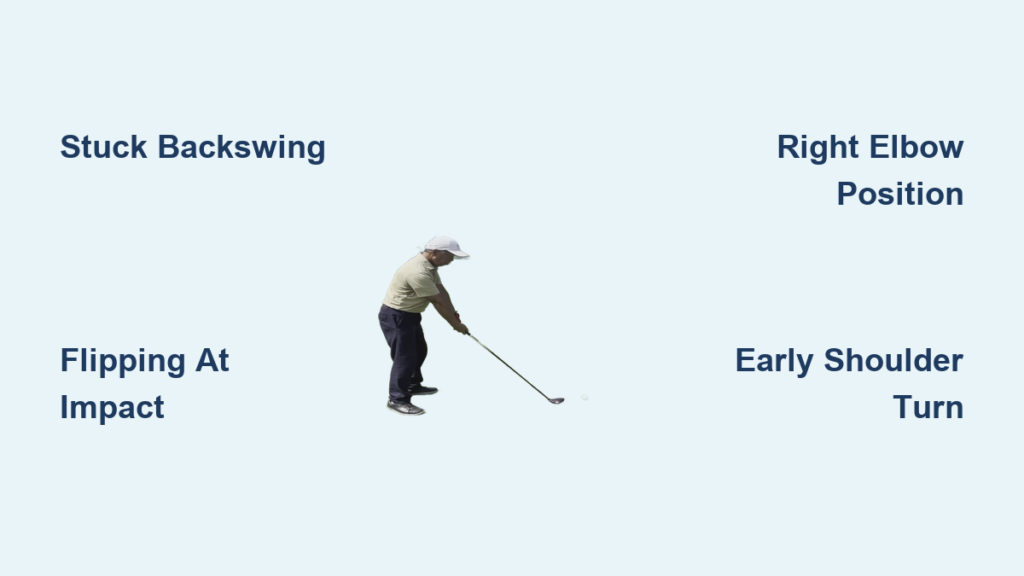
If your golf swing feels stuck in the backswing and you flip through impact, you’re facing one of the most frustrating combinations in golf. This pairing wrecks ball striking, drains power, and produces ugly pushes, hooks, and fat shots. The two flaws feed each other, so treating only the flip never works long-term. The real fix starts at the top of your backswing.
Most golfers chase the flip for years without progress because they are treating a symptom. When the club traps behind your body, your hands instinctively flip to square the face at the last second. Fix the path and the flip disappears. This guide explains exactly how being stuck causes flipping, what changes when you correct it, and drills to retrain your swing from takeaway to impact.
What “Stuck” Means in Your Golf Swing
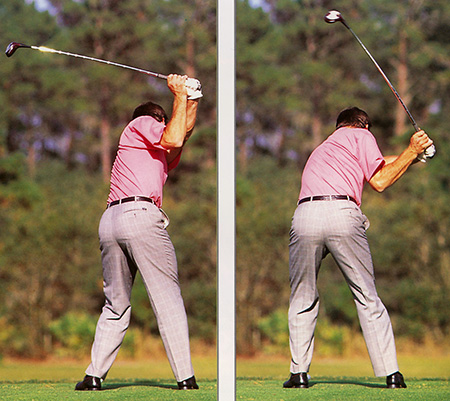
Club Trapped Behind the Body at the Transition
A stuck swing happens when the club lags behind your body during the downswing. At the halfway down position, the shaft should be in front of your chest or aligned with it. When you’re stuck, the shaft points to the right of the target (for right-handed golfers). Your arms and club fall behind your torso rotation, forcing you to compensate just to reach the ball.
Visual Cues That Signal a Stuck Position
- Right elbow pinned close to your hip
- Shoulders too closed at impact
- Club shaft leaning backward or flat
- Hands behind the ball at impact
- Frequent pushes or severe hooks
This is not a small flaw. It reshapes your entire downswing path. Great players like Ben Hogan, Tim Clark, and Ross Fisher had similar backswings, but they compensated with explosive hip clearance. Most amateurs lack that lower-body speed, so the stuck position becomes a major liability.
How a Stuck Backswing Causes Flipping
Your Brain Triggers a Last-Second Fix
When the club sits stuck behind your body, your nervous system knows the face will not square in time. To save the shot, it subconsciously triggers an early release, which is the flip. This hand action rotates the clubface shut before impact, turning a potential push into a hook or a thin shot into a fat one.
Flipping Is a Compensatory Release, Not a Habit
Flipping is not something you learned to do on purpose. It is a survival mechanism. If your arms cannot drop into the correct downswing slot, flipping becomes the only way to deliver the clubhead to the ball. The more inside and steep your backswing, the more your body depends on wrist breakdown to recover.
Why Stuck Leads to Pushes and Hookes
Swing Path Dictates Shot Shape
A stuck swing creates an extremely in-to-out path, often 8 to 10 degrees right of the target line. When the clubface matches that path, you hit a push. When the face closes slightly more than the path, you get a hook. Many players never realize how far right their path travels because the flip masks the problem.
Misalignment Starts at the Takeaway
The trouble begins early. When the club moves too far inside too quickly, it crosses the plane right away. By the top of the backswing, the club sits across the line, pointing well right of the target. Without early hip rotation, the only way down is steep and out, trapping the club behind you.
The Role of the Right Elbow in Your Swing
“Get It Out of the Way” Explained
Coaches often tell golfers to get the right elbow out of the way. A high or early-set right elbow keeps the club on plane and prevents the arm from getting wedged between your torso and hip. This is why instructors like David Orr used the waiter-carry image, with the elbow lifted and forearm vertical.
Waiter Carry Versus Basketball Elbow
Two contrasting images aim to fix the same flaw:
– Waiter carry: elbow lifted, forearm pointing up
– Throwing an elbow: right elbow driving straight back to start rotation
Both approaches delay arm dominance and promote shoulder turn. The waiter image keeps the elbow from dropping too low, while the elbow throw encourages the body to lead rather than the arms pulling.
How Being Stuck Causes Fat Shots
Your Swing Bottom Shifts Behind the Ball
When you’re stuck, your swing’s lowest point moves behind the ball. Instead of compressing down, you hit level or even ascend through impact. This explains why many golfers with a stuck swing never take real divots. The club never bottoms out in front of the ball.
Lack of Forward Shaft Lean
Fat shots happen because your hands have not moved ahead of the ball. A stuck position keeps the hands behind, the shaft upright, and the angle of attack shallow. Without forward lean, you cannot deloft the club or strike down with any authority.
Fixing the Takeaway to Prevent Getting Stuck
Keep the Club Outside Your Hands
Focus on moving the club outside the hands during the first foot of the takeaway. Most stuck swings begin with a hand-first move that closes the face too early. Instead, feel your left thumb moving up rather than back, keeping the face open longer and the path wider.
Use Rickie Fowler as a Visual Model
Watch Rickie Fowler’s takeaway from down the line. The club stays wide, the face points at the ball until waist high, and the left arm stays connected to the chest. This builds a neutral top position instead of the across-the-line trap that causes so many problems.
Drills to Stop Getting Stuck in the Backswing
The Towel Drag Drill
Tie a large beach towel around your clubhead. Take the club back to the 9 o’clock position. The drag forces you to start the backswing with shoulder turn rather than hand action. If the towel flaps behind your body, you are pulling with the arms.
Shaft on the Ground Drill
Place a shaft or alignment rod on the ground extending from the ball along your target line. During the takeaway, swing the club up the line of the rod to train a straighter, more neutral path. This prevents excessive inside movement right from the start.
Mirror Check at 7:30
Set up facing a mirror and take the club back until your hands reach the 7:30 position. The shaft should form a straight line with your left arm, and the face should still point at the ball. If the face is closed, your wrists are breaking down too early.
Transition Fixes to Unstick the Downswing
Feel Your Shoulders Open Early
Forget arm positions for a moment and focus on rotating your shoulders quickly in the downswing. Players like Graeme McDowell, Corey Pavin, and Miguel Angel Jimenez use this feel to clear space and shallow the club. Your only job is to get the chest facing the target sooner.
Bottle Target Drill
Place a water bottle two to three feet in front of the ball, slightly right of the target line. Aim to start the ball left of the bottle. This encourages an earlier release of the hips and a shallower angle of attack.
Stop Flipping by Fixing the Root Cause
Pull, Don’t Push
When the club sits on plane, you can pull the club through with your left arm and chest. A pulled motion stays stable. A pushed motion (right arm dominant) encourages flipping. Think of the left arm leading the downswing, dragging the clubhead into the ball.
Connected Left Arm Drill
Hold a small ball or headcover between your left bicep and chest. Swing slowly while keeping it pinned. This promotes connection and rotation rather than an arm throw. If the ball drops, you have lost the connection.
Build a Better Top-of-Swing Position
Neutral Club, Not Across the Line
At the top of your backswing, the club should point near the target line, not to the right of it. If the club points right, you are stuck before the downswing even begins. A neutral top allows the club to drop freely into the slot.
Avoid the Chicken Wing
A high right elbow is not inherently wrong, but if it creates a chicken wing with the elbow flared out and forearm vertical, it demands extreme hip clearance to save the shot. Players like Jim Furyk and Eamonn Darcy pull this off with incredible natural ability and hip speed. Most golfers, especially those with limited flexibility, cannot sustain this move.
Shorten the Backswing for Better Control
Half-Swing Reset Drill
Make short backswings at three-quarter length and focus only on reaching a balanced top. This reduces over-rotation and arm pull. Gradually add length as control improves.
Pre-Set Your Wrists Early
Set your wrists by waist high rather than letting them hinge late. This helps maintain the triangle between your arms and keeps the club on plane. Many stuck swings delay the wrist set, which leads to a steep, trapped drop on the downswing.
Why You Are Not Taking Divots and How to Fix It
Your Swing Center Must Move Forward
A stuck swing keeps your swing center too far back, so the low point lands behind the ball. To take a proper divot, your center must shift forward so the hands lead and the club bottoms out ahead of the ball.
Forward Ball Position Adjustment
Move the ball off your left heel temporarily. This forces your body to shift forward to reach the ball, promoting better weight transfer and shaft lean. You will feel the club strike down more sharply and finally see real divots.
Real Results: What Improves When You Fix It
Instant Ball-Striking Gains
Many golfers report hitting 150-yard flagsticks far more consistently after fixing the stuck move. They also start taking 3 to 4 inch divots for the first time, proving the swing bottom has shifted forward.
Better Compression and Trajectory
With the club arriving from a better path and the hands ahead, the ball launches higher and rolls less. You feel solid compression at impact instead of a flip-and-scoop action. The ball flies farther and lands softer.
Frequently Asked Questions About Getting Stuck and Flipping
How does getting stuck in the backswing cause pushes and hooks?
When you’re stuck, the club points right at the halfway position, forcing your swing path far to the right of the target. If the clubface matches that path, you hit a push. If the face closes even slightly more than the path, you produce a hook.
Why does being stuck make me flip at impact?
Your golfing brain recognizes the club is trapped behind your body and knows the face will not square in time. It subconsciously triggers a flip, rotating the hands early to close the face and salvage the shot.
Will fixing the stuck move eliminate my fat shots?
Yes, in most cases. A stuck position keeps your swing bottom behind the ball and prevents forward shaft lean. When you fix the path and move the low point forward, you start compressing down on the ball and taking real divots.
What exactly changes when I raise my right elbow?
Raising the right elbow keeps the club on plane during the backswing and prevents the arm from getting trapped between your torso and hip on the downswing. This allows the arms to drop into the slot naturally, removing the need to flip to square the face.
Should I change my entire backswing to fix this?
No dramatic overhaul is required. Small adjustments in the takeaway (keeping the club outside the hands) and right elbow awareness usually produce immediate results. Focus on creating space for the right elbow to clear your hip on the downswing.
Key Takeaways for Fixing Your Stuck and Flipping Swing

Fixing a golf swing that gets stuck and flips at impact starts with understanding the cause-and-effect relationship. A stuck backswing forces a compensatory flip to square the clubface. By retraining your takeaway, improving right elbow awareness, and promoting early shoulder turn, you eliminate the need to manipulate the club.
The path is straightforward. Keep the club outside your hands at address, raise the right elbow to prevent trapping, and rotate the shoulders quickly through impact. Use the drills above to build a repeatable, powerful swing that does not rely on last-second fixes. One golfer reported taking divots for the first time in 20 years and hitting 150-yard flagsticks consistently, all from making these simple changes.
Book a range session, bring a towel and an alignment rod, and spend 30 minutes on the takeaway and transition drills. Within a few range visits you will notice cleaner strikes, straighter ball flight, and divots that finally appear in front of the ball.





