

Your 2021 EZGO TXT golf cart will not start, and you have somewhere to be. Maybe it is a faint click. Maybe it is complete silence. Either way, the frustration is real, and the fix is usually simpler than you think. Most no-start problems trace back to four predictable culprits: a weak battery, a faulty solenoid, a bad starter motor, or an overlooked safety switch. This guide walks you through each one in logical order, so you spend less time guessing and more time driving.
You will learn how to test voltage, listen for the right clicks, jump components safely, and decide when a part needs replacement. Grab a multimeter and a basic socket set, and you can solve most issues in under an hour.
Test Battery Voltage Before Anything Else
Low battery power is the number one reason a golf cart will not start. Even when the headlights still glow, the battery may lack the strength to crank the starter motor.
Read Voltage with a Multimeter
Start with the cart powered off and the key removed. Set your multimeter to DC voltage, then touch the red probe to the positive terminal and the black probe to the negative terminal. A healthy battery reads 12.6 volts or higher. Anything below 12 volts means the battery is too weak to start the cart.
If the reading is low, plug in a deep-cycle charger for 6 to 8 hours. If the voltage drops again shortly after charging, the battery is likely failing and needs replacement.
Spot the Symptoms of a Weak Battery
A dying battery often powers small electronics but fails under heavy load. Watch for these signs:
- The engine turns over for only half a second
- Headlights or dashboard lights appear dim
- The reverse beeper sounds weak
- Pressing the accelerator produces no response at all
These clues point strongly to insufficient voltage reaching the starter system.
Replace the Battery If It Is Failing
Batteries older than three years often lose their ability to hold a charge. Common causes include plate degradation, extreme temperature exposure, physical damage, and parasitic drain from a faulty accessory.
When shopping for a replacement, keep these factors in mind:
- Match the 12V output standard for your EZGO TXT
- Choose higher ampere-hours (Ah) for longer runtime
- Pick AGM batteries for zero maintenance or lead-acid for lower cost
- Verify compatibility with the 2021 EZGO TXT before purchasing
Even if the old battery looks fine, clean the terminals and tighten every cable. Loose or corroded connections block power flow and mimic battery failure.
Listen for the Solenoid Click
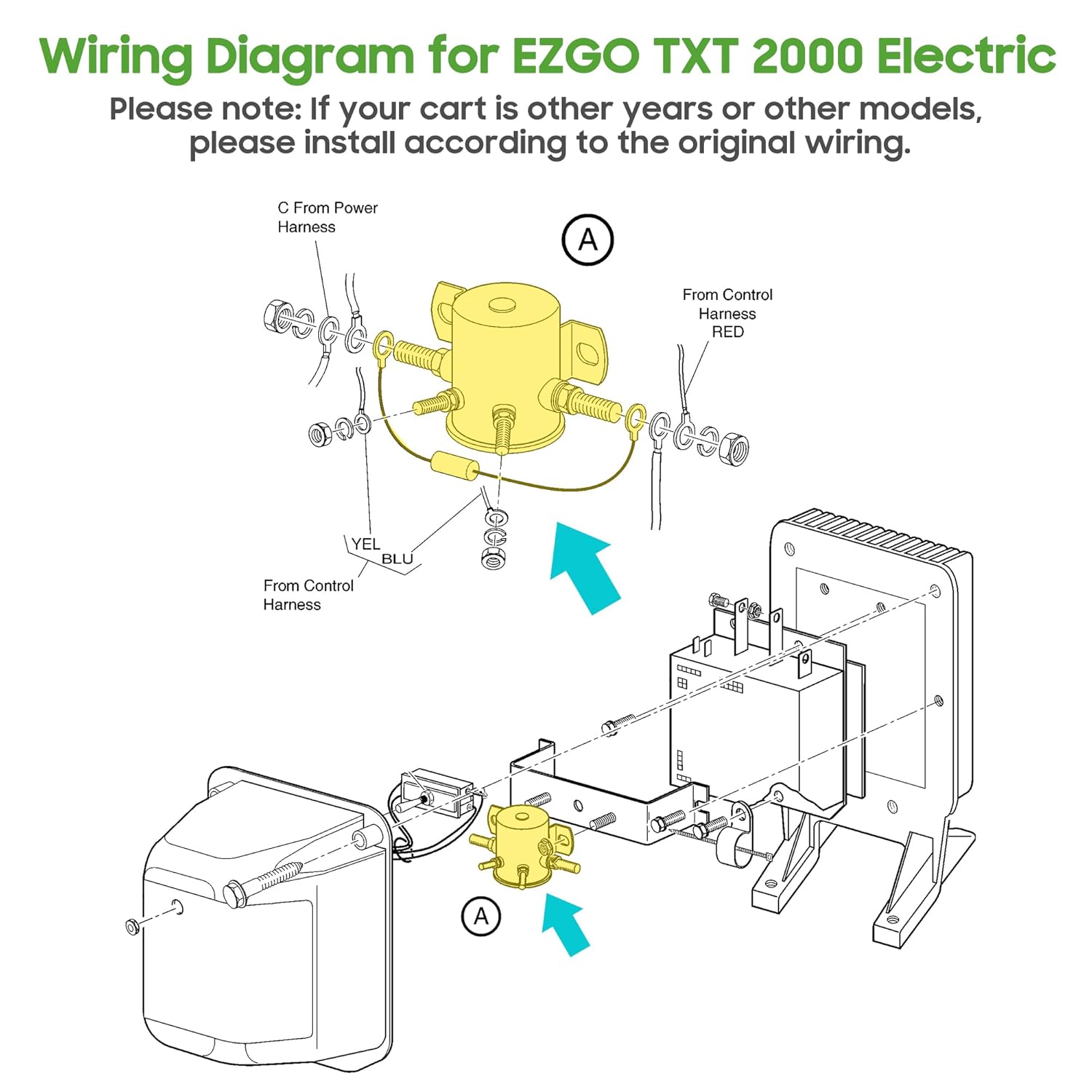
The solenoid acts as a heavy-duty switch that sends battery power to the starter motor. When you press the accelerator, you should hear a single, solid click.
No Click Means Power Is Not Reaching the Solenoid
If pressing the pedal produces silence, suspect one of these issues:
- Battery voltage is too low (recheck your multimeter reading)
- The ignition switch is faulty
- The solenoid has failed internally
- Wiring is loose, corroded, or damaged
Use a test light or multimeter to check for power at the solenoid’s small control terminals when the pedal is pressed. No voltage means you must trace the circuit back to the key switch and pedal microswitches.
Click Without Start Points Downstream
A clear click means the solenoid is activating properly. If the engine still will not turn over, the problem lies past the solenoid. Focus next on the starter motor or the main power cables running between them.
Confirm Voltage at the Solenoid Output
Set your multimeter to DC voltage and have a helper press the accelerator. Probe the large output terminal that feeds the starter motor. You should see full battery voltage (12V or more).
If voltage is present, the solenoid is doing its job. If there is no voltage, the solenoid is bad. Replacement solenoids cost around $30 and typically take 10 minutes to swap out.
Diagnose the Starter Motor Directly
When the battery is strong and the solenoid clicks, the starter motor becomes the prime suspect. You can confirm this with a direct jump test.
Bypass the System with a Screwdriver
This test sends battery power straight to the starter, skipping every switch and relay:
- Disconnect the small control wires from the starter.
- Use an insulated screwdriver to briefly bridge the main battery cable terminal to the starter input terminal.
- If the starter spins, it is functional and the problem is upstream.
- If nothing happens, the starter motor is faulty.
Caution: This step creates a spark. Confirm the cart is in neutral and keep hands, clothing, and bystanders clear of the wheels.
Recognize the Warning Signs of a Bad Starter
A failing starter often announces itself before it dies completely. Look for these symptoms:
- Grinding or screeching noises when turning the key
- A burnt smell near the motor housing
- Intermittent starting that works one day and fails the next
- Visible corrosion or melted insulation on the terminals
Worn brushes, a seized gear, or a burnt armature will prevent the motor from engaging. Once these failures appear, replacement is the only reliable fix.
Install a Replacement Starter
Most starters for the 2021 EZGO TXT are direct-fit units. Expect to pay between $80 and $150 for the part. Swap the unit by unbolting the old motor, transferring any brackets or spacers, and reconnecting the cables. Test the cart before buttoning everything up.
Verify Key Position and Safety Interlocks
Even with a strong battery and a working solenoid, safety switches can block startup. These interlocks protect you, but they can also leave you stranded when they malfunction.
Confirm the Cart Is in Neutral
The EZGO TXT will not start unless the transmission is in neutral. Rock the cart slightly forward and backward while pressing the pedal to help the switch seat properly. If it starts in neutral but not in drive or reverse, the forward/reverse switch likely needs cleaning or realignment.
Use the Accessory-First Trick
Turn the key to the accessory position and hold it there for 5 to 10 seconds. This powers up the controller and can clear minor software faults. Then rotate to run and press the accelerator. Many intermittent starting issues disappear after this simple reset.
Test Microswitches and the Seat Sensor
Several small switches must engage before the cart will move:
- The brake pedal microswitch must close when pressed
- The seat sensor requires a driver to be seated on some models
- The reverse buzzer switch can interrupt the circuit if faulty
You can bypass each switch temporarily with a jumper wire to test it. If the cart starts with a switch bypassed, that switch needs cleaning, adjustment, or replacement.
Jump-Start the Cart to Confirm Battery Health
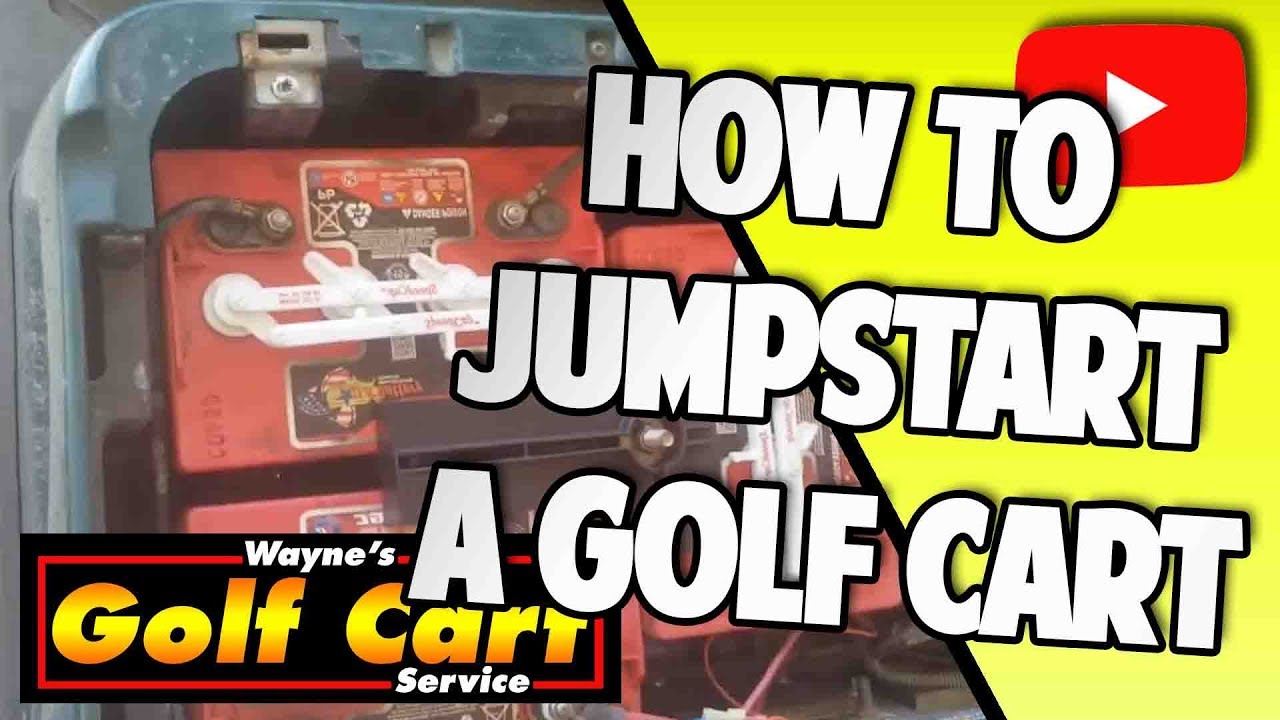
If you are still unsure whether the battery is the problem, perform a controlled jump-start using a known-good 12V source.
Follow These Jump-Starting Steps
- Position a known-good 12V battery nearby, either from another cart or a vehicle.
- Connect the red cable to the dead battery’s positive terminal.
- Attach the other red clamp to the good battery’s positive terminal.
- Connect the black cable to the dead battery’s negative terminal.
- Ground the other black clamp to a bare metal chassis point on the cart.
- Wait 2 to 3 minutes for charge transfer.
- Attempt to start the cart.
If the cart starts, the original battery is weak or dead. If nothing changes, the problem is mechanical or deeper in the electrical system.
Warning: Never attempt to jump-start a frozen, cracked, or leaking battery. Also avoid revving the engine, since electric carts have no throttle response in the traditional sense.
Prevent Future No-Start Problems
A little routine maintenance keeps your cart reliable all season long. Most no-start issues are preventable with consistent care.
Maintain Battery Health Year-Round
Build these habits into your regular routine:
- Charge the cart after every use and never let voltage drop below 50%
- Use a smart charger that stops automatically when full
- Clean the terminals monthly with a baking soda and water solution
- Check fluid levels in flooded lead-acid batteries every 60 days
Inspect Electrical Connections Seasonally
Every three months, walk through the wiring and tighten anything that has loosened. Look closely for frayed wires, cracked insulation, or green corrosion on terminals. Apply dielectric grease to all major connections to block moisture and oxidation.
Schedule Pre-Season Checkups
Before busy weekends or heavy use, run through a quick diagnostic:
- Test battery voltage and charge state
- Listen for a clean solenoid click
- Lubricate moving parts and inspect cables
- Check tire pressure and brake function
A 15-minute checkup can prevent hours of roadside frustration later.
Know When to Call a Professional
Some problems go beyond the scope of basic DIY repair. Recognizing them early saves you time and prevents further damage.
Seek a Technician for These Situations
Call a certified EZGO technician if any of the following apply:
- You have tested the battery, solenoid, and starter with no resolution
- The controller displays error codes or unusual blinking lights
- You notice burnt wiring or melted plastic components
- The motor produces visible sparks or a smoke smell
Certified technicians have access to proprietary diagnostic software and replacement parts that go beyond standard repair work.
Compare Repair Costs to Cart Value
Use this quick reference when deciding whether to repair or replace:
- Battery replacement runs $100 to $200
- Solenoid replacement costs $25 to $40
- Starter motor replacement falls between $80 and $150
- Controller or motor rebuilds can exceed $300
When repair costs approach half the cart’s value, upgrading to a newer model often makes better financial sense.
Frequently Asked Questions About Golf Cart Starting Problems
Why does my golf cart click but will not start?
A single click usually means the solenoid is engaging but power is not reaching the starter motor. The most common causes are a weak battery, corroded cables, or a failing starter motor. Test the battery voltage first, then inspect the main cables for corrosion.
Can a golf cart battery be too dead to jump-start?
Yes. A battery that has sat below 10 volts for weeks may have suffered permanent damage. If the cart does not respond to a jump-start and the battery reads below 10 volts, replacement is likely the only option.
How long should an EZGO TXT battery last?
With proper care, a quality lead-acid battery lasts 3 to 5 years. AGM batteries often reach 5 to 7 years. Frequent deep discharges, extreme temperatures, and skipped maintenance shorten lifespan significantly.
Is it safe to bypass the solenoid on a golf cart?
Bypassing the solenoid for testing is safe when done briefly with insulated tools and the cart in neutral. However, never drive the cart with the solenoid bypassed, since this removes a critical safety control.
What does it mean if the reverse beeper works but the cart will not move?
The reverse beeper draws very little power, so a working beep only confirms the battery has some charge. It does not guarantee enough voltage to run the starter motor. Always perform a full voltage test before assuming the battery is healthy.
Final Thoughts on Getting Your EZGO TXT Running Again
A golf cart that will not start is almost always fixable with basic tools and a logical approach. In most cases, the culprit is a low battery or a worn solenoid, both of which take less than 30 minutes to diagnose and replace. By working through the battery, solenoid, starter motor, and safety switches in order, you can identify the problem without wasting time or money on guesswork.
Your next step is simple: grab your multimeter, check the battery voltage, and follow this guide from top to bottom. Within an hour, you will likely have your 2021 EZGO TXT back on the course, the path, or the driveway. Keep this guide saved for future troubleshooting, and your cart will stay reliable for many seasons to come.





