
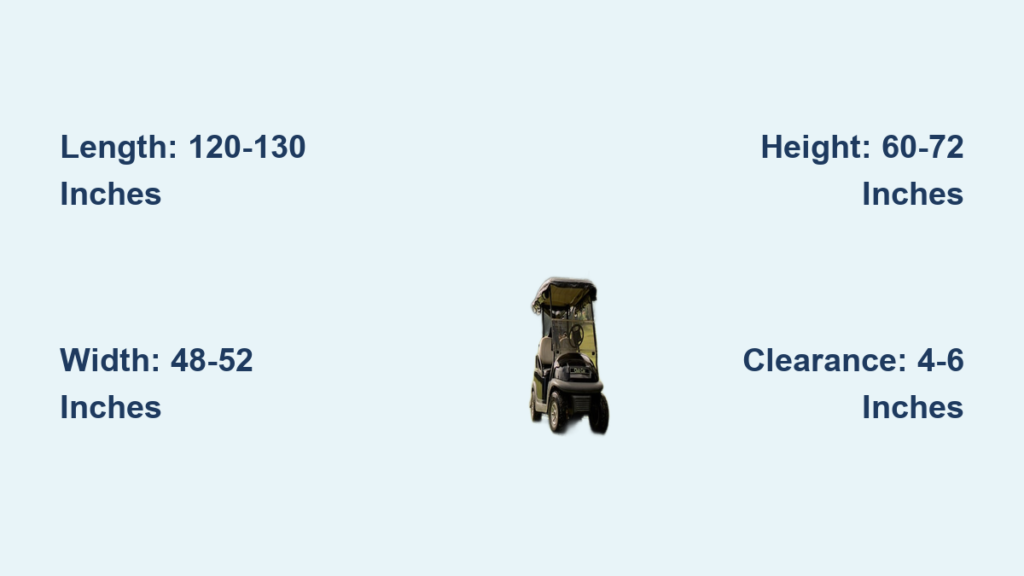
If you’re shopping for a golf cart, storing one, or planning to transport it, knowing the average golf cart dimensions is essential. Whether you’re navigating tight garage spaces, building a custom enclosure, or considering modifications, understanding standard size ranges helps avoid costly mistakes. While models and manufacturers vary, most gas and electric golf carts follow similar dimensional patterns.
This guide breaks down the typical length, width, height, and ground clearance across 2-, 4-, and 6-passenger carts. You’ll also learn how seating configurations, roof types, and added accessories impact overall size. By the end, you’ll know exactly what to measure and expect, whether for storage, hauling, or off-course use.
Standard Length by Seating Capacity

Golf cart length depends primarily on the number of seats. Manufacturers design each model to balance passenger space with maneuverability.
2-Passenger Cart Length
Most 2-seater golf carts range from 94 to 105 inches long (7.8 to 8.75 feet). These compact models are ideal for solo riders or couples and fit easily in standard garages. The shorter frame enhances agility on narrow paths and makes them popular for residential communities and small properties.
4-Passenger Cart Length
A typical 4-passenger golf cart measures 120 to 130 inches long (10 to 10.8 feet). This is the most common size for both recreational and utility use. The extended chassis accommodates two rows of seating while maintaining a tight turning radius.
6-Passenger Cart Length
Larger 6-seaters stretch between 140 and 160 inches long (11.7 to 13.3 feet). These are often used in resorts, large estates, or for family recreation. Their increased length requires wider driveways and more parking space.
Pro Tip: Always measure your storage or transport area before purchasing. Add at least 6 inches of clearance on each end for safety and ease of access.
Typical Width Measurements

Width affects where a golf cart can travel, especially through gates, garage doors, or wooded trails.
Base Width Without Mirrors
The average golf cart is 48 inches wide (4 feet) from wheel well to wheel well. This standard width allows carts to fit on most golf course paths and residential sidewalks. Some narrow utility models may be as slim as 42 inches, while lifted or off-road versions can reach 52 inches.
With Mirrors Extended
When side mirrors are installed, total width increases by 6 to 12 inches. Foldable mirrors help reduce this footprint, but always account for mirror span when planning passage through tight spaces.
Garage Fit Guidelines
A standard single-car garage door is 9 feet wide. With wall clearance, this allows room for a golf cart plus mirrors. However, if your door is smaller than 8 feet, verify cart width with accessories included.
Average Height Variations
Height determines garage clearance, carport fit, and overhead obstacle navigation.
Roofless Cart Height
An open-top golf cart typically stands 48 to 54 inches tall (4 to 4.5 feet). This includes seat height and roll bar but no roof or enclosure. These models offer easy entry and a breezy ride.
With Factory Roof Installed
Adding a standard factory roof raises the cart to 60 to 72 inches tall (5 to 6 feet). Full-length canopies or hardtops fall in this range. Always measure ceiling height before parking indoors.
Lifted or Modified Carts
Carts with lift kits or oversized tires can exceed 80 inches (6.7 feet). Combine that with a roof, and you may need a high-clearance garage or covered parking structure.
Warning: Don’t forget to measure with any cargo racks, light bars, or antennas installed. These can add several inches.
Ground Clearance and Tire Impact

Ground clearance affects where a golf cart can go, especially on uneven terrain.
Standard Clearance Range
Most stock golf carts have 4 to 6 inches of ground clearance. This is sufficient for paved paths, grass, and packed dirt. Lower-clearance models may scrape on speed bumps or curbs.
Off-Road and Lifted Models
Lifted carts often feature 8 to 10 inches of clearance. These are designed for trails, sandy beaches, or rural properties. Larger tires (up to 23 inches in diameter) contribute to the increased height.
Tire Size Influence
Stock tire diameter ranges from 16 to 18 inches. Upgraded all-terrain or all-season tires can grow to 20–23 inches, altering both ground clearance and overall cart height.
Wheelbase and Turning Radius
These specs affect stability, ride comfort, and maneuverability.
Average Wheelbase Length
The wheelbase, or the distance between front and rear axles, typically ranges from:
– 2-Passenger: 60–70 inches
– 4-Passenger: 80–90 inches
– 6-Passenger: 100–110 inches
A longer wheelbase improves ride smoothness but reduces agility.
Turning Radius Insights
Most golf carts have a turning radius of 10 to 14 feet. This allows tight U-turns and easy navigation around trees or obstacles. Electric models often have slightly tighter turning circles due to motor placement.
Weight and Payload Considerations
Size isn’t just about dimensions. Weight impacts transport and performance.
Empty Cart Weight
- Electric 4-seater: 900–1,100 lbs
- Gas-powered 4-seater: 1,000–1,300 lbs
- 6-passenger models: Up to 1,500 lbs
Electric carts are heavier due to battery packs, usually located under the seat.
Payload Capacity
Average payload ranges from 600 to 800 pounds. This includes passengers, cargo, and accessories. Exceeding this limit strains the motor, reduces battery life, and increases stopping distance.
Expert Note: Always check manufacturer specs. Payload varies widely between brands like Club Car, EZ-GO, and Yamaha.
Cargo Bed Dimensions (Utility Models)
Utility golf carts include rear beds for hauling gear, tools, or supplies.
Standard Bed Size
Most utility beds measure:
– Length: 40–50 inches
– Width: 36–42 inches
– Depth: 10–14 inches
These can carry lawn equipment, groceries, or construction materials.
Fold-Down Tailgate
Many models feature a hinged tailgate for easy loading. When down, it extends usable length by up to 12 inches.
Weight Limits for Beds
Cargo beds typically support 300 to 500 pounds. Reinforced models may handle more, but always confirm with the manufacturer.
Interior and Seating Space
Comfort matters, especially on longer rides.
Seat Width per Person
Each seat averages 18 to 22 inches wide. Bench seats are common, with dividers or armrests in premium models.
Legroom and Knee Clearance
Front-row legroom ranges from 36 to 42 inches. Second and third rows may offer slightly less, depending on wheelbase.
Entry and Exit Ease
Low step-in height (around 12–14 inches) makes boarding simple. However, lifted models may require steps or footrails.
How Accessories Change Dimensions

Aftermarket parts can significantly alter a cart’s footprint.
Common Add-Ons That Add Width
- Side mirrors: +3 to 6 inches per side
- Light bars: +2 to 4 inches
- Rock sliders or nerf bars: +4 to 8 inches
Always remeasure after installing accessories.
Height-Adding Modifications
- Roof racks: +6 to 10 inches
- Antennas: +12 to 24 inches
- Windshields with wipers: +2 to 4 inches
These affect garage fit and wind resistance.
Length Extensions
Some owners add rear cargo racks or hitch-mounted carriers, extending length by 12 to 24 inches. This impacts parking and turning dynamics.
Transport and Storage Tips
Knowing dimensions helps you plan safe transport and storage.
Trailer Size Recommendations
- 2-4 Passenger Cart: 5′ x 10′ trailer (minimum)
- 6-Passenger or Modified Cart: 6′ x 12′ or larger
Ensure the trailer has enough width (at least 52 inches) and tie-down points.
Indoor Storage Clearance
Allow at least:
– 6 inches front and back
– 4 inches on each side
– 6 inches above (especially with roof or racks)
Measure ceiling height, door width, and any obstructions like pipes or lights.
Outdoor Parking Considerations
Use a breathable cover to protect against sun, rain, and debris. Avoid vinyl covers that trap moisture and promote rust.
Frequently Asked Questions About Golf Cart Dimensions
What is the average length of a 4-passenger golf cart?
The average 4-passenger golf cart measures between 120 and 130 inches long (10 to 10.8 feet). This is the most common size for personal, recreational, and utility use.
How wide is a standard golf cart with mirrors?
A standard golf cart is about 48 inches wide without mirrors. With side mirrors installed, total width increases by 6 to 12 inches, depending on the mirror style and mounting position.
How tall is a golf cart with a roof?
A golf cart with a factory roof typically measures 60 to 72 inches tall (5 to 6 feet). Lifted or modified carts with roofs can exceed 80 inches in total height.
What is the ground clearance of a typical golf cart?
Most stock golf carts offer 4 to 6 inches of ground clearance. Lifted or off-road models may provide 8 to 10 inches, depending on tire size and suspension setup.
How much does an average 4-passenger golf cart weigh?
An electric 4-passenger cart weighs between 900 and 1,100 lbs, while a gas-powered model ranges from 1,000 to 1,300 lbs. 6-passenger carts can weigh up to 1,500 lbs depending on configuration.
What trailer size do I need to haul a golf cart?
A 2- to 4-passenger cart fits on a 5′ x 10′ trailer at minimum. For a 6-passenger or modified cart, use a 6′ x 12′ trailer or larger to ensure safe loading and transport.
Key Takeaways for Measuring Your Golf Cart
Understanding average golf cart dimensions helps you plan for storage, transport, and modifications. Standard 4-passenger carts measure around 120 to 130 inches long, 48 inches wide, and 60 to 72 inches tall with a roof. Tire size, lift kits, and accessories can shift these numbers significantly, so always measure your specific model before purchasing enclosures, trailers, or garage space.
Your next step is simple: grab a tape measure and check your intended storage or transport area against the dimensions listed above. Add a few inches of clearance on every side for safety, and account for any mirrors, racks, or lift kits already installed. With accurate numbers in hand, you’ll avoid costly surprises and enjoy a perfect fit from day one.





