
You turn the key, press the gas pedal, and nothing happens. Your golf cart sits silent on the driveway or trail, leaving you stranded. Whether you drive a gas or electric model, knowing how to jump start a golf cart the right way can save your day and protect your equipment from damage.
This guide explains the exact steps for jump-starting a gas golf cart with a portable power bank, why electric carts require a different approach, and how to prevent battery failures in the future. You’ll learn the techniques, warnings, and long-term maintenance habits that keep your cart running reliably.
Gas vs. Electric Golf Carts: Which Do You Own?
Before you attempt any jump-start method, confirm what type of cart you drive. The procedure depends entirely on your power system.
Gas Carts Require Jump-Starting
Gas-powered golf carts rely on a 12V battery to start the engine and support a continuous start-stop system. The engine shuts off when you come to a stop and restarts when you press the gas pedal. This means the battery is always in use, not just for ignition. A weak or dead battery prevents the engine from restarting, even if it ran fine minutes earlier.
Electric Carts Cannot Be Jump-Started
Electric golf carts, such as the 48V EZGO RXV, run on deep-cycle battery packs. These systems do not support traditional jump-starting. If the battery is dead, you must recharge it with a compatible charger. There is no auxiliary power source to provide a quick boost like with gas models.
Jump Starting a Gas Golf Cart With a Power Bank
A portable power bank can revive a dead gas golf cart battery, but you must understand its limitations before relying on this method.
Step-by-Step Jump-Start Procedure
- Attach the power bank to the battery terminals, positive to positive and negative to negative.
- Turn the key to the “On” position and press the gas pedal slightly.
- Start the engine and keep light pressure on the pedal to prevent it from shutting off when you stop.
The drive belt will not engage at idle, so the cart stays stationary but the engine continues running.
Keep the Engine Running After the Boost
- Do not release the gas pedal completely when stopping. Maintain slight pressure to keep the engine alive.
- Drive at normal speed for at least 30 minutes so the charging system can replenish the battery.
- Remove the power bank only after you reach your destination and shut off safely.
One user successfully drove home using this method and reported no further issues once the battery recharged.
Why Power Banks Shut Off Mid-Use
Most power banks include a safety feature that cuts boost power after 15 to 30 seconds if the connected system doesn’t show proper charging. Since golf carts behave differently from cars, the power bank may detect an unstable load and shut down.
Expert Note: Choose a power bank rated for sustained output rather than short bursts. Models meant only for quick engine boosts may fail you mid-drive.
Risks of Jump Starting With a Power Bank
Damage to the Power Bank
The golf cart’s charging system may back-feed current into the power bank, potentially damaging its internal circuitry. These devices are not designed to be charged while supplying power.
Risk of Getting Stranded
If the power bank shuts off and the engine dies, you may not be able to restart without another boost, especially if the battery cannot hold charge.
Not a Long-Term Solution
This method is strictly for emergencies. Using it repeatedly risks damaging both the power bank and the cart’s electrical system.
Alternative Method: Charge With a Battery Charger
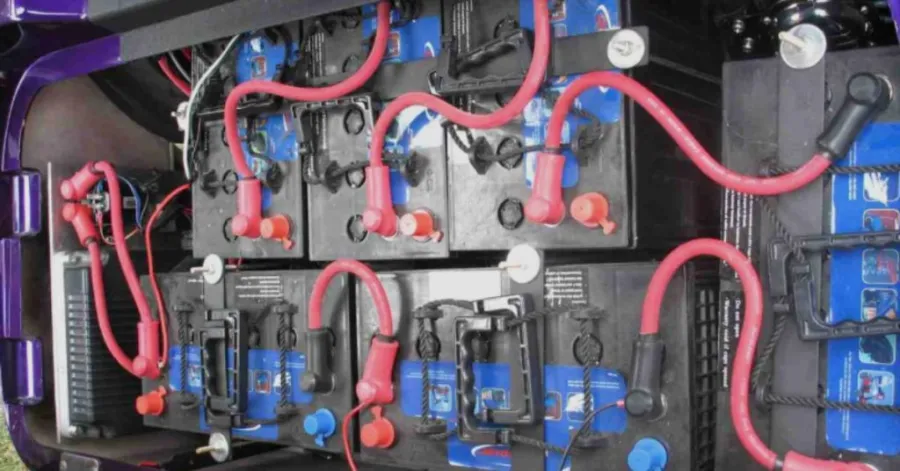
If you have access to AC power, skip the power bank and use a proper charger instead.
Trickle Charging vs. Standard Charging
- Trickle charger or battery tender: Delivers a slow, steady charge. Ideal for maintenance and long-term storage.
- Standard battery charger: Puts charge into the battery faster, usually within a few hours.
One experienced user called a battery tender “money well spent.” It keeps the battery topped off and extends its life, especially during off-seasons.
How to Charge the Battery Properly
- Turn off the cart and disconnect any accessories.
- Connect the charger to the battery, following correct polarity.
- Plug in and allow charging for several hours or overnight.
- Test the battery before driving.
This method avoids the risks of jump-starting and delivers a full, stable charge.
Diagnosing a Weak or Failing Battery

If your cart dies frequently, the battery may be failing, even if it is only two years old.
Watch for Low Battery Codes
A Yamaha gas cart owner reported a low battery code appearing after just one drive, despite a full charge. The battery was two years old and just out of warranty. Testing confirmed the battery was too weak to hold a charge.
Test the Battery Before Replacing
- Have the battery tested at a local shop or with a multimeter.
- A healthy 12V battery should read 12.6V or higher when fully charged and at rest.
- A reading below 12.2V indicates a weak or failing battery.
Replace the battery if testing confirms poor performance.
Finding Parasitic Power Drains
Even small accessories can drain a battery in one to two days if left connected.
Case Study: Sound Bar Drain
A 20W Bluetooth sound bar with a built-in battery was left plugged into a 48V EZGO RXV. It drew power in standby mode and killed the entire system in two days. Any accessory left plugged in, even when “off,” can create a parasitic draw.
Common Accessories That Drain Power
- LED underglow lights
- Aftermarket sound systems
- Digital speedometers and fuel gauges
- Self-cancelling turn signals
How to Prevent Accessory Drain
- Unplug all accessories when the cart is parked.
- Inspect wiring for improper connections or constant draws.
- Install a battery disconnect switch for long-term storage.
This simple habit prevents most unexpected battery failures.
Emergency Backup: Roadside Assistance for Golf Carts
DIY fixes have limits. Plan for real emergencies with a professional service.
Subscribe to Cart Aid or Similar Services
- What it is: A yearly roadside assistance plan designed specifically for golf carts.
- What it covers: Towing, jump-starts, battery replacement, and mechanical help.
- Why it helps: If your battery fails completely or you are far from home, a tow service is the safest option.
One community expert called it “your best bet for a backup,” particularly if you lack experience or tools.
Preventing Future Battery Failures

Avoid getting stranded by building simple maintenance habits into your routine.
Use a Battery Tender Regularly
- Keeps the battery at 100% charge.
- Prevents sulfation, which shortens battery life.
- Safe for long-term use on motorcycles, ATVs, and golf carts.
Plug it in after every use or during storage.
Replace Batteries Proactively
- Most golf cart batteries last three to five years.
- If yours is over two years old and showing weakness, consider replacement.
- Don’t wait for total failure. Weak batteries cause unreliable starts and system errors.
Audit Your Accessories
- Limit aftermarket additions.
- Use only low-draw, auto-shutoff devices.
- Check for heat or corrosion around connection points.
Every watt counts on a small battery system.
Driving Tips After a Successful Jump Start
Once your gas cart is running, drive smart to protect the battery.
Keep Light Pedal Pressure at Stops
- Prevents the engine from shutting off.
- Allows restart without another jump.
- The drive belt won’t engage until RPM increases, so the cart won’t lurch forward.
Drive at Normal Speed for 30 Minutes
- Ensures the alternator recharges the battery.
- Avoid short trips that don’t allow full recharge.
- If the battery is old, it may never recover fully. Plan a replacement soon.
Why Golf Carts Differ From Cars
No Smart Battery Management
Modern cars with auto-stop features block operation if the battery is too weak. Golf carts have no such protection. They will try to run even on a dying battery, leading to sudden shutdowns.
Continuous Battery Demand
In a car, the alternator takes over after startup. In a gas golf cart, the battery stays in the loop at all times. A failing battery means failing performance immediately.
No Standard Jump-Start Procedure
You cannot use jumper cables from a car reliably. The electrical systems differ, and back-feeding can damage either vehicle.
Choosing the Right Method for Your Situation
Use a Power Bank When
- You’re stranded and need a quick boost
- You have a short distance to travel
- You can keep the engine running without stopping
- You understand the 15 to 30 second shut-off risk
Use a Battery Charger When
- You’re at home or near power
- You can wait a few hours
- You want a safe, full charge
- The battery is weak but not dead
Call for Towing When
- The battery is completely dead and won’t hold charge
- You’re far from home
- You don’t have tools or a power bank
- You’re unsure about DIY methods
Replace the Battery When
- It’s over two years old and failing
- It dies after one use despite charging
- It’s out of warranty and tests weak
- You’re tired of repeated jump-starts
Frequently Asked Questions About Jump Starting a Golf Cart
Can I jump start a golf cart with a portable power bank?
Yes, you can jump start a gas golf cart with a power bank. Connect it to the dead battery, start the engine, and maintain slight pressure on the gas pedal to keep the engine running. Drive for about 30 minutes to recharge the battery. Be aware that most power banks shut off after 15 to 30 seconds, and the cart’s charging system may damage the power bank.
Why does my golf cart battery die so quickly?
Common causes include parasitic draws from accessories like sound bars and LED lights, a failing battery that can’t hold a charge, or insufficient charging habits. In one reported case, a 20W sound bar drained a fully charged 48V battery in one to two days.
Can electric golf carts be jump-started?
No, electric golf carts cannot be jump-started like a car. They use deep-cycle battery packs that require recharging with a proper charger. If the battery is dead, connect it to a compatible charger and wait for a full charge.
Is a battery tender worth the investment?
Yes, a battery tender is worth it. It keeps the battery at full charge, prevents sulfation, and extends overall battery life. It works well for golf carts, motorcycles, and other powersports equipment during storage.
How is jump-starting a golf cart different from a car?
Gas golf carts require a functional battery at all times because the engine stops when the cart stops and restarts when you press the accelerator. Cars use an alternator to take over after startup, and modern vehicles have smart systems that block operation when the battery is weak. Golf carts lack these protections.
What should I do if my battery is weak and out of warranty?
Have the battery tested at a local shop or with a multimeter. If it fails to hold a charge, replace it. Consider subscribing to a Cart Aid-type tow service as a backup for emergencies.
Key Takeaways for Jump Starting a Golf Cart Successfully
Jump-starting a golf cart requires understanding your cart’s unique electrical demands. Gas models can be revived with a portable power bank if you maintain light pedal pressure and stay alert to the 15 to 30 second shut-off window. Electric models require a proper charger instead. Either way, regular battery maintenance prevents most emergencies.
Your next step is simple: test your battery today, invest in a quality battery tender, and unplug accessories when your cart is parked. These habits will keep you moving and your battery healthy for years to come.





