
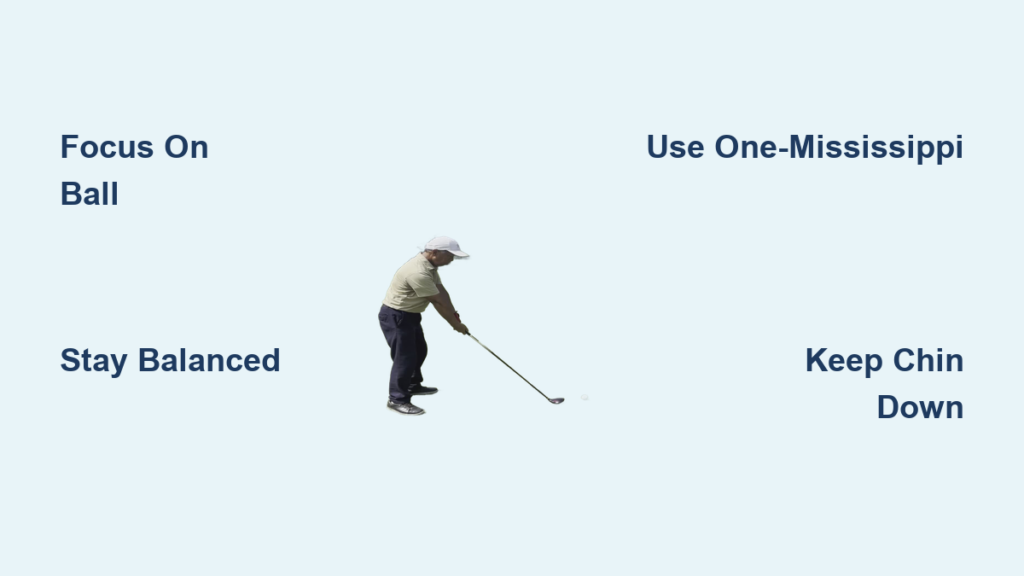
Nothing ruins a solid golf swing faster than lifting your head too soon. When you raise your head before impact, you shift your spine angle, lose balance, and often top the ball or hit it thin. The phrase “keep your head down” is one of the most common cues in golf, but it’s often misunderstood. It doesn’t mean freezing your head rigidly in place. Instead, it’s about maintaining your spine angle and staying centered through impact.
If you’re struggling with inconsistent contact, chances are your head is moving too early. This guide breaks down exactly how to keep your head down in the golf swing using proven drills, posture cues, and swing mechanics. You’ll learn how to stay focused, stable, and in position so you strike the ball cleanly every time.
Focus on the Ball Until After Impact
Lock Your Eyes on the Target Spot
Your eyes play a major role in head movement. If you look up too soon, your head follows. Train yourself to keep your gaze fixed on the back of the ball until well after the club makes contact. A helpful mental cue: imagine reading the logo on the ball through impact. This forces your head to stay down naturally.
Use the One-Mississippi Drill
After contact, silently say “one-Mississippi” before allowing your head to rise. This builds the habit of staying down. Practice this during range sessions, especially with short irons where precision matters most.
Avoid the Look Up Instinct
Many golfers lift their head out of excitement or curiosity, wanting to see where the ball will go. But the ball is already gone by the time you finish the strike. Train patience. Trust that a solid swing produces a good shot, even if you don’t watch it fly immediately.
Maintain a Stable Neck and Upper Body

Keep Shoulders Level Through the Swing
Excessive shoulder tilt or lift during the downswing often pulls the head up. Focus on rotating your shoulders around your spine, not lifting them vertically. Think of your upper body turning like a barrel on an axle, smooth and level.
Relax Your Neck Without Losing Posture
A tense neck can cause jerky movements, but a loose one can lead to swaying. Find a middle ground: keep your neck relaxed but aligned with your spine. Imagine a golf ball balanced on the crown of your head. Don’t let it roll off during the swing.
Check for Sway and Slide
Use video analysis to spot unwanted lateral head movement. In a proper swing, your head should stay relatively still, especially from address to impact. If it shifts toward the target, you’re likely losing spine angle and compromising contact.
Use a Forward Press to Stabilize Your Start
Shift Weight Slightly Forward
Before starting your backswing, make a small forward press. Shift about 60% of your weight to your front foot and press the club handle slightly forward. This engages your core and anchors your upper body, reducing the urge to lift or sway.
Sync Hands and Shoulders
The forward press should be a unified move with hands and shoulders working together. Avoid just moving the club. The entire upper body should initiate the motion smoothly. This sets a stable foundation for a repeatable swing.
Prevent Early Extension
A proper forward press helps delay early extension, a common fault where the hips slide forward too soon and force the head up. By starting with a slight forward lean, you encourage rotation over sliding.
Keep Your Chin Down and Eyes Level
Position Your Chin Away from Your Chest
At address, your chin should be slightly up, just enough to allow free neck rotation but not lifted high. A good check: you should be able to see the ball clearly with both eyes without tilting your head.
Avoid Peeking During Follow-Through
Many golfers lift their chin during the follow-through, breaking posture. Instead, let your head turn naturally with your body rotation. Your chin should rise only as a result of turning, not lifting.
Use the String Pull Cue
Imagine a string attached to the top of your head, gently pulling you upward throughout the swing. This helps maintain spine angle and prevents hunching or lifting. It promotes a tall, athletic posture from start to finish.
Train with Mirrors and Video Feedback
Record Your Swing from the Side
Use your phone or a swing app to record a side view. Look specifically at head height from address to follow-through. If your head rises more than one to two inches before impact, you’re likely lifting too soon.
Compare to Pro Swings
Watch slow-motion videos of tour players and notice how their heads stay relatively stable through impact. Overlay your swing using video tools to spot differences in head movement.
Set Up a Home Mirror Drill
Stand in front of a full-length mirror and go through your swing slowly. Focus on keeping your left shoulder (for right-handed golfers) under your chin during the backswing. If your chin moves over your shoulder, your head is likely lifting.
Use Alignment Sticks for Real-Time Feedback

Place a Stick Across Your Shoulders
Rest an alignment rod or club across your shoulders, just below the neck. As you swing, ensure the stick stays level and doesn’t rise prematurely. This gives instant feedback if your head is lifting or your shoulders are tilting.
Add a Head-Height Barrier
Set up a pool noodle or head-height training gate just behind your head. If you lift or sway back, you’ll hit it. This creates muscle memory for staying centered and down through impact.
Practice Slow-Motion Swings
With the alignment stick in place, perform half-swings at 50% speed. Focus on rotation, not power. This builds neuromuscular control and reinforces proper head positioning.
Swing with a Smooth, Controlled Tempo
Avoid Rushing the Downswing
A jerky or rushed transition often causes the head to rise as the body tries to catch up. Focus on a smooth backswing and a gradual shift into the downswing. Count “one-two” in your head to maintain rhythm.
Use the Metronome Drill
Set a metronome app to 60 to 70 BPM. Sync your backswing to the first beat and downswing to the second. This trains consistent tempo and reduces the urge to lift your head out of timing issues.
Prioritize Balance Over Power
If you’re off-balance at the end of your swing, your head likely moved. Finish in a balanced, controlled position with your head behind the ball and weight on your front foot. Power comes from rotation, not head movement.
Strengthen Core and Postural Muscles
Build Stability with Planks
A weak core leads to postural collapse during the swing. Do front planks (3 sets of 30 to 60 seconds) and side planks to build endurance in your abdominal and oblique muscles.
Add Rotational Exercises
Medicine ball throws and cable rotations mimic golf swing mechanics while building strength. Perform 3 sets of 10 reps, focusing on controlled rotation from the core.
Improve Hip and Spine Mobility
Tight hips or lower back can force your upper body to compensate, often by lifting the head. Incorporate daily stretches like the 90/90 hip stretch and cat-cow to maintain mobility.
Practice with Purpose Every Day
Dedicate 10 Minutes Daily to Head-Down Drills
Set aside focused practice time. Hit balls using only one cue: “stay down.” Combine this with the one-Mississippi rule or alignment stick feedback. Repetition builds consistency.
Use the Towel Drill
Tuck a small towel under both armpits and make swings without dropping it. This promotes connected arms and a stable upper body, making it harder to lift your head.
Track Progress Weekly
Record your swing every week. Measure improvements in head stability, ball contact, and shot consistency. Celebrate small wins like hitting more solid irons or reducing topped shots.
Frequently Asked Questions About Keeping Your Head Down in Golf
Why do I keep lifting my head in my golf swing?
Most golfers lift their head out of habit or excitement to watch the ball fly. Others do it because of poor posture, weak core muscles, or a rushed tempo. Practicing eye focus drills and strengthening your core can correct this common fault.
Does keeping your head down help you hit the ball better?
Yes. Keeping your head down helps maintain your spine angle through impact, which leads to cleaner contact, more consistent ball striking, and better trajectory. It also improves balance and reduces topped or thin shots.
How long should I keep my head down after hitting the ball?
Your head should remain down until at least after impact. A good rule is to count “one-Mississippi” before lifting your head. This ensures you’ve completed the strike and follow-through before shifting your gaze.
What is the best drill to keep your head down in golf?
The one-Mississippi drill and the alignment stick drill are two of the most effective. The first trains patience after impact, while the second gives instant physical feedback if your head lifts or tilts during the swing.
Can keeping your head down too much hurt your swing?
Yes. Keeping your head completely frozen can restrict rotation and reduce power. The goal is stability, not stiffness. Your head should stay still through impact but turn naturally with your body during the follow-through.
Should I look at the ball or the target when swinging?
Focus on the ball at address and through impact. You can shift your eyes to the target during the follow-through, but only after contact has been made. Looking up too soon is one of the main causes of inconsistent contact.
Final Thoughts on Keeping Your Head Down in Your Golf Swing
Keeping your head down in the golf swing isn’t about stiffness. It’s about stability. By focusing on spine angle, eye control, and core strength, you’ll maintain proper posture and strike the ball with confidence. Combine mental cues like the one-Mississippi count with physical training aids such as alignment sticks and towels. Within weeks, staying down will feel natural. The result is cleaner contact, better trajectory, and more consistent scores on the course.
Start your next practice session with just one cue: stay down. Hit 20 balls using only that thought, and build from there.





