
You’ve hit bucket after bucket at the range. Yet your scores stay stuck. Most golfers practise hard but improve slowly because they’re reinforcing mistakes instead of building new skills. Learning how to practise golf the right way transforms mindless hitting into measurable progress.
The difference between endless range sessions and real improvement comes down to three things: purpose, feedback, and progression. Whether you shoot in the 90s or chase single digits, structured practice produces faster results than volume alone. Below, you’ll learn how to organise your sessions, avoid common training traps, and focus on the skills that actually lower scores.
Build a Functional Swing Before Adding Details
Your swing is only as strong as its foundation. Many golfers obsess over hand positions or quick fixes while ignoring the body mechanics that drive consistency.
Focus on Swing Plane and Body Motion First
A reliable swing starts with proper body mechanics, not arm and hand manipulation. Shoulder plane and pivot form the backbone of an efficient swing. When these elements break down, no grip adjustment can save the shot.
One experienced player found that drilling a functional swing plane, one that mirrors his full swing, produced immediate improvements in ball striking. Unlike artificial drills, this approach reinforces correct motion under realistic conditions. Tools like the Mevo+ add value by showing club path and face angle data in real time, so you can confirm adjustments quickly.
Avoid Isolated Arm Drills Without a Stable Base
Drills focusing only on wrists or hands often create disconnected movements. Before working on release or hand path, confirm your foundation is solid:
- Spine angle stays stable through the swing
- Shoulder turn matches your swing plane
- Lower body allows a full pivot
Once your body moves in sync, arm and hand positions fall into place naturally.
Stop Hitting Balls Without Feedback

Hitting 100 balls without a feedback loop reinforces whatever you’re already doing, flaws included. You can’t improve what you can’t measure.
Use Tools That Reveal the Truth
Feedback tools expose issues invisible to feel. Consider these options:
- Impact tape or foot spray shows exactly where the clubface strikes the ball
- Launch monitors deliver data on path, face, spin, and strike quality
- Video analysis reveals alignment, posture, and swing flaws
- A mirror or smartphone recording provides free visual feedback
Even basic tools catch errors your body has learned to ignore.
Break the Swing Into Manageable Phases
Trying to fix everything at once overwhelms your brain and stalls progress. Instead, work through these phases one at a time:
- Takeaway – Is the club on plane?
- Backswing – Is your pivot full and stable?
- Transition – Are you shifting weight correctly?
- Downswing – Is the club delivering on path?
- Impact – Are you striking the ball first?
- Follow-through – Is your body balanced at finish?
Set micro-goals for each session. For example: “Today I’ll focus only on a smooth takeaway for 15 swings.” Targeted work creates lasting change faster than unfocused hitting.
Train with Deliberate Practice
Deliberate practice means purposeful, structured training designed to build new neural pathways. It’s different from casual repetition because every rep has a specific goal.
Exaggerate Correct Movements to Retrain Your Brain
When learning a new motion, exaggeration accelerates learning. Training aids like the Prosendr help you feel the correct path. If you tend to swing over the top, exaggerate an inside takeaway to reprogram your motor patterns.
The goal isn’t to swing that way on the course. It’s to feel the correction so your natural swing drifts toward ideal.
Start Slow, Then Build Speed Gradually
Speed hides flaws. Slowing your swing during practice reveals inconsistencies and builds accuracy. Begin with half or three-quarter swings focused on clean mechanics.
Once you’re consistent at lower speeds, gradually add speed and length. This sequence builds muscle memory correctly: accurate first, fast later.
Master Setup, Alignment, and Grip Every Session
Even a great swing collapses without proper fundamentals. Be meticulous with these basics:
- Grip pressure – Firm but relaxed, not tense
- Stance width – Shoulder or hip width, depending on the club
- Ball position – Adjust by club (middle for 7-iron, forward for driver)
- Alignment – Lay a club on the ground to check foot, hip, and shoulder lines
Practise these fundamentals every session. They form the base of every solid shot.
Prioritise Full Swings for Lower Scores

Here’s a truth many golfers resist: full swings have roughly twice the scoring impact of short game shots. That doesn’t mean ignore the short game. It means allocate your hours wisely.
Why the Long Game Drives Score Reduction
A simple thought experiment illustrates this: a pro hitting only full shots would still beat an 80-shooter playing only short game shots. Drives and approach shots set up scoring chances. Even elite players scramble successfully only about 60% of the time, so relying on recovery is a losing long-term strategy.
Focus on Long Irons and Driver Accuracy
Long iron consistency separates good players from great ones. Hitting a 5-iron from 180 yards onto the green beats scrambling from the rough every time.
Spend around 75% of practice time on full swings, especially:
- Mid to long irons (5-iron, 7-iron)
- Driver accuracy and contact
- Fairway woods off the deck
This focus builds the foundation for sustained score improvement.
Practise the Short Game Smarter
Short game still matters. Just allocate it efficiently and practise with realistic feedback.
Use the 80/20 Time Split
A practical split for most players: 80% full swing, 20% short game. This balance supports long-term improvement while delivering immediate scoring gains.
Use your short game time on:
- Chip-and-run shots – Low, rolling approaches
- Pitch shots – Higher, softer landings
- Bunker shots – Focus on consistent sand entry
- Pressure putting – Practise 3 to 6 footers with consequences
Create Realistic Practice Conditions
Simulate real feedback whenever possible. One player practises chips in his backyard with real balls to hear the “click” of clean contact. Another uses a carpeted hallway and a Rukket net for indoor short game sessions.
Sound, roll, and strike quality from real setups teach your hands and ears better than foam balls or artificial mats.
Get External Feedback to Avoid Reinforcing Bad Habits
Practice makes permanent, not perfect. If you’re ingraining poor form without knowing it, you’re moving backward.
Work With a Coach or Observant Peer
Even professionals rely on coaches. A second set of eyes catches flaws your body has normalised. Options include:
- A certified instructor for periodic lessons
- A skilled playing partner who understands swing mechanics
- Video analysis using your phone or a dedicated app
Recorded swings reveal alignment and posture issues that feel invisible mid-motion.
Join a Structured Programme for Accountability
Structured programmes provide weekly drills, progress tracking, and feedback loops. One player joined a Premium YouTube coaching protocol and saw immediate score improvement after just two days. External structure keeps you accountable and focused on the right skills.
Track Progress and Adjust Your Approach
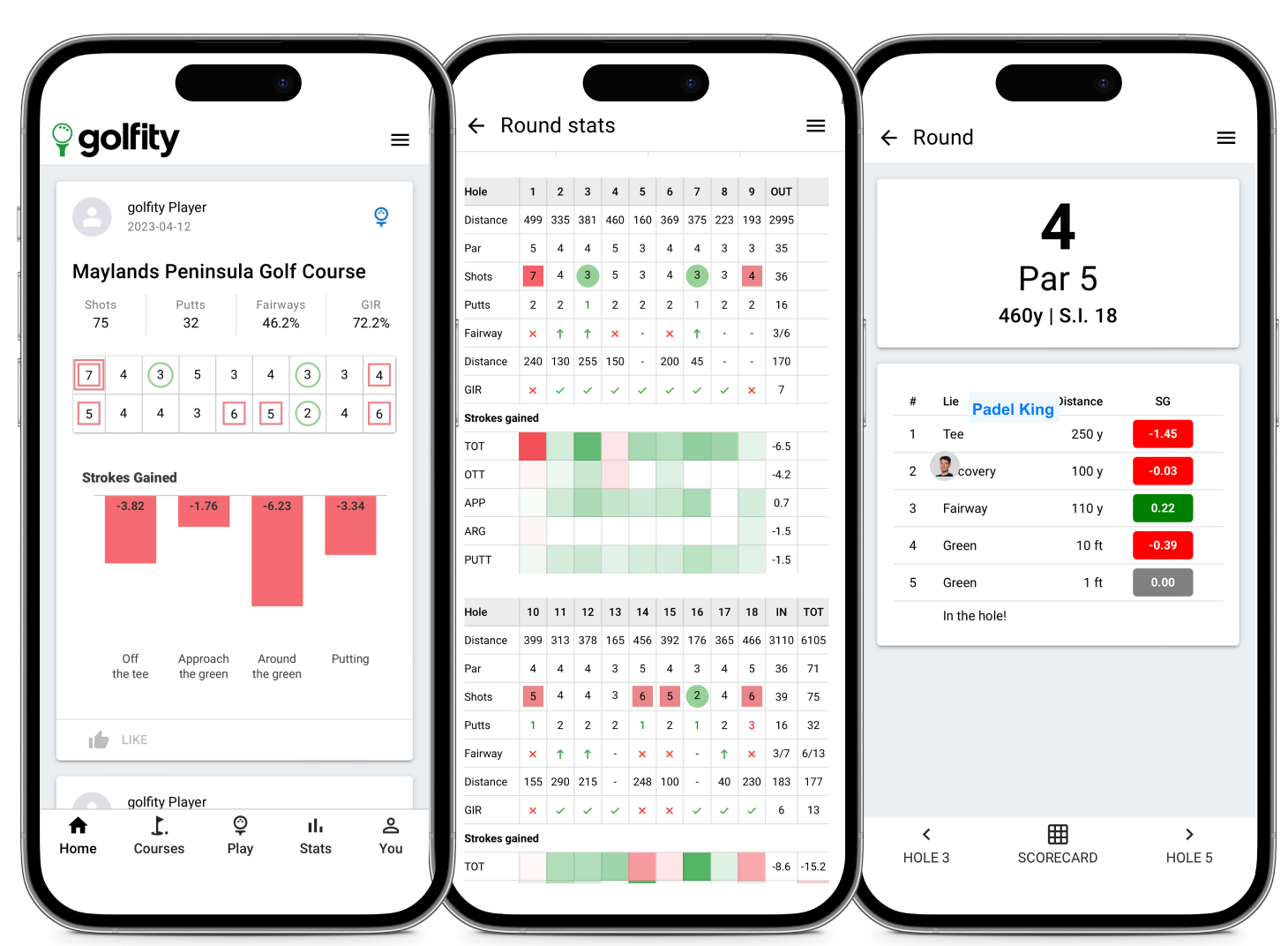
Improvement rarely follows a straight line. Without tracking, you can’t tell what’s working.
Measure Key Metrics Over Time
Log these data points regularly:
- Ball striking consistency – Percentage of fairways hit
- Proximity to hole – Average distance from pin on approach shots
- Scrambling success rate – Percentage of up-and-down saves
- Putting average – Putts per round
Use a notebook or golf app to record practice sessions and round results.
Reassess Your Plan Every 4–6 Weeks
If results stall, change your approach. You may be overworking the driver while neglecting irons. Or your short game drills may lack realism. Stay flexible and adjust based on data, not feelings alone.
Final Tips for Sharper Practice Sessions
Choose Training Aids That Reinforce Correct Motion
Alignment sticks, swing planes, and impact bags help when they support sound mechanics. Avoid aids that force artificial positions unrelated to your real swing.
Add Pressure to Build Mental Toughness
Simulate pressure during practice to prepare for the course:
- Bet yourself $1 on making five putts in a row
- Play up-and-down challenges with consequences
- Set time limits for drills to create mild stress
Pressure training builds resilience for tournament rounds or competitive play.
Rest and Recover Between Sessions
Over-practicing leads to fatigue and sloppy habits. Schedule rest days so your body and brain can consolidate new motor patterns. Recovery is part of improvement.
Frequently Asked Questions About How to Practise Golf
What’s the best way to practise golf alone?
Focus on short, structured sessions with clear goals. Use feedback tools like impact tape, a launch monitor, or video recording. Practise one swing phase at a time, simulate short game shots in your backyard, and track results in a notebook.
How often should I practise golf each week?
Three to four focused sessions per week beats daily mindless hitting. Quality matters more than volume. Include rest days to let your body recover and your brain absorb new motor patterns.
Should I spend more time on full swings or short game?
For long-term scoring improvement, prioritise full swings. Most players benefit from an 80/20 split, with 80% on full swings (especially long irons and driver) and 20% on short game and putting.
How long does it take to see improvement from better practice?
Many players notice changes within one to two weeks of structured, feedback-driven practice. Sustained improvement typically shows in scores after four to six weeks of consistent, deliberate work.
Do I need a coach to practise golf effectively?
A coach accelerates progress, but isn’t strictly necessary. Video analysis, launch monitors, and structured online programmes can provide similar feedback. External observation is critical either way, since self-assessment misses many swing flaws.
What’s the biggest mistake golfers make during practice?
Hitting balls without feedback or goals. This reinforces existing flaws rather than building new skills. Always practise with a specific intention, measure results, and adjust based on data rather than feel.
Key Takeaways for Practising Golf the Right Way
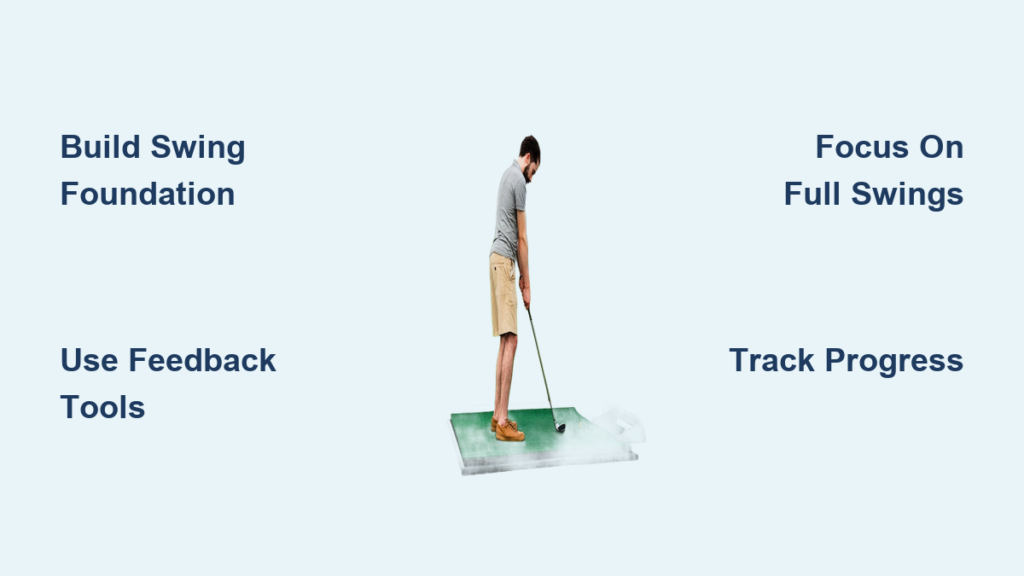
Learning how to practise golf is about working smarter. Build a functional swing foundation before adding details, use feedback tools to expose hidden flaws, and break your swing into phases you can fix one at a time. Prioritise full swings for long-term scoring gains, but practise your short game with realistic conditions and pressure.
Track your progress, adjust every four to six weeks, and never practise alone without a feedback loop. Rest, recover, and stay consistent. Your next step is simple: choose one swing phase to focus on in your next session and measure the results.





