

You’ve probably heard golfers talk about “compressing” the golf ball, especially when describing powerful iron shots that explode off the clubface. But what does it really mean to compress a golf ball with irons, and how can you do it consistently? Compression refers to how efficiently energy transfers from your clubhead to the ball at impact, creating a low, piercing ball flight with maximum speed, control, and spin.
For most amateur golfers, true compression feels elusive. They hit fat shots, thin shots, or top the ball, none of which allow for clean, descending contact. In this guide, you’ll learn the setup, swing mechanics, and drills that help you compress the golf ball like a pro, no matter your swing speed.
Build a Setup That Promotes Compression

Your ability to compress the ball starts long before you swing. The foundation of clean iron contact is a setup that promotes a downward strike.
Position the Ball for a Descending Strike
Place the ball just ahead of center in your stance, slightly toward your front foot. For mid-irons like a 7-iron, position the ball one to two inches inside your left heel (for right-handed golfers). This encourages a descending blow without forcing you to chop down too steeply. If the ball is too far forward, you’ll hit it on the upswing. If it’s too far back, you’ll catch it fat or thin.
Shift Your Weight Forward at Address
Start with 55 to 60 percent of your weight on your lead foot. This pre-loads your front side and makes it easier to maintain forward shaft lean through impact. Avoid standing evenly balanced or leaning back, since this leads to fat shots and weak contact. Think of your posture as athletic and ready to strike down.
Create Forward Shaft Lean Before You Swing
Your hands should be slightly ahead of the ball at address. This forward shaft lean promotes a delofted clubface and helps deliver the club on a downward path. Don’t overdo it; just enough so the hands are level with or slightly ahead of the inside of your front thigh.
Strike Down with a Steep Angle of Attack
Hitting down on the ball is essential for compression. Tour players consistently strike down with their irons, creating a divot after the ball.
Why a Descending Blow Beats Scooping
A common mistake is trying to “help” the ball into the air by scooping it. This upward or level attack angle reduces compression and leads to inconsistent contact. A descending blow allows the club to trap the ball against the ground, creating solid contact and backspin. The ball launches higher due to the club’s loft, not your hands lifting it.
Check Your Divot Direction
After hitting shots, look at your divots. They should start after the ball, not before it. If your divot begins before impact, you’re hitting the ground too early. If there’s no divot at all, you’re likely hitting the ball on the way up with a shallow path. A proper divot is shallow and points at your target, which proves you made a clean, compressed strike.
Try the Towel Under Arm Drill
Place a small hand towel under both armpits and make slow swings. The goal is to keep the towel in place throughout the swing. This promotes a connected, one-piece motion and prevents your arms from flying out, which often leads to an over-the-top swing and poor angle of attack.
Deliver Forward Shaft Lean at Impact
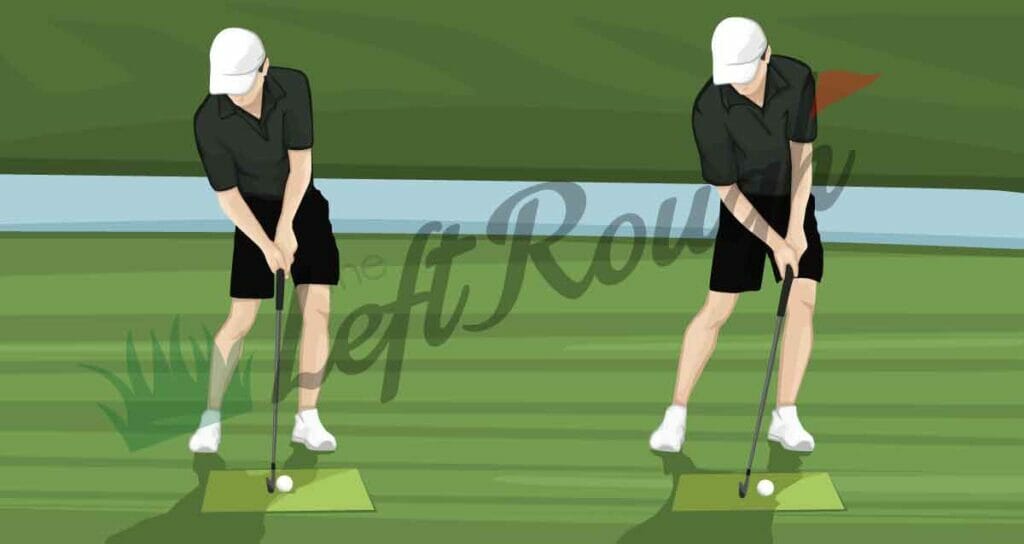
True ball compression requires forward shaft lean at impact, meaning your hands stay ahead of the ball when the club makes contact.
Lead with Your Hands, Not the Clubhead
At impact, your hands should be ahead of the ball, and the clubhead should be slightly behind your hands. This delofts the club slightly and ensures the ball is struck with a descending blow. The result is a penetrating ball flight with more roll and control.
Stop Flipping Through Impact
Many amateurs flip their wrists through impact, releasing the club too early. This causes the clubhead to pass the hands before contact, leading to weak, high shots with little spin. To fix this, focus on leading with your hands through the hitting zone. Think of pinching the ball off the turf.
Train with an Impact Bag
Use an impact bag or heavy pillow to practice the correct impact position. Set up as if hitting a 7-iron, then swing into the bag and stop at impact. Your weight should be on your front foot, hands ahead of the ball, and your belt buckle facing the target. Repeat this 10 to 15 times to build muscle memory.
Adjust Ball Position for Each Iron
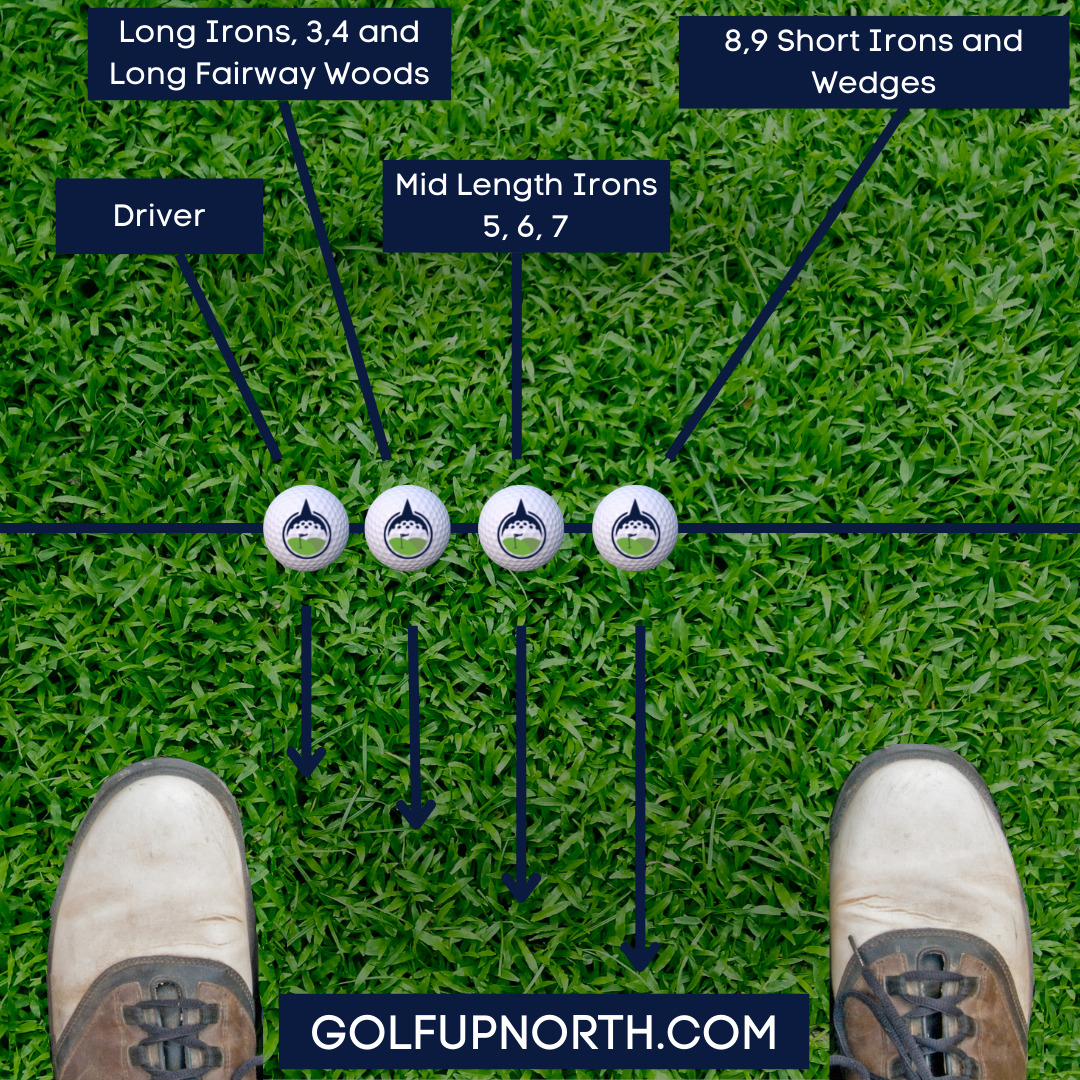
Not all irons are played the same way. Adjusting ball position helps you compress each club effectively.
Short Irons: Centered Ball Position
With wedges and 8- or 9-irons, place the ball in the center of your stance. These clubs have more loft, so you don’t need as much forward position to launch the ball high. A centered ball promotes a steeper angle of attack, ideal for crisp short iron shots.
Mid-Irons: One Ball Forward
For 5-, 6-, and 7-irons, move the ball one ball width forward from center. This slight adjustment helps you catch the ball on a descending path while still allowing for solid divots and full compression.
Long Irons: Two Balls Forward
With 3- and 4-irons, place the ball two ball widths forward. These clubs have less loft, so you need a slightly shallower angle of attack. A forward ball position helps you sweep the ball off the turf while still maintaining enough downward strike for control.
Choose the Right Golf Ball for Your Swing
Not all golf balls compress the same way. Your swing speed and skill level should guide your choice.
Match Compression to Your Swing Speed
Low-compression balls (70 to 80) are softer and easier to compress for slower swing speeds under 90 mph. They offer more distance but less spin. High-compression balls (90 to 100+) require faster swing speeds over 95 mph to fully compress. They offer better feel and control for advanced players.
If you’re swinging under 90 mph with your 7-iron, a two-piece, low-compression ball will give you better results than a tour-level ball designed for pros.
Test Balls on a Launch Monitor
Visit a golf simulator or pro shop with launch monitor access. Hit your 7-iron with different balls and compare ball speed, spin rate, and smash factor. A higher smash factor (ball speed divided by clubhead speed) indicates better compression and energy transfer.
Generate Efficient Clubhead Speed
More speed doesn’t always mean more compression, but efficient speed does.
Retain Lag Into the Downswing
Compression improves when you retain lag, the angle between your wrists and the club shaft, into the downswing. This builds pressure in the shaft, releasing at impact for maximum power. Avoid casting the club early; instead, feel like your hands lead and the clubhead snaps through the ball.
Practice the Pause Drill
Make practice swings, pausing for one second at the top of your backswing. Then start the downswing with your lower body while keeping your arms and club back for as long as possible. This trains proper sequencing and helps you deliver the club on a powerful, descending path.
Try Overspeed Training
Use lighter or heavier clubs for overspeed training one to two times per week. This can improve neuromuscular efficiency and help you generate more clubhead speed without sacrificing control. More speed with clean contact equals better compression.
Avoid Common Compression Mistakes
Even with good intentions, many golfers sabotage their ability to compress the ball.
Don’t Stand Up During the Swing
Standing up or losing posture during the swing lifts your head and raises the low point of your swing arc. This leads to thin or fat contact. Keep your spine angle constant from start to finish.
Prevent a Reverse Weight Shift
If your weight ends up on your back foot at impact, you’ll hit behind the ball or top it. Focus on rotating your hips forward and finishing with your weight on your front foot.
Double-Check Ball Position
Incorrect ball position is one of the top reasons for poor compression. Use alignment sticks or clubs on the ground to verify your setup before every practice session.
Practice Drills That Build Compression
Practice with purpose using these proven drills.
The Coin Drill
Place a coin or tee two inches in front of the ball. Your goal is to strike the ball first, then take a divot that removes the coin. This trains a descending strike and forward divot.
The Towel Drill
Fold a small towel and tuck it under your lead armpit. Make swings without letting the towel drop. This keeps your arms connected and promotes a one-piece swing.
The Hitting Net Drill
Set up a hitting net or impact screen close to the ball, six to 12 inches away. Focus on making solid contact without hitting the net with your body. This encourages a compact, powerful strike and prevents over-swinging.
Frequently Asked Questions About Compressing the Golf Ball
What Does It Mean to Compress a Golf Ball?
Compression describes how efficiently energy transfers from the clubhead to the ball at impact. It results in a low, controlled ball flight with high spin and maximum speed. True compression happens when your iron strikes the ball first, then takes a divot after impact.
Do I Need a High Swing Speed to Compress the Ball?
You don’t need tour-level speed, but you need efficient contact. A clean, descending strike with forward shaft lean matters more than raw power. Choosing a low-compression ball also helps if your swing speed is under 90 mph.
Why Am I Hitting the Ball Fat with My Irons?
Fat shots usually happen when your weight stays on your back foot, your ball position is too far back, or your angle of attack is too steep. Shift 55 to 60 percent of your weight forward, move the ball slightly ahead of center, and focus on striking the ball first.
How Do I Know If I’m Compressing the Ball?
Check your divots. A proper divot starts after the ball and points toward your target. You’ll also notice a penetrating ball flight, more spin, and a crisp feel at impact. Thin shots or no divots at all suggest you’re not compressing the ball.
Should I Use Low- or High-Compression Golf Balls?
If your 7-iron swing speed is under 90 mph, choose a low-compression ball (70 to 80) for better distance and feel. If your swing speed is over 95 mph, a high-compression ball (90 to 100+) gives you more control and spin.
Final Thoughts on Compressing Golf Balls with Irons
Compressing a golf ball with irons comes down to three essentials: a setup that promotes a downward strike, forward shaft lean through impact, and efficient clubhead speed. Focus on striking the ball first, then the turf, and your divots will tell the story of solid contact.
Start with one drill this week, such as the coin drill or towel drill, and practice it for 10 minutes before your next range session. Track your divots, monitor your ball flight, and adjust your setup as needed.





