Your golf cart works hard, whether shuttling you across the course, through a neighborhood, or down a dusty trail. Over time, dirt, moisture, and UV rays wear down paint, fade plastic trim, and corrode metal parts. Learning how to clean a golf cart the right way protects your investment and keeps every ride looking sharp. This guide breaks down safe, effective techniques for washing, drying, and protecting every surface of your cart.
Pre-Rinse the Entire Golf Cart
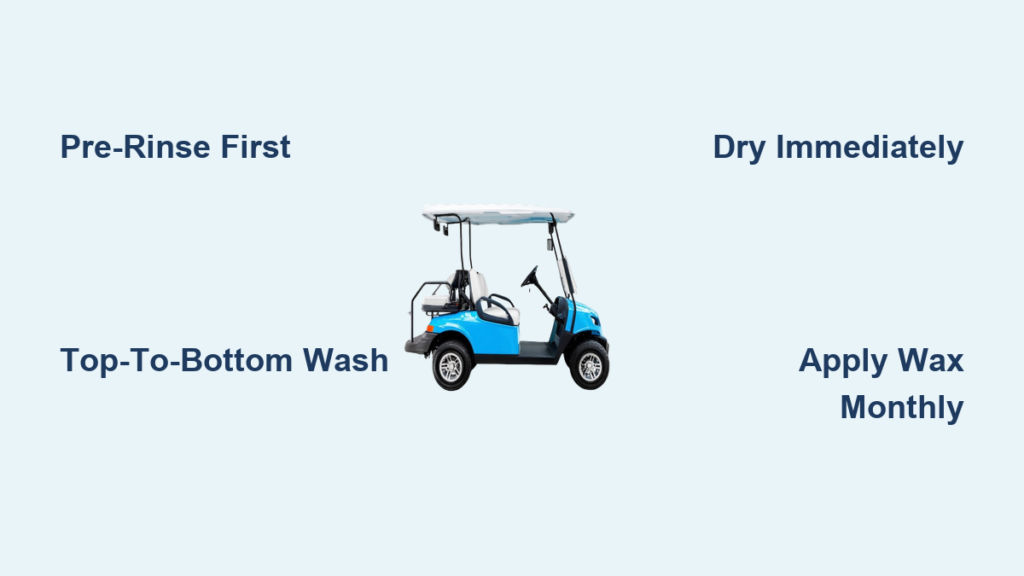
A proper rinse sets the foundation for a scratch-free wash. Before touching the cart with soap or a mitt, spray down every surface to loosen dust, sand, leaves, and dried mud. Skipping this step forces you to grind loose debris into the paint with your cloth, creating fine swirl marks. Use a standard garden hose with a gentle spray nozzle. Avoid pressure washers near door seals, electrical panels, and undercarriage areas where high-pressure water can force its way inside.
Wash from Top to Bottom Using the Two-Bucket Method
Gravity is your ally here. Dirt flows downward, so always start at the roof and upper body panels, then move to doors, fenders, and lower sections last. This prevents dirty runoff from re-soiling clean areas.
Choose the Right Soap and Tools
Reach for a pH-balanced car wash soap instead of dish detergent, which strips wax and dries out paint. Pair the soap with a soft microfiber wash mitt or sponge. Harsh brushes and abrasive pads leave scratches on paint, plastic, and trim.
Use Two Buckets for Safer Cleaning
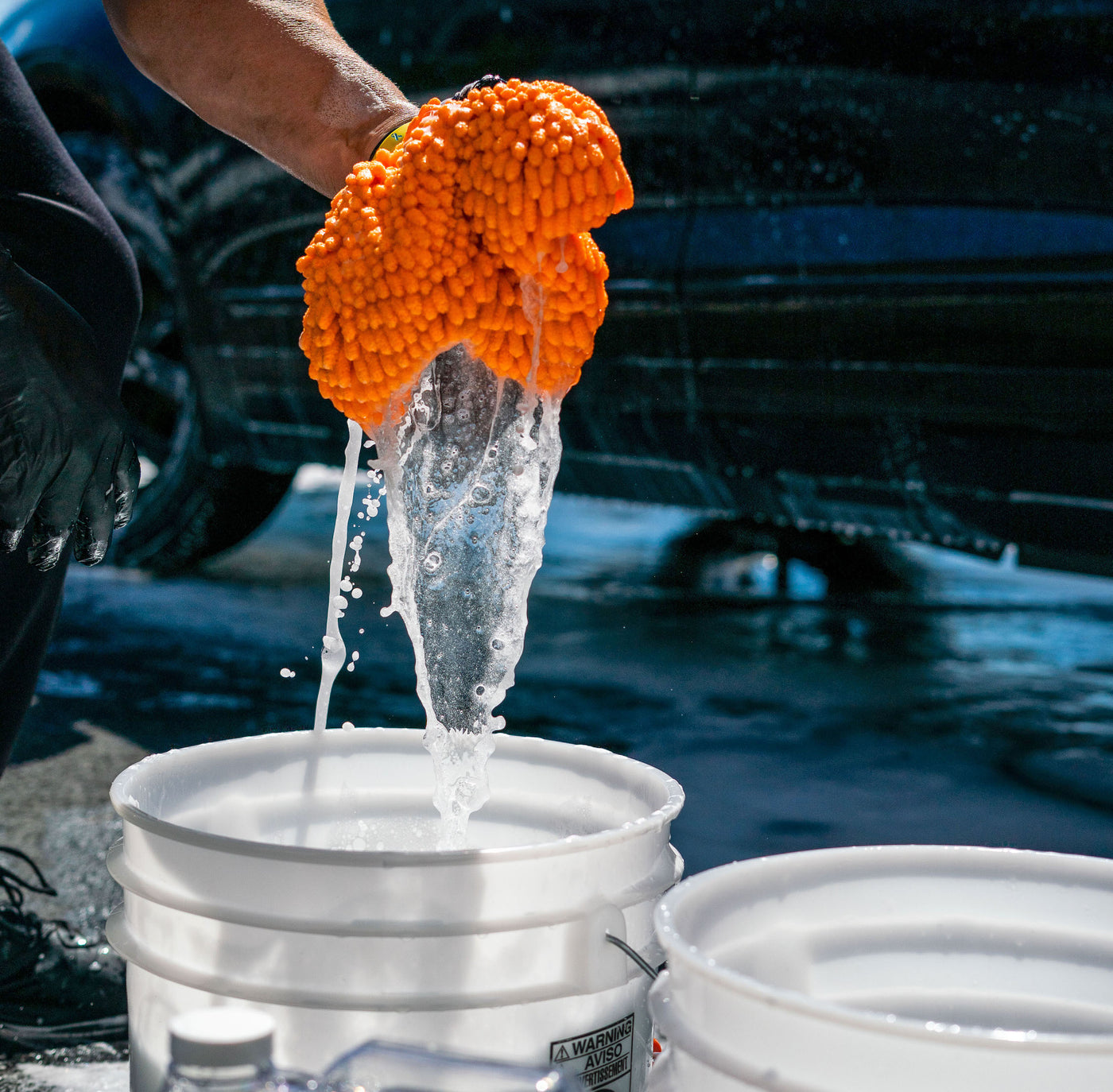
Set up one bucket with soapy water and a second with clean rinse water. After each pass over the cart, dip your mitt in the rinse bucket to flush out trapped grit. This simple habit dramatically reduces the chance of dragging sand across glossy surfaces.
Focus on High-Grime Zones
Some spots collect more dirt than others. Give these areas extra attention during your wash:
- Wheel wells and fender liners
- Frame rails and undercarriage edges
- Behind bumpers and around tire sidewalls
These zones trap road salt, mud, and brake dust. A soft-bristle detailing brush works well here. It agitates grime without scratching paint or plastic.
Clean Plastic Bumpers and Trim Safely

Golf carts feature plenty of vinyl and plastic components on bumpers, dashboards, and side skirts. These materials scratch easily and fade under UV exposure.
Stick to Mild Cleaners
Mix a few drops of mild dish soap with water, or use a dedicated plastic cleaner. Apply with a soft microfiber cloth. For textured or grooved trim, a soft toothbrush lifts dirt from crevices without damaging the surface.
Skip Harsh Solvents
Acetone, paint thinner, and bleach-based products dissolve plastic and leave permanent marks. For tree sap, road tar, or tough scuffs, use a plastic-safe stain remover and gentle circular scrubbing with a soft brush.
Wash Windows and Mirrors Without Streaks

Clear visibility matters for safe driving, especially at night or on shared paths. Clean glass the right way and you avoid streaks, lint, and micro-scratches.
Pick a Safe Glass Cleaner
For tinted windows, choose an ammonia-free glass cleaner. Ammonia weakens window film adhesive over time, leading to peeling or bubbling. Standard glass cleaners work fine on non-tinted surfaces.
Use Microfiber, Not Paper Towels
Paper towels leave lint and tiny scratches. A clean, dry microfiber cloth delivers a streak-free finish. Wipe in straight vertical or horizontal passes for the clearest view. Clean both sides of every window, plus side mirrors and the rearview mirror.
Dry Immediately to Prevent Water Spots
Letting your golf cart air dry invites water spots, especially in hard water regions where minerals leave behind permanent etching. Grab a plush microfiber drying towel or a chamois and blot the surface dry. Avoid dragging the towel across panels. A blotting motion lifts water without scratching.
Apply Wax or Sealant for Long-Term Protection
Every 3 to 6 months, protect painted surfaces with a coat of carnauba wax or synthetic paint sealant. This invisible layer:
- Shields paint from UV rays
- Repels bird droppings and tree sap
- Adds depth and gloss to the finish
Skip wax on plastic trim and rubber seals. Instead, use a trim dressing to condition those surfaces and prevent drying or cracking.
Adjust Cleaning Frequency Based on Conditions
How often you clean depends on where and how you use your cart. Harsh environments demand more frequent washing to prevent long-term damage.
Beach and Saltwater Areas
Salt accelerates corrosion on frames, hardware, and electrical components. Rinse your cart with fresh water at least once a week, even when it looks clean.
Humid or Rainy Climates
Moisture encourages mold, mildew, and rust. A monthly deep clean keeps moisture-related problems in check.
Dusty Trails and Off-Road Use
Fine dust settles into every crevice after off-road rides. Wipe down the cart after each outing to prevent grit buildup in moving parts.
Follow Manufacturer Recommendations
Before using any new cleaning product, check your owner’s manual. Some golf carts feature specialty finishes, composite bodies, or sealed electronics that require specific care. If you no longer have the manual, contact your dealer or manufacturer for guidance. Sticking to their recommendations protects your warranty coverage.
Frequently Asked Questions About Cleaning a Golf Cart
Can I use a pressure washer on my golf cart?
You can use a pressure washer on the body and wheels, but keep it on a low setting and avoid spraying directly at rubber seals, electrical components, or undercarriage areas. High-pressure water can force its way past seals and cause electrical or rust issues.
What soap is safe for golf cart paint?
A pH-balanced automotive car wash soap is the safest choice. Dish detergent strips protective wax and dulls finishes over time. Always rinse thoroughly after washing.
How often should I wax my golf cart?
Wax or seal painted surfaces every 3 to 6 months under normal use. Carts exposed to intense sun, saltwater, or frequent rain benefit from waxing every 2 to 3 months.
Is dish soap safe for plastic trim and bumpers?
A small amount of mild dish soap mixed with water works for routine plastic cleaning. For best results and added UV protection, use a dedicated plastic cleaner and follow up with a trim dressing.
Can I use Windex or ammonia cleaners on tinted windows?
Avoid ammonia-based cleaners like standard Windex on tinted windows. Ammonia breaks down window film adhesive and causes bubbling or peeling. Choose an ammonia-free glass cleaner instead.
What should I do if my cart has tree sap or road tar?
Dampen the spot with warm soapy water, then gently scrub with a soft toothbrush or detailing brush. For stubborn residue, use a plastic-safe bug and tar remover. Never use acetone or harsh solvents.
Key Takeaways for Cleaning a Golf Cart the Right Way
Cleaning a golf cart comes down to three core principles: use gentle products, work from top to bottom, and dry thoroughly. Stick to pH-balanced soap and soft microfiber tools to protect paint and plastic. Adjust your cleaning routine based on local conditions, especially if you live near the coast or drive on dusty trails. Finally, apply wax or sealant every few months to lock in shine and defend against the elements. Start with a thorough wash this weekend, and your golf cart will look better, run smoother, and hold its value for years to come.