
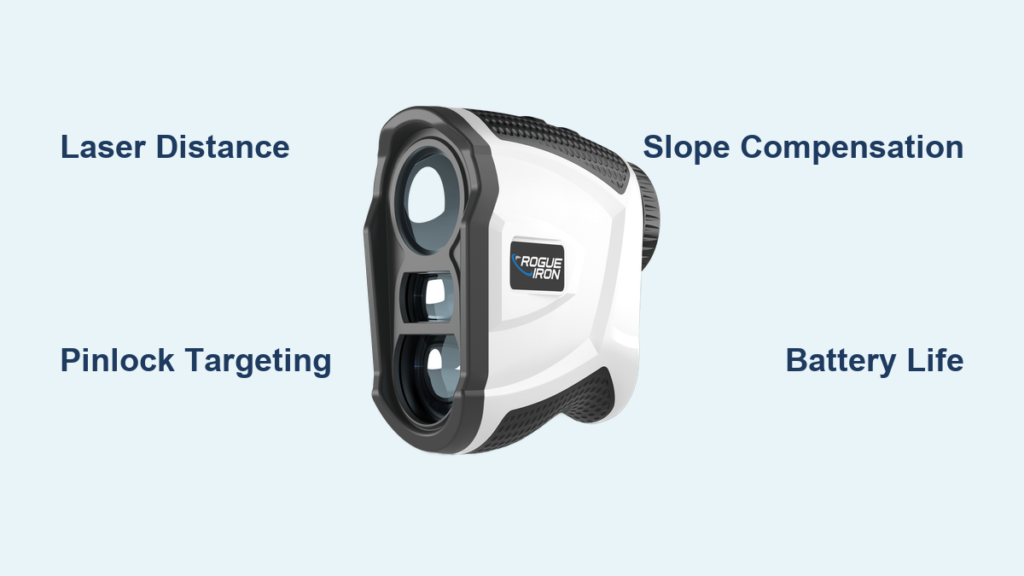
You’re standing on the tee, eyeing the flag in the distance. Is it 150 yards? 160? A few extra steps forward or back could mean the difference between a clean approach and a ball in the bunker. That’s where a golf rangefinder comes in, your pocket-sized precision tool for measuring exact distances on the course. But how do golf rangefinders work? Behind their compact design and quick readouts lies advanced technology that turns a simple point-and-shoot motion into accurate yardage in seconds.
Most modern golf rangefinders use laser-based distance measurement, a system so precise it can calculate the span from your stance to the pin within a yard or even a foot. When you press the button, the device emits a narrow beam of light that travels to your target and bounces back. By measuring how long that round trip takes, the rangefinder uses the speed of light to compute the distance, almost instantly. This process, known as time-of-flight calculation, is the core of how these devices deliver reliable results under real-course conditions.
In this guide, you’ll learn the science behind laser rangefinders, how they differ from older GPS models, and what features make certain models more accurate or easier to use. Whether you’re deciding which rangefinder to buy or just curious about the tech in your bag, understanding how these tools work will help you make smarter shots and lower your score.
Laser Beam Distance Calculation
At the heart of every high-performance golf rangefinder is a laser emitter and receiver. When activated, the device sends out a focused pulse of infrared light toward the target, typically the flagstick, a tree, or a bunker. This beam travels at nearly 186,000 miles per second, hitting the object and reflecting back to the rangefinder’s sensor.
How Time-of-Flight Determines Distance
The rangefinder’s internal processor measures the time it takes for the laser pulse to return. Since the speed of light is constant (about 299,792,458 meters per second), the device calculates distance using a simple formula:
Distance = (Speed of Light × Time of Flight) ÷ 2
The division by two accounts for the round-trip nature of the beam.
Even though the laser travels incredibly fast, modern rangefinders use ultra-precise timers capable of detecting differences in nanoseconds. This allows them to report distances accurate to within ±1 yard, sometimes even ±0.5 yards on premium models.
What Affects Laser Accuracy?
While laser technology is highly accurate, several factors can influence performance:
- Target reflectivity: Highly reflective surfaces like a flag with a metal pin return stronger signals than dark, matte objects.
- Weather conditions: Heavy rain, fog, or haze can scatter the beam, reducing effective range.
- Shaky hands: If the user moves during measurement, the laser may lock onto the wrong object.
High-end models combat these issues with faster processors, multi-pulse scanning, and advanced optics that stabilize the image and improve targeting.
Target Acquisition and Locking
One of the biggest challenges in rangefinding is ensuring you’re measuring the correct object, especially when trees, carts, or other hazards sit between you and the pin. Modern rangefinders solve this with target prioritization algorithms and pin-seeking technology.
First vs. Last Target Logic
Most devices use one of two logic modes:
- First-target priority: Locks onto the closest object in the line of sight. Ideal for clearing foreground obstacles.
- Last-target priority: Ignores nearby objects and seeks the farthest strong return. Useful when shooting over bushes or water.
Advanced models let you switch between modes or use hybrid logic, automatically detecting whether the strongest return is likely the flag.
PinLock and Flag-Tracking Features
Brands like Bushnell and Garmin equip premium rangefinders with PinLock or Jolt technology. When the device detects the flagstick, it vibrates slightly or highlights the reading, confirming you’ve locked the correct target. This feedback reduces guesswork and builds confidence in fast-paced rounds.
To engage this feature:
- Aim near the flag.
- Press and hold the trigger.
- Wait for vibration or beep.
- Read the displayed distance.
These systems rely on reflective coatings on flagsticks or built-in angle compensation to distinguish the pin from background clutter.
Optical Components and Magnification
A rangefinder isn’t just a laser. It’s also a miniaturized optical instrument. The quality of its lens and magnification system directly impacts how clearly you can see and target distant objects.
Typical Magnification Range
Most golf rangefinders offer 4x to 6x magnification, balancing field of view with zoom power. Higher magnification helps spot pins on large greens but narrows the view, making it harder to track moving objects or maintain stability.
Look for models with:
- Fully multi-coated lenses for better light transmission
- Exit pupil diameter of at least 3.5mm for clear viewing in low light
- Rubber armor for grip and shock resistance
Importance of Lens Clarity
Dirt, smudges, or scratches on the lens can distort the laser path or blur the image, leading to misreads. Always keep the lens clean using a microfiber cloth and protective cap when not in use.
Some rangefinders include water-repellent lens coatings or fog-proof construction for all-weather reliability.
GPS vs. Laser Rangefinders
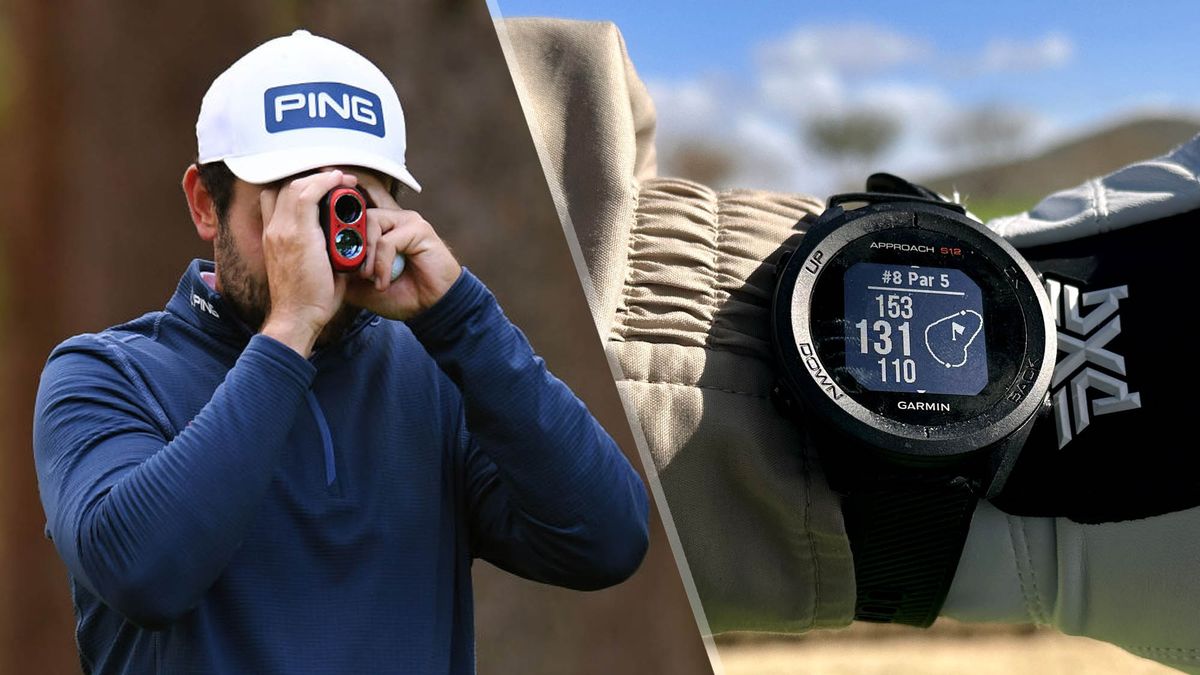
While laser rangefinders dominate in precision, GPS rangefinders remain popular for their convenience and course mapping capabilities. Understanding the differences helps you choose the right tool for your game.
How GPS Rangefinders Work
GPS models use satellite signals to determine your location on a preloaded course map. They calculate distance based on fixed coordinates of hazards, greens, and tees, with no laser involved.
Advantages:
- No aiming required
- Provides distances to multiple points simultaneously
- Often includes scorekeeping and shot tracking
Limitations:
- Less accurate (±3–5 yards)
- Requires updated course maps
- Can’t measure to unmapped targets (e.g., random trees)
When to Use Laser vs. GPS
| Scenario | Best Choice |
|---|---|
| Tournament play (with pin-seeking) | Laser |
| Fast play, no setup | GPS |
| Unfamiliar courses | GPS |
| Maximum accuracy needed | Laser |
| Measuring slope or elevation | Laser with inclinometer |
Many serious golfers carry both: GPS for general awareness, laser for critical approach shots.
Slope and Angle Compensation
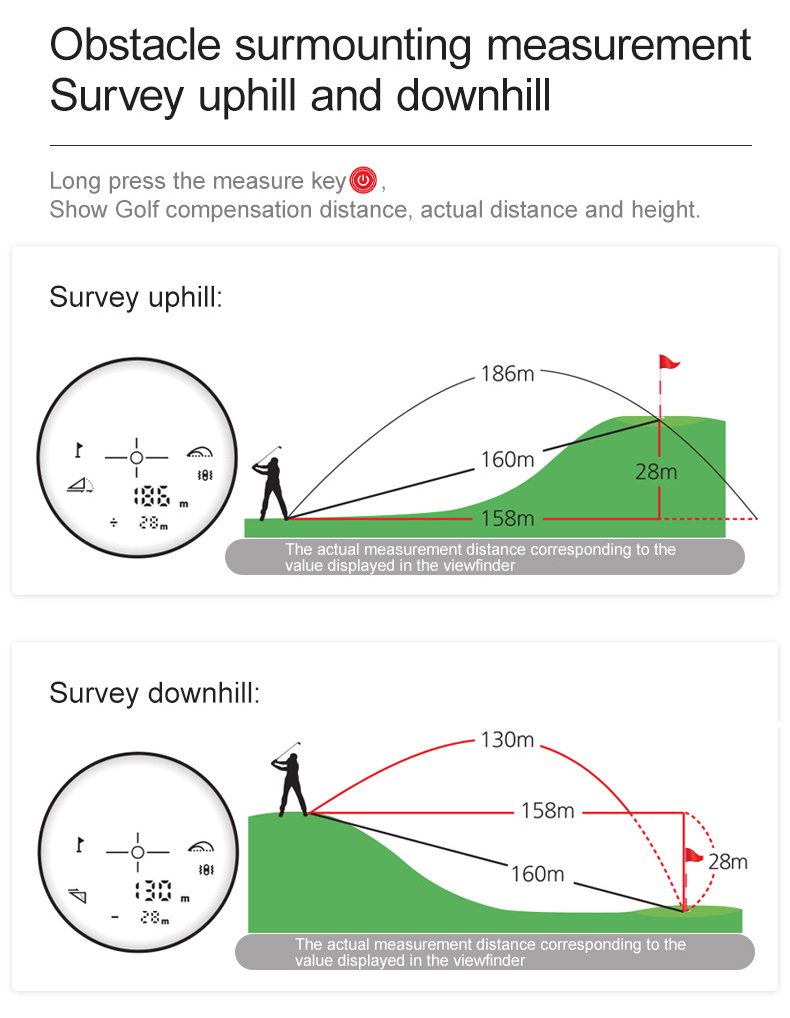
Some rangefinders go beyond flat-distance measurement by factoring in uphill and downhill elevation changes, a feature known as slope compensation.
How Inclinometers Enhance Accuracy
An internal digital inclinometer detects the angle of your shot. Using trigonometry, the device adjusts the displayed distance to reflect the true playing distance.
For example:
- Shooting 150 yards uphill at a 20° angle might display an adjusted distance of 165 yards
- A 150-yard downhill shot might read 135 yards
This helps golfers select the right club when terrain affects ball flight.
Tournament Legal Considerations
While slope mode improves practice-round accuracy, it’s not allowed in official competition under USGA Rule 4.3a unless the feature is disabled. Many rangefinders let you turn slope off to remain tournament-legal.
Pro tip: Use slope mode during practice to learn how elevation impacts your clubs, then disable it before posting a score.
Battery Life and Power Management
Golf rangefinders are powered by small, replaceable batteries, usually CR2 or CR123A lithium cells. Battery life varies widely based on usage patterns and features.
Average Battery Longevity
- Basic models: Up to 5,000 shots per battery
- High-end with Bluetooth or GPS: As low as 1,500–2,000 shots
- Auto-off feature: Preserves power by shutting down after 10–30 seconds of inactivity
To extend battery life:
- Turn off the device after each use
- Avoid continuous scanning
- Store in moderate temperatures
Always carry a spare battery, especially during multi-round days or tournaments.
Maintenance and Care Tips
Like any precision instrument, a golf rangefinder needs regular care to perform reliably.
Cleaning the Lens and Housing
After each round:
- Wipe the lens gently with a dry microfiber cloth
- Remove debris from the lens housing with a soft brush
- Check for moisture inside the unit. If fogging occurs, place in a sealed bag with silica gel
Never use window cleaners or paper towels, which can scratch coatings.
Proper Storage Conditions
Store your rangefinder in a:
- Cool, dry place
- Protective case
- Area away from extreme heat (e.g., glove compartment)
Avoid dropping or exposing it to strong impacts, which can misalign the laser or damage internal sensors.
Choosing the Right Rangefinder for You
With so many models available, selecting the best rangefinder depends on your skill level, budget, and playing style.
Key Features to Compare
- Accuracy: Look for ±1 yard or better
- Range: 400+ yards for flagsticks, 1,000+ for large targets
- Ease of use: Fast acquisition, intuitive buttons
- Durability: Waterproof, shock-resistant build
- Additional tech: Slope, Bluetooth, GPS overlay
Beginners benefit from simple, affordable models with fast targeting. Low-handicappers and competitive players often prefer advanced features like vibration feedback and angle adjustment.
Top Brands and Reliability
Trusted names in golf rangefinders include:
- Bushnell: Known for PinSeeker and Tour series
- Garmin: Offers GPS-laser hybrids like Approach Z80
- Nikon: Durable optics with long range
- Leupold: Premium build with Flag IQ technology
Check warranty terms. Most offer 1–3 years of coverage against defects.
Frequently Asked Questions About Golf Rangefinders
What Is the Most Accurate Type of Golf Rangefinder?
Laser rangefinders are the most accurate, typically delivering readings within ±1 yard. Premium models can reach ±0.5 yards under ideal conditions.
Can You Use a Rangefinder in Tournaments?
Yes, provided the rangefinder measures distance only. Slope and temperature-adjusted features must be disabled under USGA Rule 4.3a.
How Far Can a Golf Rangefinder Measure?
Most rangefinders measure 400–1,000 yards to large targets. Flagstick range typically tops out at 400–500 yards depending on reflectivity.
Do I Need Slope Mode on My Rangefinder?
Slope mode helps with elevation changes during practice rounds. Competitive golfers often prefer models with a disable switch for tournament legality.
What Batteries Do Golf Rangefinders Use?
Most use CR2 or CR123A lithium batteries. Battery life ranges from 1,500 to 5,000 shots depending on features like Bluetooth or GPS.
Are GPS Rangefinders as Accurate as Laser Models?
No. GPS rangefinders typically show distances within 3–5 yards, while laser models offer ±1 yard accuracy to specific targets.
Key Takeaways for Understanding How Golf Rangefinders Work
Understanding how golf rangefinders work empowers you to use them more effectively and choose the right model for your needs. From laser pulses to angle calculations, these devices combine optics, physics, and digital processing to give you a competitive edge on every shot. Whether you’re dodging bunkers or chasing birdies, a reliable rangefinder puts precise data in your hands so you can play with confidence, not guesswork.
Ready to step up your game? Test a few rangefinders at your local golf shop, compare their feel and readability, and choose the one that matches both your skill level and your budget.





