
You’re standing on the range, swinging your driver, and in seconds a screen tells you your ball speed, launch angle, spin rate, and carry distance. It feels like magic, but it’s science. Golf launch monitors have transformed how players train, fit clubs, and understand their game.
At their core, these devices track the motion of your club and ball to deliver precise data about every shot. They use advanced technology to capture what the human eye can’t see, including how fast the clubhead moves at impact or how much backspin the ball generates. In this guide, you’ll learn the inner workings of launch monitors, the two main technologies behind them, and how to choose the right one for your needs.
Radar-Based Launch Monitors and How They Track Your Ball
Radar launch monitors use Doppler radar technology to detect movement and track the ball in flight. These devices emit radio waves that bounce off the moving ball and, in some cases, the clubhead. By analyzing changes in wave frequency, the monitor calculates speed, direction, and trajectory.
These systems excel at measuring post-impact ball flight and are known for their accuracy over distance. Because they track the ball after launch, they’re less dependent on setup precision and work well in open outdoor spaces.
The Doppler Radar Principle Explained
Doppler radar detects shifts in wave frequency caused by motion, the same principle used in weather forecasting and police speed guns. When the launch monitor sends out a radar pulse, it waits for the signal to reflect off the moving golf ball.
As the ball moves away from the monitor, the frequency of the returned signal drops. The faster the ball moves, the greater the shift. This allows the device to calculate ball speed with high accuracy while also determining trajectory, apex height, carry and total distance, and side spin. Some advanced models can even reconstruct full shot shapes and simulate ball flight in 3D.
How Radar Infers Club Data
Unlike camera-based systems, radar monitors don’t see the clubhead directly. Instead, they infer club data such as clubhead speed, angle of attack, and club path by analyzing the initial moments of ball flight and applying physics models.
This indirect method works well but can be less precise than direct measurement, especially if the ball is poorly hit. However, modern algorithms have improved accuracy significantly, making high-end radar units trusted tools across professional golf.
Camera-Based Launch Monitors and Photometric Technology

Camera-based launch monitors use high-speed sensors to capture images of the club and ball before, during, and after impact. These systems rely on optical detection rather than radar waves, allowing them to directly observe physical interactions.
Because they see the clubhead and ball, they can measure parameters that radar can only estimate. This makes them highly accurate for club data and ideal for indoor use where space is limited.
High-Speed Cameras Capture Every Detail at Impact
Photometric systems use one or more high-speed cameras, often infrared or optical, to record dozens to thousands of frames per second. These cameras focus on the impact zone to capture critical details like face angle, point of contact on the clubface, and smash factor.
By analyzing the position and movement of the ball and club across multiple frames, the system calculates exact velocities, angles, and spin rates. This direct observation leads to highly reliable data, especially for metrics tied to club performance.
Why Photometric Systems Excel at Measuring Ball Spin
One of the biggest advantages of camera-based systems is their ability to directly measure spin. The cameras detect the rotation of the ball’s markings or seams immediately after impact, allowing for precise backspin and side spin calculations.
Radar systems estimate spin based on flight curvature, which can introduce small delays or inaccuracies. Camera systems provide real-time spin data with minimal guesswork.
Key Metrics Every Launch Monitor Tracks
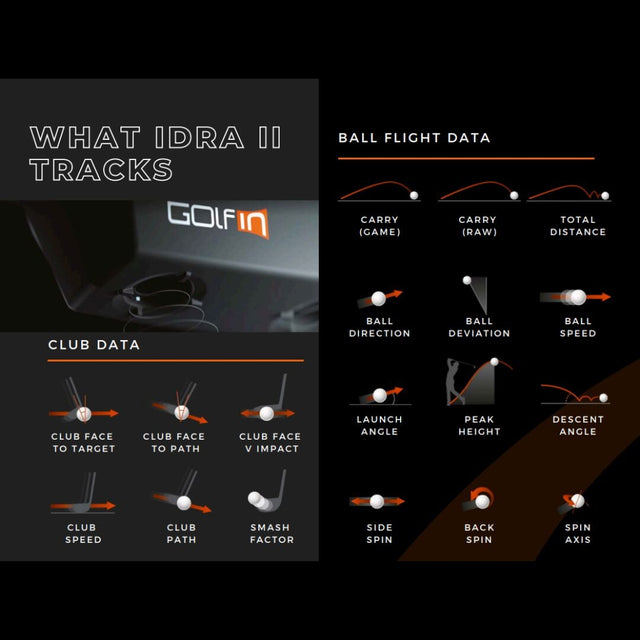
All launch monitors report a standard set of performance metrics that help players understand their shot dynamics. While the number of data points varies by model, the most important ones remain consistent.
Ball Speed and Clubhead Speed
Ball speed measures how fast the ball travels immediately after impact. It’s primarily determined by clubhead speed and the quality of contact. Higher ball speed generally means more distance if launch angle and spin are optimized.
Clubhead speed is the velocity of the club just before impact. Radar systems estimate it from ball flight, while camera systems measure it directly. Both metrics are crucial for assessing power and potential distance.
Launch Angle and Spin Rate
Launch angle is the vertical takeoff angle of the ball relative to the ground. Too low, and the ball won’t carry far. Too high, and it may balloon with excess spin. The ideal launch angle depends on swing speed and club type.
Spin rate refers to how many times per minute the ball rotates around its axis. Drivers benefit from moderate backspin to stay airborne, while irons need higher spin to stop on greens. Launch monitors help you find the sweet spot.
Smash Factor and Carry Distance
Smash factor is the ratio of ball speed to clubhead speed. A higher value indicates efficient energy transfer and solid contact. It’s a great indicator of strike quality.
Carry distance is how far the ball flies before landing. Combined with roll distance, it gives total distance. Launch monitors calculate carry using trajectory, spin, and environmental factors.
Radar vs Camera: Which Launch Monitor Technology Is Better?

Choosing between camera-based and radar launch monitors depends on your setup, budget, and goals. Neither is universally better, as each has strengths that suit different users.
Accuracy and Data Depth Comparison
Camera-based systems typically offer more precise club data because they directly observe impact. They measure face angle, center contact, and spin directly, giving a complete picture of what happened at strike.
Radar systems excel at tracking ball flight over distance and simulating realistic shot shapes. High-end radar models are considered the gold standard for outdoor performance analysis.
Setup and Space Requirements
Photometric monitors work in small indoor spaces. Some need only 8 to 10 feet behind the ball, making them perfect for basements, garages, or home simulators.
Radar units need more room for the ball to travel before hitting a net. Outdoors, this isn’t an issue. Indoors, you’ll need a larger enclosure or net system to ensure accurate readings.
Price Ranges and Accessibility
Entry-level camera systems start at accessible price points, making them suitable for casual golfers. High-end photometric units can exceed several thousand dollars.
Radar monitors tend to be more expensive overall, though mid-range options exist. For most home users, camera-based monitors offer the best balance of accuracy, features, and price.
Common Launch Monitor Limitations and How to Avoid Them
Even the best launch monitors can produce inaccurate data if not used correctly. Understanding common pitfalls helps you avoid misleading readings.
Lighting Issues That Affect Camera Systems
Infrared and optical cameras struggle in direct sunlight or low light conditions. Glare can obscure the ball or club, leading to missed shots or incorrect data. Always use camera-based monitors in controlled lighting, and avoid windows and bright overhead lights.
Radar Alignment Problems
Radar units must be properly aligned with the target line. If angled incorrectly, they may misread club path or launch direction. Nearby metal objects or other radar devices can also cause interference.
Make sure the unit is level, positioned behind or beside the ball, and free from obstructions for the most accurate results.
Net and Background Interference
Indoor setups with nets too close to the ball can cut short flight tracking. Some monitors can’t calculate spin or apex if the ball hits the net too quickly. Use low-stretch mesh nets and position them farther back when possible.
Dark or patterned backgrounds can confuse camera systems. Use a solid, neutral-colored backdrop behind the hitting area for best results.
Pro Tips for Getting Accurate Launch Monitor Readings
Maximize your device’s performance with these best practices that ensure consistent, reliable data every session.
Calibrate Before Each Session
Many monitors require calibration for club type, ball type, or environmental conditions. Always run the startup calibration process, especially when switching clubs or moving locations.
Use Quality Golf Balls
Some monitors struggle with certain ball models. Avoid recycled or scuffed balls, as they may not have consistent markings for spin detection. Use premium balls recommended by the manufacturer for the most accurate readings.
Maintain Proper Stance and Distance
Stand in the correct position relative to the sensor. Too close or too far can skew data significantly. Follow the manufacturer’s setup guide for optimal alignment and distance every time you hit.
Choosing the Right Launch Monitor for Your Game
Your ideal launch monitor depends on where you play, your budget, and what data matters most to your improvement goals.
For Home Simulators: Camera-Based Wins
If you’re setting up a golf simulator in your garage or basement, choose a photometric system. These monitors deliver accurate data in tight spaces and integrate seamlessly with simulation software.
For Outdoor Practice: Radar Offers Real-World Tracking
If you train at the driving range and want true ball flight analysis, a radar-based monitor gives unmatched insight into your long game and realistic shot shapes.
For Club Fitting: Prioritize Data Accuracy
Club fitters need high-fidelity data on face angle, spin, and impact location. Professional-grade photometric and radar systems serve as industry standards for serious fitting work.
For Casual Use: Affordable Entry Models Work Well
Budget-friendly options track essential metrics and support popular simulation apps. These entry-level monitors offer solid performance for weekend golfers who want basic shot data without a major investment.
Frequently Asked Questions About Golf Launch Monitors
What Is the Main Difference Between Radar and Camera Launch Monitors?
Radar launch monitors use Doppler radar waves to track the ball in flight and infer club data from ball behavior. Camera-based monitors use high-speed optical sensors to directly observe the club and ball at impact. Radar excels outdoors over distance, while cameras work better indoors and provide more direct club measurements.
Do Launch Monitors Work Indoors?
Yes, camera-based photometric monitors work exceptionally well indoors because they don’t need long ball flight to gather data. Radar monitors can also work indoors but require larger enclosures and sufficient ball flight distance to track accurately.
How Accurate Are Golf Launch Monitors?
High-end launch monitors from trusted brands are highly accurate, often within 1 to 2 percent of professional-grade testing equipment. Accuracy depends on proper alignment, lighting, calibration, and using quality golf balls during your session.
Can a Launch Monitor Improve Your Golf Game?
Absolutely. By providing objective data on ball speed, launch angle, spin rate, and club path, launch monitors help you identify swing flaws, optimize equipment, and track improvement over time. Many players see noticeable gains within weeks of using one consistently.
What Is the Best Launch Monitor for Beginners?
Entry-level camera-based monitors offer the best value for beginners. They provide accurate data for essential metrics, work well in home setups, and cost far less than professional-grade systems while still delivering actionable feedback.
Do You Need Special Balls for a Launch Monitor?
Most launch monitors work with standard golf balls, but some perform better with specific models. Avoid heavily scuffed or recycled balls, as inconsistent markings can affect spin detection. Premium balls with clear markings typically yield the most reliable data.
Key Takeaways for Understanding How Golf Launch Monitors Work
Golf launch monitors combine physics, optics, or radar technology to capture detailed shot data that transforms how players train and improve. Radar systems track ball flight over distance and excel outdoors, while camera-based photometric monitors deliver precise club measurements and work perfectly in indoor simulator setups.
Understanding the difference between these technologies helps you choose the right device for your space, budget, and goals. Whether you’re building a home simulator, fitting clubs professionally, or simply want to track your progress at the range, there’s a launch monitor designed for your needs.
Your next step: identify where you’ll use your monitor most often, set a realistic budget, and compare two or three models in that range. Many retailers offer demo programs or return policies, so you can test accuracy and ease of use in your own space before committing to a purchase.





