
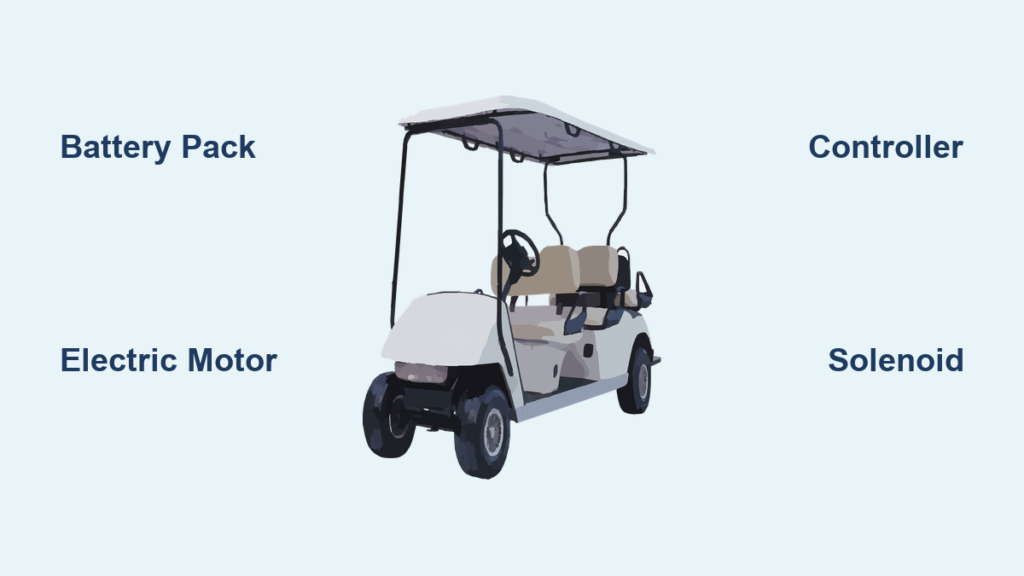
If you’ve ever cruised silently across a golf course or through a resort in an electric golf cart and wondered what makes it move, you’re not alone. How do electric golf carts work is a question many people ask when they first experience these compact, quiet vehicles. Unlike gas-powered carts, electric models run entirely on stored battery energy sent through a simple but effective drivetrain. They produce no exhaust, run almost silently, and need far less upkeep than their combustion counterparts.
In this guide, you’ll get a clear breakdown of every major component, from battery to wheels. You’ll also learn how charging works, why most carts don’t recharge themselves when braking, and what it takes to keep your cart running smoothly for years.
Battery Pack: The Heart of the System
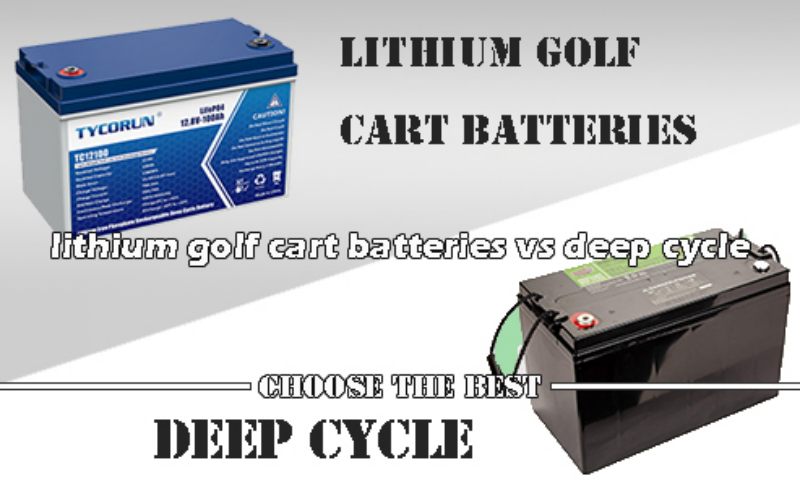
The battery pack powers everything. Most electric golf carts use a series of 6V or 12V deep-cycle lead-acid batteries wired together to deliver 36V, 48V, or 72V of total system voltage.
These batteries are built to provide steady current over long periods and can be recharged hundreds of times with proper care.
Lithium-ion options are growing in popularity. They’re lighter, charge faster, and last longer, though they cost more upfront.
Electric Motor: Turning Energy Into Motion

The electric motor receives power from the batteries and converts it into rotational force. Most carts use DC motors, though newer models may feature AC motors for better efficiency and smoother performance.
This motor connects to the rear axle through a gear reduction or direct-drive setup. When energized, it spins the wheels and moves the cart forward or backward based on your input.
Controller: The Brain of the Cart
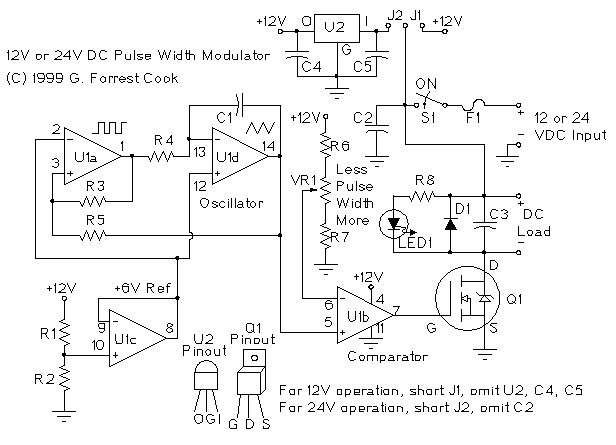
The controller decides how much power flows to the motor at any given moment. When you press the accelerator, a signal travels to the controller, which interprets your input and adjusts output accordingly.
Most modern controllers use pulse-width modulation (PWM), a method that rapidly switches power on and off to simulate variable voltage. This delivers smoother acceleration, better speed control, and improved energy efficiency.
Controllers also include safety features that prevent overheating, overloading, and excessive battery drain.
Solenoid: The High-Current Switch
The solenoid is an electromagnetic relay that connects the battery to the controller and motor only when needed. It stays closed when the cart is off and clicks open when you turn the key and press the pedal.
That familiar “click” sound when starting your cart is the solenoid engaging. It keeps high-voltage circuits safe and inactive when the cart isn’t in use.
How Power Moves From Battery to Wheels
Once you press the accelerator, energy flows through the system in a precise sequence.
Accelerator Input
Pressing the pedal sends a low-voltage signal to the controller. The controller reads how far the pedal is pressed and responds by allowing more or less current to pass.
Controlled Current Delivery
Using PWM, the controller regulates power delivery with minimal energy loss. This keeps acceleration smooth and prevents jerky starts.
Motor Activates the Drivetrain
The motor receives the regulated current and spins. Torque transfers to the rear wheels through a differential or direct-drive system, propelling the cart in your selected direction.
Speed depends on power allowed by the controller, while torque determines how well the cart handles hills and heavy loads.
Charging: How Electric Golf Carts Replenish Power
Electric golf carts do not charge while braking or going downhill under normal conditions. They rely entirely on external plug-in charging.
Standard Plug-In Charging
Most carts include an onboard charger that connects to a standard wall outlet. The charger converts AC power from your outlet into DC power your batteries can store.
Charging usually takes 6 to 8 hours for a fully drained lead-acid pack. Lithium-ion systems often cut that time in half.
Smart Charging Features
Many chargers shut off automatically when the battery reaches full capacity. This prevents overcharging and extends battery life.
Why Golf Carts Don’t Charge When Braking or Going Downhill
A common misconception is that electric carts recharge themselves during deceleration, similar to electric cars. In reality, most do not.
Standard Models Lack Regenerative Braking
Most electric golf carts use friction brakes, not regenerative systems. When you brake or coast downhill, the motor either disengages or freewheels.
Kinetic energy converts into heat through the brake pads or drums. No electricity gets sent back to the batteries.
Energy Recovery Is Minimal Even in Upgraded Models
Some high-end or custom carts include regenerative braking, but the benefit is small. These systems require:
- A compatible AC motor
- An advanced controller featuring regen support
- Firmware programming
- Additional wiring and safety hardware
Even with these upgrades, energy recovery is limited by the cart’s light weight and low top speed, typically extending range by only 5 to 10 percent.
Battery Maintenance for Maximum Lifespan
Since the battery pack is the most expensive component, proper care saves money and prevents breakdowns.
Watering Lead-Acid Batteries
If your cart uses flooded lead-acid batteries, check water levels monthly. Add distilled water to cover the plates, but never above the fill line.
Always water after charging, not before. Water expands during charging and can overflow if added too early.
Cleaning Battery Terminals
Corroded terminals reduce power flow and hurt efficiency. Clean them every 3 to 6 months using a baking soda and water mix, then coat with dielectric grease to prevent future buildup.
Wear gloves and use insulated tools for safety.
Equalization Charges
Flooded batteries benefit from an equalization charge every 10 to 15 cycles. This controlled overcharge balances individual cell voltages and breaks down sulfate buildup.
Never equalize sealed AGM or gel batteries, as this can cause permanent damage.
Troubleshooting Common Electric Golf Cart Problems
Even reliable carts run into issues. Here’s how to identify and fix the most common ones.
Cart Won’t Start
If the cart doesn’t respond when you press the accelerator:
- Listen for the solenoid click
- Check battery voltage (should read above 50% charge)
- Inspect all cable connections for corrosion or looseness
A bad solenoid or faulty microswitch often causes this issue.
Sluggish Performance
Reduced speed or weak acceleration usually points to:
- Low battery charge
- Aging batteries (over 4 to 6 years old)
- Worn motor brushes in DC motors
- A failing controller
Test each battery individually and replace any that read significantly lower than the rest.
Frequent Need for Charging
If your cart loses charge faster than usual:
- Batteries may be sulfated or worn out
- The charger could be failing to reach full voltage
- A parasitic drain (such as accessories left on) might be pulling power
A professional load test can confirm battery health.
Upgrades Worth Considering

While factory carts are reliable, certain upgrades improve performance and convenience.
Lithium Battery Conversion
Swapping lead-acid for lithium-ion batteries delivers:
- 2 to 3 times longer lifespan
- About 50 percent weight reduction
- Faster charging times
- Zero routine maintenance
The higher upfront cost pays off in long-term durability.
Speed and Torque Improvements
Some owners upgrade motors, change gear ratios, or install aftermarket controllers. These changes can improve hill climbing and acceleration but may reduce range or void warranties.
Adding Regenerative Braking
Installing regenerative braking requires compatible hardware and professional installation. While energy recovery is modest, it slightly extends range and reduces brake wear.
Safe Operation and Energy-Saving Habits
Smart habits extend battery life and prevent accidents.
Avoid Deep Discharges
Never drain batteries below 20 percent regularly. Frequent deep discharges damage lead-acid cells and shorten overall lifespan.
Use Only Approved Chargers
Mismatched chargers can overheat batteries or deliver incorrect voltage. Always use OEM or certified replacements.
Drive Smoothly
Avoid aggressive acceleration and hard braking. Steady speeds and gentle stops maximize range and reduce mechanical wear.
Frequently Asked Questions About Electric Golf Carts
Do electric golf carts charge when going downhill?
No. Standard electric golf carts do not regenerate power during braking or downhill travel. Energy from motion converts into heat through the friction brakes and is lost.
What kind of batteries do electric golf carts use?
Most use deep-cycle lead-acid batteries in 6V or 12V configurations, wired together to reach 36V, 48V, or 72V. Lithium-ion batteries are an upgraded alternative.
How long does it take to charge an electric golf cart?
A full charge typically takes 6 to 8 hours for lead-acid batteries. Lithium-ion packs often charge in 3 to 4 hours.
Why won’t my electric golf cart start?
Common causes include a dead battery, faulty solenoid, corroded connections, or a broken microswitch. Check voltage and listen for the solenoid click first.
Can I add regenerative braking to my golf cart?
Yes, but it requires a compatible AC motor, an advanced controller, and professional installation. The energy recovered is minimal due to low speeds and light weight.
How long do golf cart batteries last?
Lead-acid batteries typically last 4 to 6 years with proper care. Lithium-ion batteries can last 8 to 10 years or more.
Final Thoughts on Electric Golf Cart Operation
So, how do electric golf carts work? They store electrical energy in a battery pack, regulate it through a controller, and send it to an electric motor that turns the wheels. Every component works together to deliver quiet, efficient, low-maintenance transportation.
The most important takeaway is that standard carts do not charge when braking or going downhill. Regenerative braking exists only in upgraded or custom systems and offers limited benefits. For most owners, routine charging and basic battery care are all that’s needed to keep the cart dependable.
If you’re considering buying an electric golf cart or want to extend the life of your current one, start with the battery. Choose the right chemistry, follow a consistent charging routine, and keep terminals clean. These simple steps ensure your cart stays ready whenever you are.





