
You’re on the green, staring down a tricky chip shot from the fringe. You pull out your wedge, take your stance, and swing, only to watch the ball balloon high, land hard, and roll past the hole. Sound familiar? A poor golf wedge setup is often the culprit behind frustrating short-game results.
The right wedge configuration can transform your short game, turning hesitant strokes into confident, controlled shots. This guide breaks down the exact elements of an effective golf wedge setup, including club selection, loft gaps, shaft choice, grip, stance, and alignment. You’ll learn how to make smarter decisions before your next round and start saving strokes around the green.
Choose the Right Wedge Lofts

Your wedge setup begins with selecting the correct lofts. Most golfers carry at least three wedges: pitching, gap, and sand. A fourth, the lob wedge, adds versatility for advanced players who need higher trajectories. The key is ensuring even loft gaps between each wedge and your longest iron.
Match Loft Gaps to Your Irons
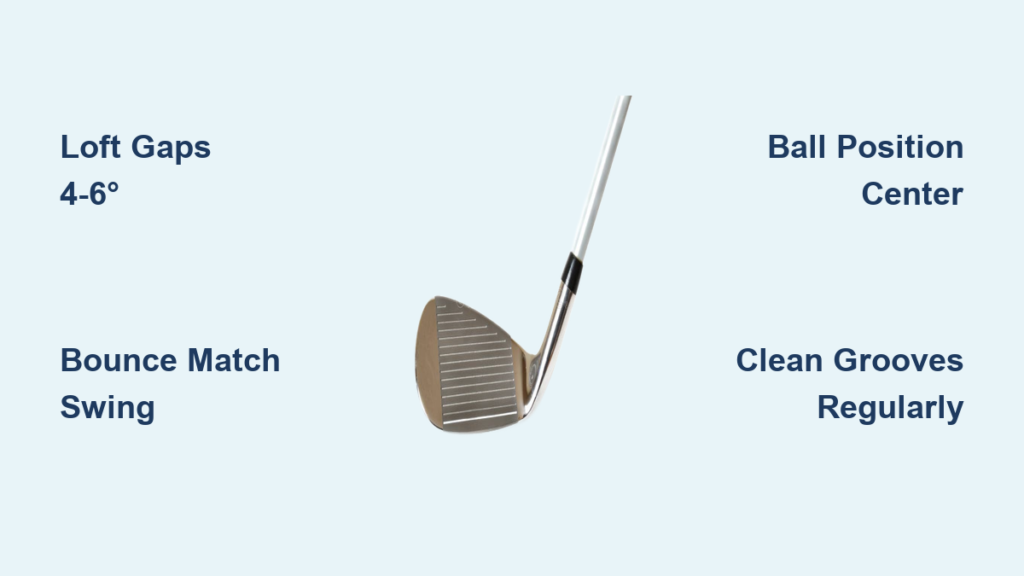
Ideally, there should be a 4–6° gap between each club. For example, if your pitching wedge is 44°, your gap wedge should be around 50°, the sand wedge 56°, and the lob wedge 60°. This spacing prevents distance overlaps and ensures smooth transitions between shots. Many off-the-rack irons come with strong-lofted pitching wedges (43°–46°), which can create large gaps if not addressed with proper wedge fitting.
Identify Your Primary Use Cases
Different lofts serve different purposes on the course. A 56° sand wedge excels in bunkers and full short-game shots, while a 60° lob wedge is ideal for high, soft landings over hazards. The gap wedge (48°–52°) bridges the distance between your pitching wedge and sand wedge. Assess your typical course conditions before choosing lofts, since firm greens favor sharper leading edges while soft terrain benefits from higher lofts.
Set Up the Correct Bounce
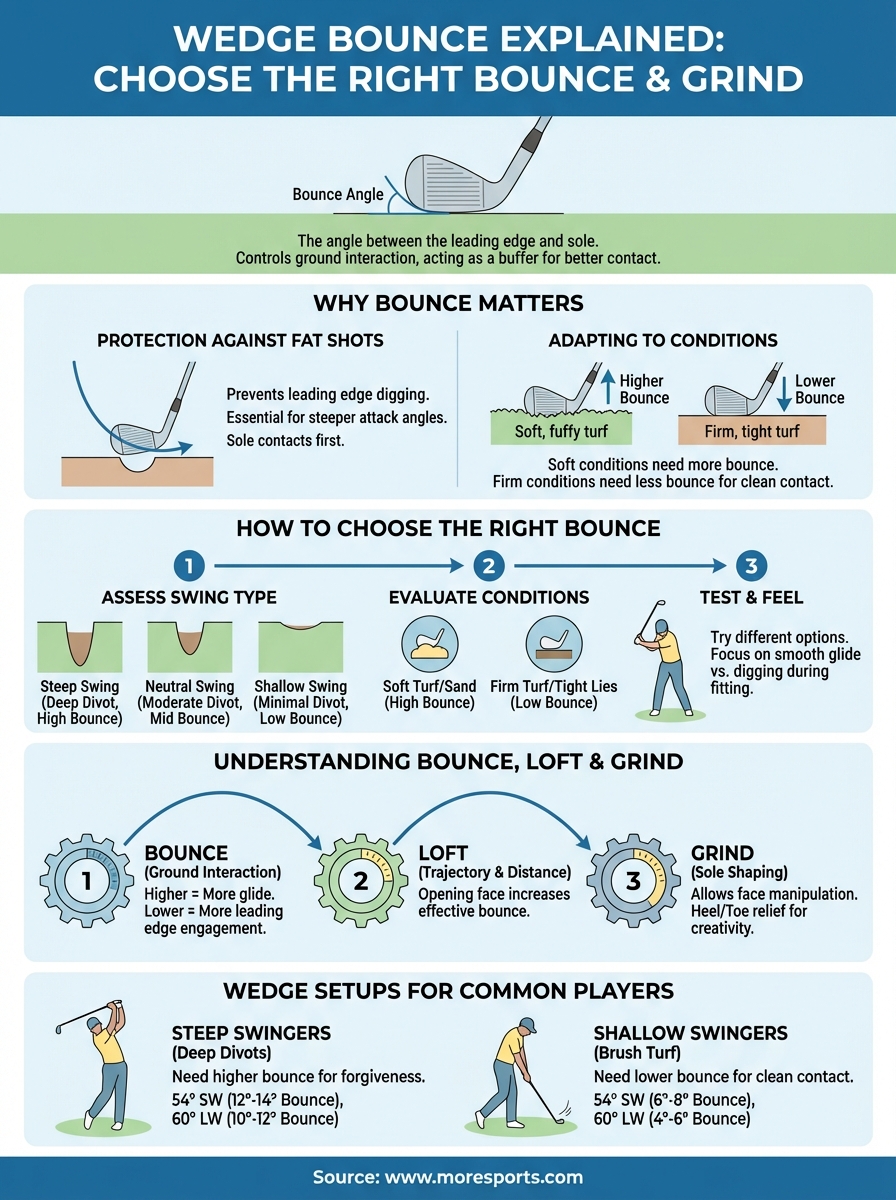
Bounce is the angle between the leading edge and the lowest point of the sole. This measurement determines how your wedge interacts with the turf. Choosing the right bounce is critical for clean contact and avoiding fat or thin shots around the green.
Low vs High Bounce: When to Use Each
Low bounce (4°–6°) works best on firm turf and tight lies, allowing the club to cut through without bouncing off the ground. High bounce (10°–14°) prevents digging, making it ideal for soft conditions and fluffy sand. Mid-bounce (7°–9°) offers versatility for average course conditions and serves as a safe choice for most amateur golfers building their golf wedge setup.
Adjust for Your Swing Type
Steep swingers who take deep divots benefit from higher bounce, as it prevents the club from digging too aggressively. Shallow swingers with a sweeping motion do better with low to mid-bounce designs. If you frequently hit behind the ball, consider increasing bounce. If you blade shots often, you may be using too little bounce or an incorrect setup position.
Shaft and Grip Selection
The shaft and grip of your wedges impact feel, control, and consistency. While many golfers use the same shafts in their wedges as in their irons, dedicated wedge shafts can enhance short-game performance in noticeable ways.
Use Wedge-Specific Shafts
Wedge-specific shafts are often heavier and stiffer, promoting stability on partial swings. They reduce twisting at impact, leading to tighter shot dispersion. Some players opt for raw or chrome shafts for better feedback during practice. If you’re using graphite in your irons, consider switching to steel in your wedges for improved control and a more consistent feel.
Choose the Right Grip Size and Texture
A slightly thicker grip can reduce hand action and promote a smoother release, which is ideal for finesse shots around the green. Textured or corded grips improve control in wet or humid conditions. Ensure your grip is clean and replaced every 12–18 months to maintain optimal feel and control throughout your golf wedge setup.
Master the Pre-Shot Stance
Your physical setup determines how effectively you deliver the wedge to the ball. Small adjustments in stance, ball position, and weight distribution can dramatically improve contact and shot shape on every short-game shot.
Position the Ball Correctly
Place the ball in the middle of your stance for most chip and pitch shots. For higher, softer shots with a lob wedge, move the ball slightly forward toward your lead foot. For low-running chips, position it back in your stance. Avoid extreme ball positions that promote inconsistent strikes and unpredictable trajectories.
Adjust Weight and Posture
Distribute 60% of your weight on your front foot at address. This promotes a slightly descending strike, which is crucial for generating spin. Keep your posture athletic, with knees flexed, spine straight, and arms hanging naturally. Your setup should feel balanced and ready to make a compact, repeatable swing every time.
Align for Consistent Contact
Misalignment is a common cause of poor wedge shots. Even slight errors in aim can lead to pulls, pushes, or inconsistent trajectories that cost you strokes.
Use a Club for Visual Alignment
Lay a club on the ground parallel to your target line during practice to train proper alignment. Your feet, knees, hips, and shoulders should all be square to the target. Avoid aiming too far left or right to “compensate” for a miss, since this creates swing flaws rather than fixing them.
Pick a Spot to Hit
Instead of focusing on the hole, pick a specific landing spot such as a discolored patch of grass or a spike mark. This improves precision and helps you commit to the shot. Use your wedge’s bounce by opening the face only when necessary, such as for flop shots or soft sand conditions.
Dial in Distance Control
One of the biggest challenges in the short game is judging distance. A proper golf wedge setup includes strategies to master yardage gaps and swing variations that translate to lower scores.
Practice Three Swing Lengths
Develop three repeatable swings: half, three-quarter, and full. For example, a half-swing with a 56° wedge might carry 50 yards, a three-quarter 70 yards, and a full 90 yards. Use a launch monitor or on-course testing to map your distances. Consistency comes from rhythm, not power, especially on partial wedge shots.
Use the Clock Method
Visualize your backswing as positions on a clock. 9 o’clock equals a half swing, 10 o’clock equals three-quarter, and 12 o’clock equals full. This mental model helps standardize your partial swings and improves distance control under pressure when you need it most.
Maintain Your Wedges
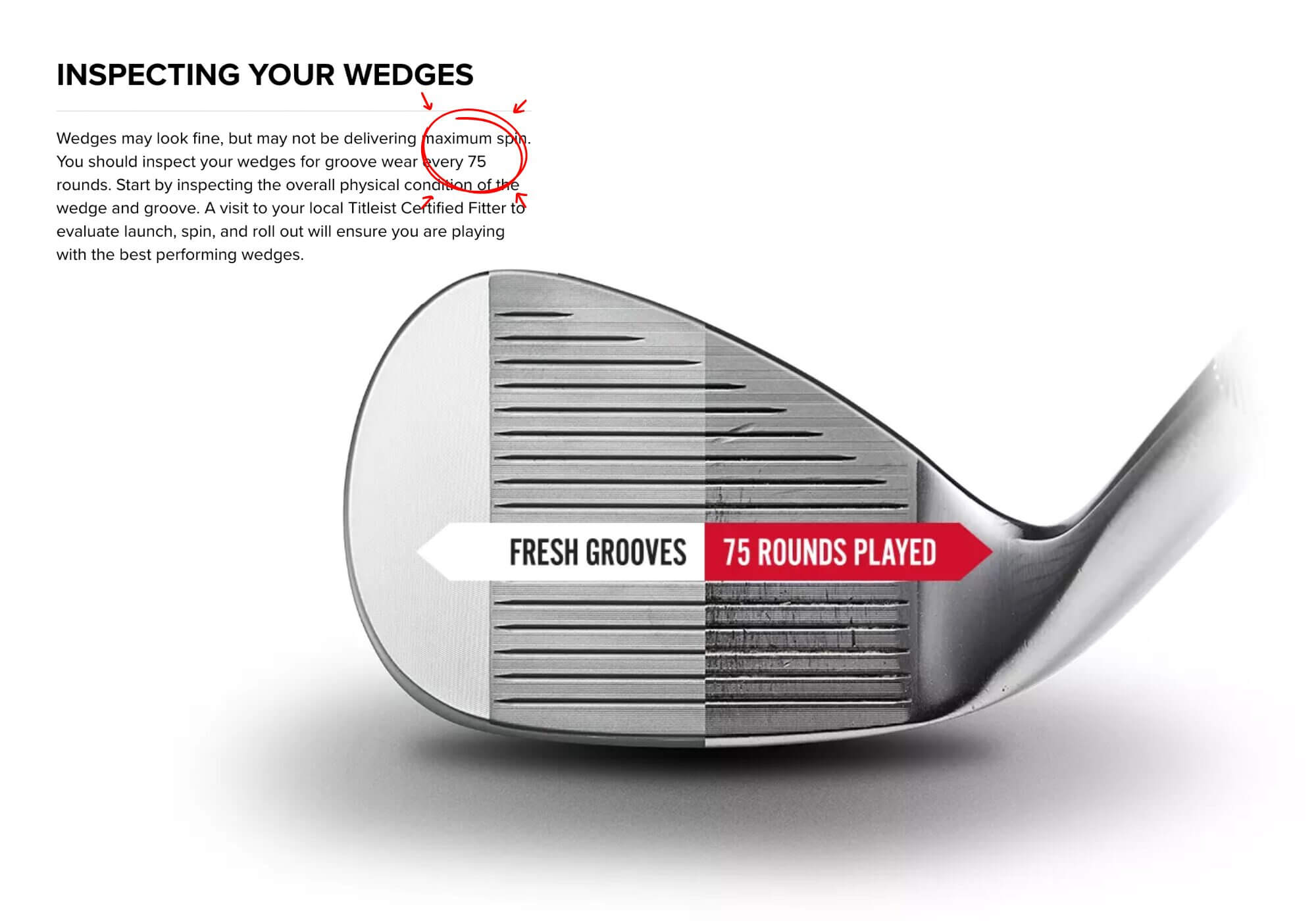
Even the best setup fails with worn equipment. Wedges lose performance over time, especially in the areas that matter most, including grooves and sole finish.
Replace Wedges Every 60–80 Rounds
Grooves wear down after about 75 rounds, reducing spin and control on scoring shots. Check your grooves regularly with a coin or groove cleaner. If they look flat or shiny, it’s time for a replacement. Fresh wedges can add 1,000+ rpm of spin, especially on partial shots where control matters most.
Clean After Every Round
Dirt, grass, and moisture degrade grooves and face texture over time. Rinse your wedges after each round and use a brush to clean the grooves thoroughly. Avoid harsh chemicals or dishwashers, which can damage the finish. Store them dry to prevent rust, especially on raw or satin finishes that are more prone to corrosion.
Frequently Asked Questions About Golf Wedge Setup
What is the ideal loft gap between wedges?
A 4–6° gap between each wedge works best for most golfers. This spacing prevents distance overlaps and creates smooth transitions between clubs. For example, a setup of 44°, 50°, 56°, and 60° covers all common scoring distances without gaps.
What bounce should I use for firm greens?
Low bounce (4°–6°) is best for firm greens and tight lies. This allows the leading edge to cut through the turf cleanly without bouncing off the surface. If your course has hard, fast conditions, prioritize low-bounce options in your golf wedge setup.
How often should I replace my wedges?
Replace your wedges every 60–80 rounds, or roughly every 75 rounds on average. Worn grooves reduce spin and control significantly. Check grooves regularly and replace when they appear shiny or flat rather than sharp.
Should wedge shafts match iron shafts?
Not necessarily. Wedge-specific shafts are often heavier and stiffer than iron shafts. They promote stability on partial swings and reduce twisting at impact. Many players benefit from steel wedge shafts even if their irons contain graphite.
What ball position works best for chip shots?
Middle of the stance is ideal for most chip and pitch shots. Move the ball slightly forward for higher, softer shots with a lob wedge, and slightly back for low-running chips that need to release toward the hole.
How can I improve distance control with wedges?
Practice three repeatable swing lengths (half, three-quarter, and full) and use the clock method to standardize your motion. Mapping your distances with each wedge and swing length builds confidence and consistency under pressure.
Key Takeaways for a Better Golf Wedge Setup
A proper golf wedge setup combines smart club selection, precise physical positioning, and consistent maintenance. Focus on matching loft gaps to your irons, choosing bounce that suits your swing and course conditions, and dialing in your stance and alignment for repeatable contact. Practice partial swings with a clock-based system to master distance control, and replace your wedges every 60–80 rounds to maintain spin and performance. Start by auditing your current wedge setup this week. Check your loft gaps, inspect your grooves, and test your three swing lengths on the practice green. Small adjustments to your golf wedge setup lead to immediate improvements in your short game and lower scores on the course.





