You love the game but breaking through to the next level feels frustrating. Maybe you’re stuck in the same scoring range, missing fairways, or struggling with consistency. The good news? Real improvement isn’t about swinging harder or copying male pros. It’s about smart, targeted strategies that work with your body and game.
For women golfers, strength comes from the legs, the mindset, and the details most overlook. From custom clubs to smarter goals and daily putting routines, small changes create big results. This guide delivers 7 proven golf tips for women who want measurable progress, no fluff, and no outdated myths. You’ll learn how to generate more power without brute force, make better decisions on the course, and build a practice routine that actually pays off.
Generate Power From Your Legs, Not Your Arms
Women often rely too much on arms and shoulders, missing a major source of power: the lower body. Your legs are strong, stable, and built to drive rotation. Tapping into them boosts swing speed, balance, and consistency without extra effort.
Build Leg Strength Off the Course
Strong legs start off the course. Add these exercises to your weekly routine:
- Bodyweight squats (3 sets of 15)
- Walking lunges (2 sets of 20 steps)
- Glute bridges (3 sets of 12)
- Calf raises (2 sets of 20)
Even brisk walking or light jogging improves endurance and foot stability. These movements build the explosive leg drive needed for a powerful downswing.
Pro Tip: Practice squats with a golf grip. This mimics the posture and muscle engagement used in your swing.
Choose Performance-Driven Golf Shoes
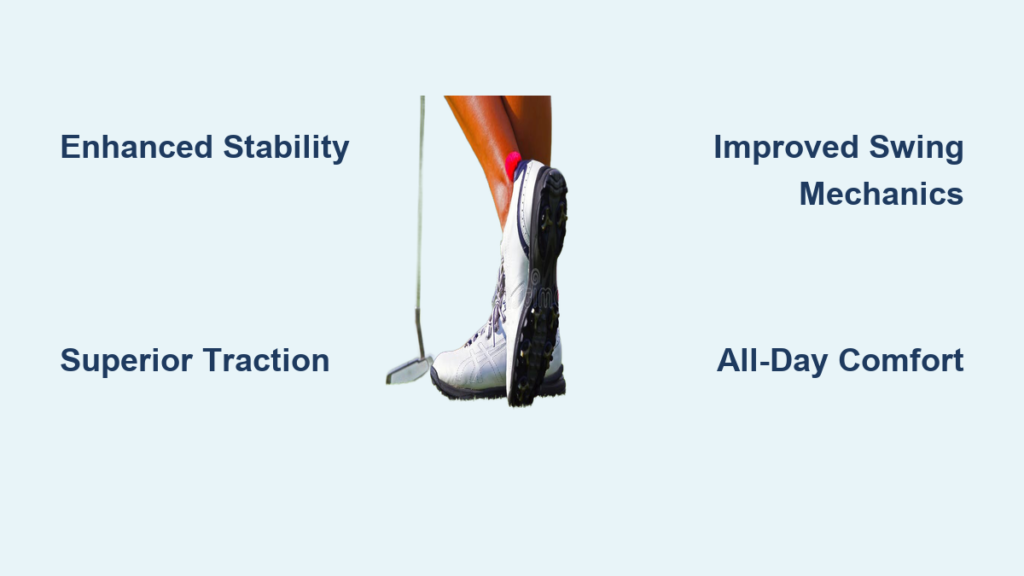
Cute doesn’t score. Stability does. Many women sacrifice performance for style, wearing shoes with poor traction or weak support.
Look for:
- Firm heel counters
- Spiked or aggressive rubber outsoles
- Ankle support and snug fit
The Puma Ignite is a top performer, lightweight, grippy, and designed for rotational movement. It helps transfer energy from the ground up, increasing clubhead speed and control.
Push Into the Ground for More Speed
At impact, your feet should feel connected to the turf. This ground force drives rotation and power.
Try this drill:
- Take your stance.
- On the downswing, focus on pushing your trail foot into the ground.
- Feel your lead foot anchor down through contact.
This isn’t a hop or lift; it’s a firm, athletic push. Think of a sprinter exploding from the blocks. That same energy, channeled correctly, transforms your swing.
Visual Cue: If your back heel lifts naturally during the backswing, that’s fine. But in the downswing, drive both feet into the ground.
Track Your Rounds to Find Your Weaknesses

Most women don’t track their rounds, and that’s holding them back. You can’t improve what you don’t measure.
If you’re a 19-handicap, ask yourself why. Is it missed fairways? Three-putts? Poor short game? Tracking reveals the real reasons behind your score and helps you focus where it matters.
Use Apps That Show Strokes Gained Insights
Skip basic scorecards. Use tools that show why you scored the way you did.
Top choices:
- Pinpoint Golf: Tracks strokes gained, proximity, and putting stats
- Garmin Golf: Syncs with GPS devices and wearables like the Bushnell Wingman View
- Arccos Caddie: Uses sensors to analyze every shot
Even one round tracked gives you a baseline. After three rounds, patterns emerge.
Example: One golfer discovered she lost 2.1 strokes per round on putting alone, more than her driving. She shifted focus, improved her stroke, and dropped three strokes in two weeks.
Set Process Goals Instead of Score Goals
“Break 90” sounds motivating, but it’s not actionable. If you miss, you feel defeated. If you hit it, you don’t know why you succeeded.
Process goals fix this. They’re specific, measurable, and within your control.
Examples of Effective Process Goals
- Increase clubhead speed by 3 mph using a launch monitor
- Play a round with fewer than 30 putts
- Hit at least 3 greens in regulation
- Get on the green on every par 3
- Establish proper posture before each swing
These goals build skills that lead to lower scores naturally.
Why it works: You can succeed even if your score doesn’t drop. That keeps motivation high and focuses effort where it matters.
Plan Your Course Strategy Before Every Shot
Golf isn’t just about hitting the ball. It’s about smart decisions. Many women play passively, aiming for the middle and hoping for the best.
Great course management means playing to your strengths, not someone else’s game.
Play Your Natural Shot Shape
If you naturally hit a fade, don’t fight it. Aim left on a straight hole and let the ball work right.
Trying to hit “straight” often leads to blocks or pulls. Embrace your shot pattern. It’s more consistent and controllable.
Match Your Club to Your Confidence
A 150-yard shot feels very different if you’re nervous with your 7-iron. Yardage isn’t everything. Position matters more.
Real example: A student consistently missed 7-iron approaches. On a par 5, she laid up with a 5-wood, leaving her 145 yards. But she was anxious. So we had her re-tee and hit the 7-iron from the tee box.
She nailed it. Now she was 170 yards out, perfect 5-wood distance. Calm, confident, full swing.
She made par, her first ever on that hole.
Lesson: Match the club to your confidence. Sometimes laying up further back gives you a better shot.
Favor Uphill Putts Whenever Possible
Being on the green is good. Being on the right side is better.
On approach shots, aim to leave yourself an uphill putt. Downhill putts are harder to judge and stop. A 3-footer downhill can lip out. An 8-footer uphill has a better chance of dropping.
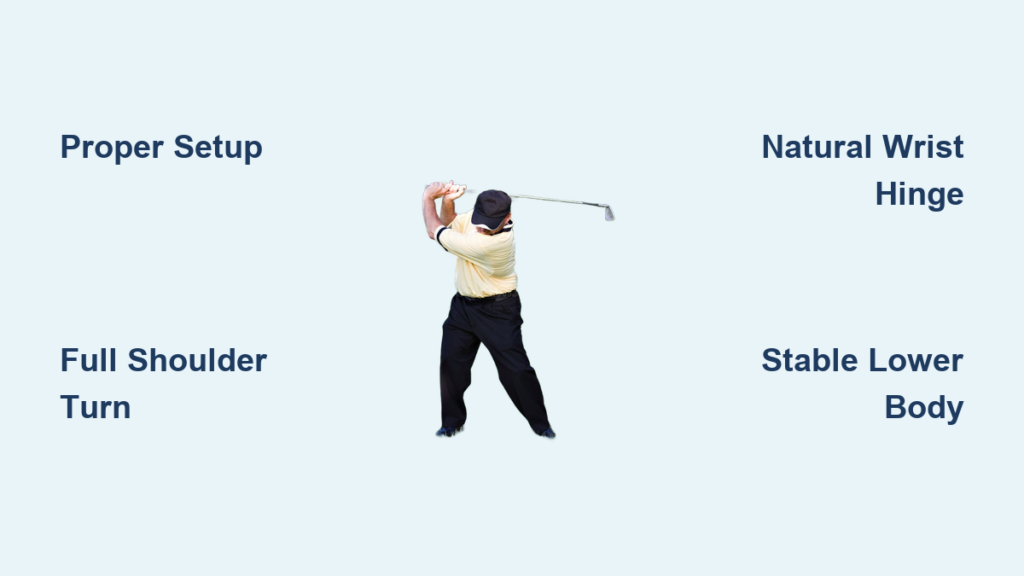
Master a Low and Slow Takeaway
The first few inches of your swing set everything else in motion. A poor takeaway leads to slices, loss of power, and inconsistency.
A great takeaway is low, slow, and connected.
Build a Repeatable Takeaway Routine
Follow this sequence:
- Bring the club back low and slow along the ground for the first 6–12 inches.
- Initiate a pivot with your lower body, not your arms.
- Let your shoulders turn naturally away from the ball.
- Feel a full body rotation with weight shifting slightly to your trail side.
This creates a wide, on-plane backswing that’s easy to repeat.
Avoid the “Club Lift” Mistake
Many women pick the club straight up. This narrows the swing arc, throws weight to the toes, and makes it hard to return on plane.
Fix it: Place a headcover 6 inches behind the ball. Practice taking the club back without hitting it. This encourages a shallower path.
Do this drill for 5 minutes daily. It rewires muscle memory and builds consistency.
Practice Putting Every Single Day
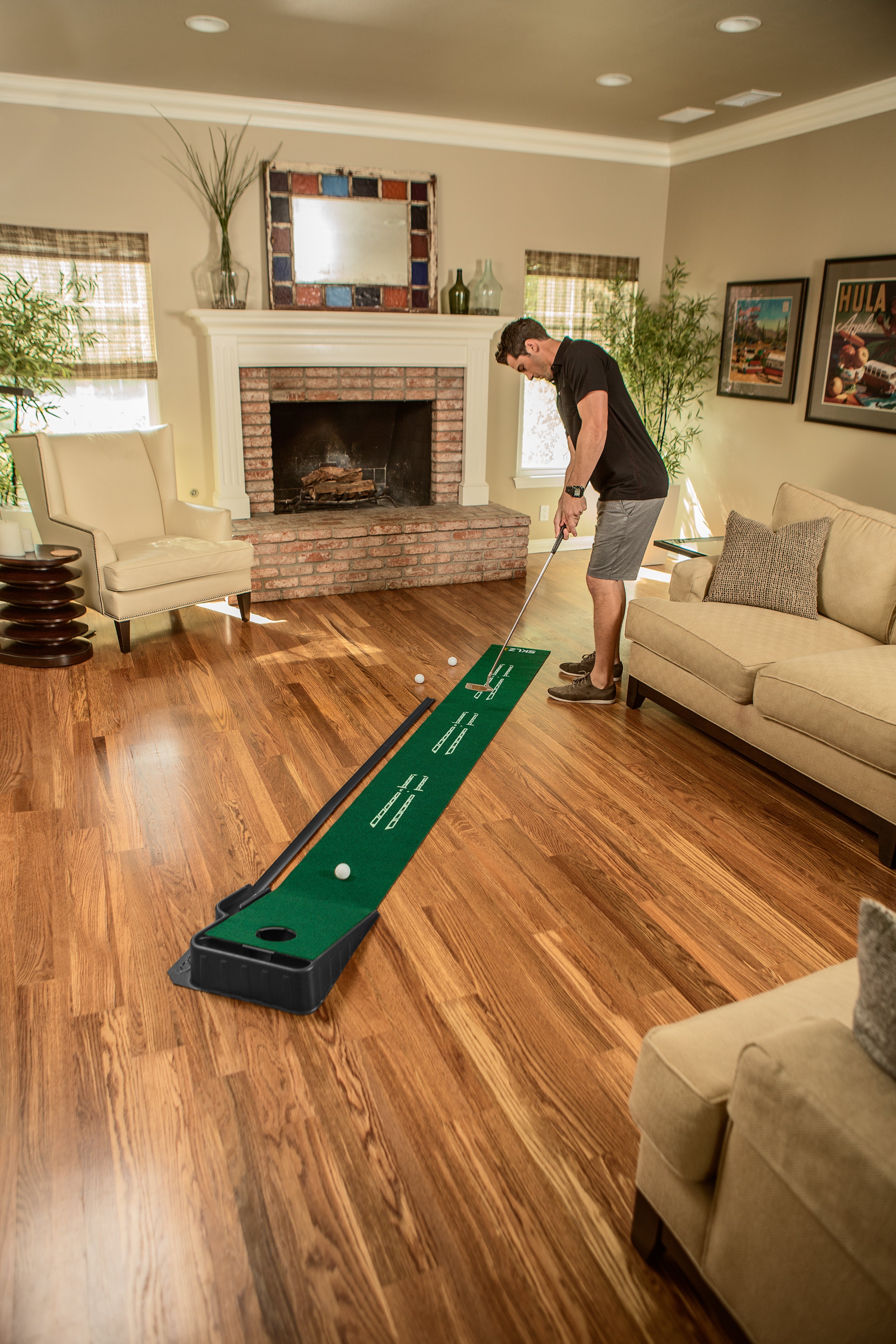
Putting makes up 40% of your shots, yet many women practice it least. You don’t need a green. You don’t need 30 minutes. Just 10–15 minutes daily can transform your flat stick.
Make Putting Practice Easy and Fun
Try these ideas:
- Putt while watching TV
- Set up a mat in your hallway
- Challenge a friend to a “closest to the line” game
- Use coins as targets
Consistency beats intensity. Daily micro-sessions build touch and confidence.
Use Training Aids That Work
Affordable tools with big impact:
- SKLZ Putt A Bout: A compact mat that fits anywhere, great for distance control
- Go Sports Putting Gates: Forces straight stroke and proper alignment
- Dave Pelz Putting Clips: Attaches to the putter to train a pendulum motion
Pro Tip: Practice lag putting (3–10 feet) more than short putts. Reducing three-putts saves more strokes.
Get Fitted for Your Clubs
Buying a women’s set off the rack is like wearing shoes two sizes too big. It might fit, but it won’t perform.
Custom-fitted clubs match your swing, height, and speed, unlocking distance, accuracy, and consistency.
Why Off-the-Rack Sets Fall Short
- Shafts may be too stiff or too soft
- Lie angles don’t match your posture
- Grips are too thick or thin
- Long irons are hard to launch for slower swing speeds
A fitting fixes all this and more.
Key Fitting Factors for Women
- Shaft flex: Not all women need “ladies flex.” Use a launch monitor to test
- Swing speed: Determines iron versus hybrid mix. Below 70 mph? Use more hybrids
- Loft gapping: Ensure even yardage jumps between clubs (around 10–12 yards)
- Center of gravity: Some clubs are designed for higher launch, ideal for slower swings
- Wedges: Carry at least 3: pitching (45°), gap (50°), sand (56°)
- Putter fitting: Length, lie angle, and head style affect roll and alignment
Investment Tip: A full fitting costs $100–$300, but pays for itself in fewer lost balls and better scores.
Even one fitted club, like a driver or putter, can boost confidence and performance.
Frequently Asked Questions About Golf Tips for Women
What Is the Best Way for Women to Increase Golf Swing Speed?
Focus on lower body rotation and ground force, not arm strength. Strengthening your legs through squats and lunges, combined with proper weight transfer during the downswing, naturally increases clubhead speed. Tracking swing speed with a launch monitor also helps measure progress.
How Often Should Women Practice Putting to See Improvement?
Daily short sessions of 10–15 minutes are more effective than one long weekly session. Consistency builds touch and confidence. Focus on speed control and breaking putts rather than only short straight putts.
Are Custom-Fitted Clubs Worth the Cost for Women Golfers?
Yes, especially if you play regularly. Custom fitting matches shaft flex, lie angle, and loft to your unique swing. Even one fitted club can improve accuracy and distance, making the $100–$300 investment worthwhile for serious players.
What Are Good Beginner Golf Goals for Women?
Set process goals instead of score goals. Examples include hitting 5 of 14 fairways, making fewer than 30 putts per round, or improving posture on every tee shot. These measurable targets build skills that lead to lower scores naturally.
How Can Women Stop Slicing the Golf Ball?
A low and slow takeaway is often the key fix. Many slicers pick the club up too quickly, causing an out-to-in swing path. Practicing a ground-level takeaway and avoiding the “club lift” mistake helps create a more neutral swing path.
What Exercises Help Women Hit the Golf Ball Further?
Lower body exercises like squats, lunges, glute bridges, and calf raises build the leg power needed for distance. These movements improve stability, rotation, and ground force during the downswing, all of which translate to longer shots.
Key Takeaways for Women Ready to Improve Their Golf Game
The best golf tips for women focus on working smarter, not harder. Use your legs to generate power instead of relying on arm strength. Track every round to identify where strokes are actually being lost. Set process goals that build skills rather than vague score targets that deflate motivation.
Plan each shot based on confidence and natural shot shape. Practice a low and slow takeaway to eliminate slice-causing moves. Putt daily in short sessions, even at home. And finally, invest in clubs that match your swing through a proper fitting.
These aren’t quick fixes. They’re long-term game changers. Pick one tip to start with this week. Master it through deliberate practice. Then move to the next.
Your lowest score is coming, and it starts today.