
Poor posture is one of the most common yet overlooked issues in golf. Whether you’re a beginner or a weekend warrior, your stance and spine alignment directly impact swing mechanics, power transfer, and shot consistency. Many players focus on club selection or swing speed but neglect the foundation: posture. With the right golf posture tips, you can reduce strain, increase swing efficiency, and improve ball striking starting today.
This guide delivers actionable, expert-backed golf posture tips that target real-world problems. You will learn how to set up correctly, avoid common mistakes, and maintain optimal alignment through the swing. No fluff, no guesswork, just proven techniques used by coaches and pros to build a repeatable, powerful golf setup.
Set Up for Success with Proper Spine Alignment
The foundation of great golf begins before you even swing. Proper setup ensures your body is in the best possible position to execute a consistent, powerful motion.
Align Your Spine Correctly at Address
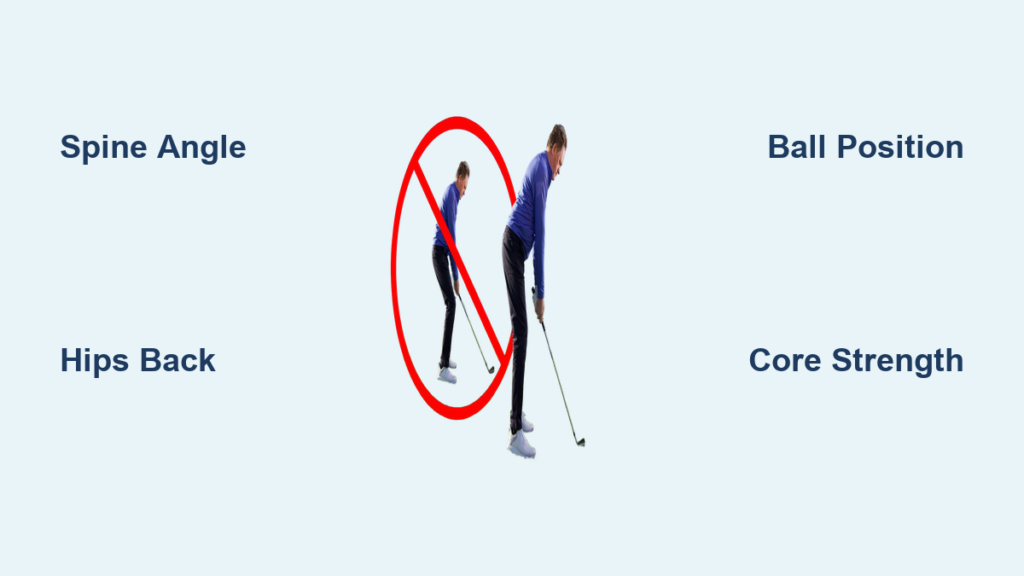
Your spine angle determines the path and plane of your swing. To get it right:
- Tilt forward from the hips, not the waist
- Keep your back straight with no rounding or arching
- Maintain a neutral neck position, eyes down the target line
A slight forward tilt allows your arms to hang naturally and promotes an inside-out swing path. If your spine is too upright or collapsed, you will likely top the ball or swing off-plane.
Bend from the Hips, Not the Waist
Many amateurs bend at the waist, creating a hunched look. This restricts rotation and leads to early extension. Instead:
- Push your hips back as if sitting in a chair
- Feel a stretch in your hamstrings
- Let your arms drop below your chest
This athletic stance engages your core and sets you up for full shoulder turn.
Position the Ball Correctly in Your Stance
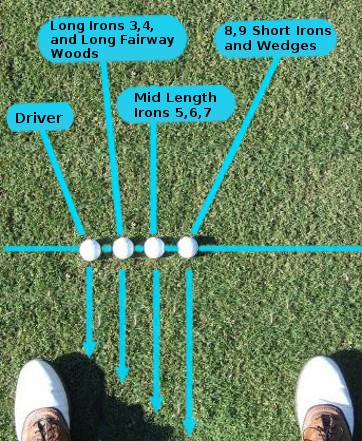
Ball placement affects launch angle and contact quality. General rules:
- Short irons (8-iron, wedge): Center or slightly back in stance
- Mid-irons (5 to 7): Middle of stance
- Long irons and woods: Off the front heel
Incorrect ball position forces compensations like lifting up or lunging forward, ruining posture mid-swing.
Fix Common Posture Mistakes That Kill Your Swing

Even small flaws in posture can derail your swing. Recognizing these issues is the first step to correcting them.
Avoid Swaying or Sliding During the Backswing
Swaying off the ball at takeaway breaks posture and shifts weight incorrectly. Look for:
- Hips moving laterally instead of rotating
- Head shifting outside the ball during backswing
Fix it: Anchor your lead foot slightly and focus on coiling around your spine. Use a mirror or video to check head position.
Prevent Early Extension Through Impact
Early extension, or standing up during the downswing, is a major power killer. Signs include:
- Head moving closer to the ball at impact
- Loss of spine angle
- Hip pain or inconsistent contact
Fix it: Strengthen your core and practice the “post-up” drill. Hold your finish position for 3 seconds to train stability.
Stop Rounding the Shoulders at Setup
Rounded shoulders limit arm swing and cause slices. This often comes from poor setup or tension.
Quick fix: Before swinging, roll shoulders back and down. Imagine holding a tennis ball under each armpit to maintain width.
Build a Repeatable Pre-Shot Routine
Consistency starts with routine. A structured pre-shot sequence locks in good posture every time.
Check Posture with the Wall Drill
This simple drill ensures proper alignment:
- Stand with your back against a wall
- Heels 2 to 4 inches from the wall
- Touch wall with head, upper back, and buttocks
- Grip a club and simulate setup
If you cannot maintain contact points, adjust your stance until you can.
Optimize Equipment to Support Better Posture
Your gear should support, not sabotage, your posture.
Choose the Right Club Length for Your Build
Too long or too short clubs force awkward stances. Signs of poor fit:
- Hunched shoulders
- Arms too high or low at address
- Reaching for the ball
Solution: Get a professional club fitting. Even a half-inch adjustment can improve posture and contact.
Wear Proper Golf Shoes for Stability
Stability starts from the ground up. Shoes with poor support lead to swaying and balance loss.
Look for:
– Firm heel counter
– Traction pattern suited to your swing
– Comfortable arch support
Maintain Flexibility and Strength for Lasting Posture
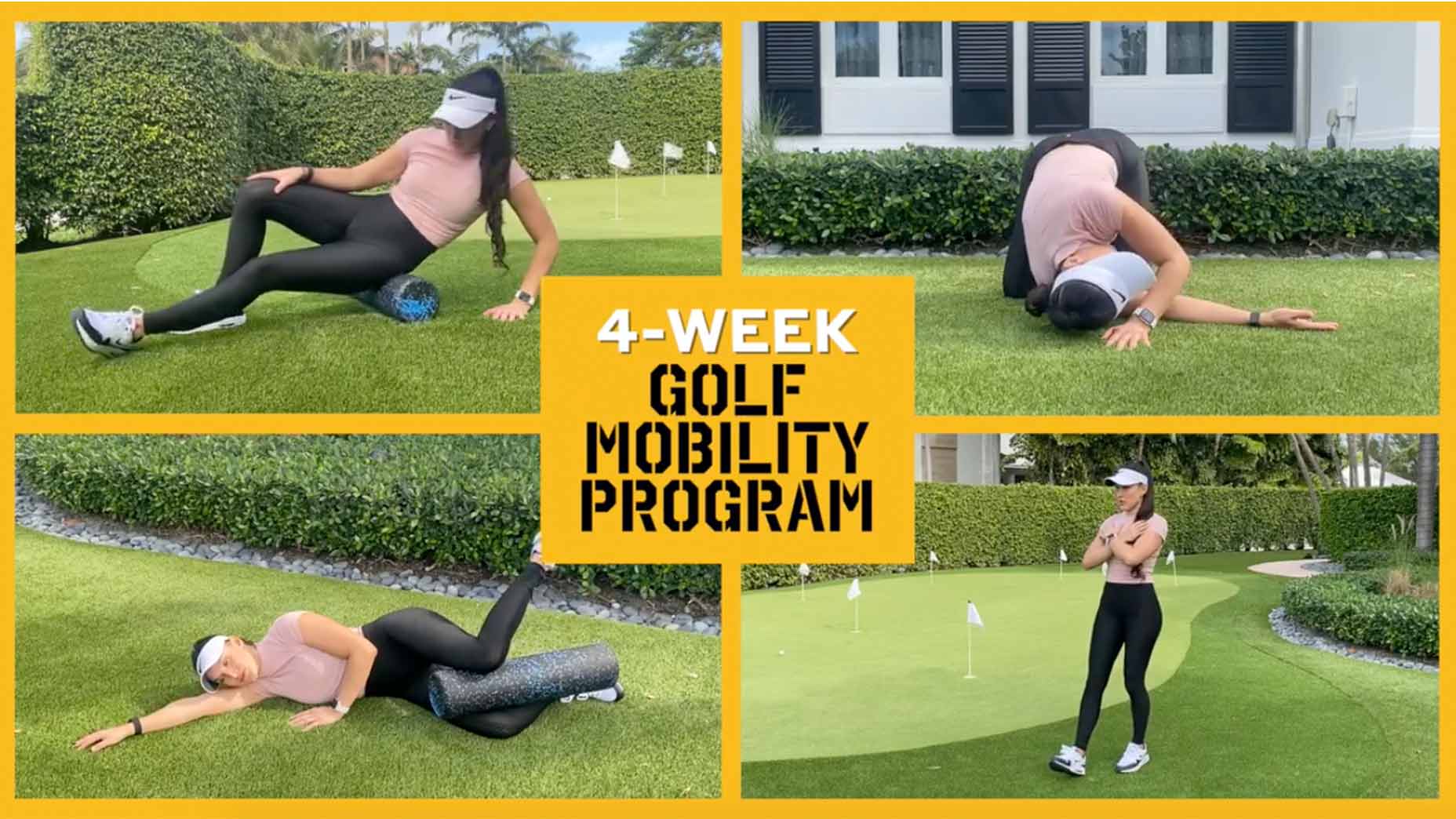
Great posture requires mobility and core control. Many golfers lack the flexibility to maintain spine angle.
Stretch Key Areas Before Playing
Focus on these areas:
– Hamstrings, since tightness pulls on the lower back
– Hip flexors, which get tight from sitting
– Thoracic spine, which enables shoulder turn
Quick routine:
– 30 seconds per side: Lunging hip flexor stretch
– 1 minute: Seated forward fold
– 10 thoracic twists lying on side
Do this pre-round for better posture and reduced injury risk.
Strengthen Core and Glutes for Swing Stability
Weak core muscles lead to postural collapse during the swing.
Effective exercises:
– Planks (3 sets of 30 seconds)
– Dead bugs (2 sets of 10 per side)
– Glute bridges (3 sets of 12)
Do 3 times per week for noticeable improvement in 4 to 6 weeks.
Use Drills to Reinforce Good Posture
Practice makes permanent, only if you are practicing correctly. These drills lock in proper posture.
The Head Against the Wall Drill
- Set up to a shot with your head lightly touching a wall
- Make slow swings, keeping head in place
- Focus on rotating, not sliding
If the head loses contact, you are moving off the ball.
The Glove Under the Arm Drill
Place a glove under each armpit and hit short shots. If the glove drops, you have lost connection or posture.
This promotes:
– Compact backswing
– Proper arm movement
– Consistent spine angle
Adjust Posture for Different Clubs
Your posture should adapt slightly based on the club.
Fairway Woods and Hybrids
- Slightly wider stance
- Ball off front heel
- Minimal spine tilt to stay balanced
These clubs need a shallow angle of attack. Too much forward press leads to fat or thin shots.
Wedges and Short Irons
- Narrow stance
- Ball centered
- More weight on lead foot
This setup promotes a steeper, descending strike, which is critical for clean contact.
Monitor Progress with Video Feedback
You cannot fix what you cannot see. Use your smartphone to record swings.
What to look for:
– Head position at address versus impact
– Spine angle consistency
– Shoulder alignment
Compare side-on videos weekly. Small improvements add up fast.
Frequently Asked Questions About Golf Posture Tips
What Is the Correct Golf Posture for Beginners?
The correct posture starts with a slight forward tilt from the hips, a straight back, and a neutral neck. Arms should hang naturally below the chest with knees slightly flexed. This athletic stance promotes balance and full rotation.
How Does Posture Affect Golf Swing Mechanics?
Posture controls swing plane, power transfer, and contact quality. Poor posture leads to compensations like early extension, slicing, and topped shots. Proper posture allows you to rotate freely and strike the ball consistently.
How Can I Check My Golf Posture at Home?
Use the wall drill described above. Stand with your back to a wall, keeping your head, upper back, and buttocks in contact while gripping a club. If you lose contact during a simulated swing, your posture needs work.
What Are the Most Common Golf Posture Mistakes?
The most common mistakes include bending from the waist instead of the hips, rounding the shoulders, and placing the ball too far forward or back in the stance. Swaying during the backswing is another frequent error.
How Long Does It Take to Improve Golf Posture?
With consistent practice of drills and stretching, most golfers see improvement in 4 to 6 weeks. Strength training accelerates results by building the core stability needed to hold posture through the swing.
Should I Get My Clubs Fitted for Better Posture?
Yes, ill-fitting clubs force awkward postures and compensations. A professional club fitting ensures your clubs match your height, arm length, and swing style, which directly supports better posture.
Key Takeaways for Better Golf Posture
Great golf starts with great posture. By applying these golf posture tips, including setting up with proper spine angle, avoiding common mistakes, using drills, and maintaining mobility, you will build a more consistent, powerful swing. Stick with it. In just a few weeks, better posture will lead to straighter drives, cleaner iron shots, and lower scores. Start with one drill today and track your progress with video to see real improvement fast.





