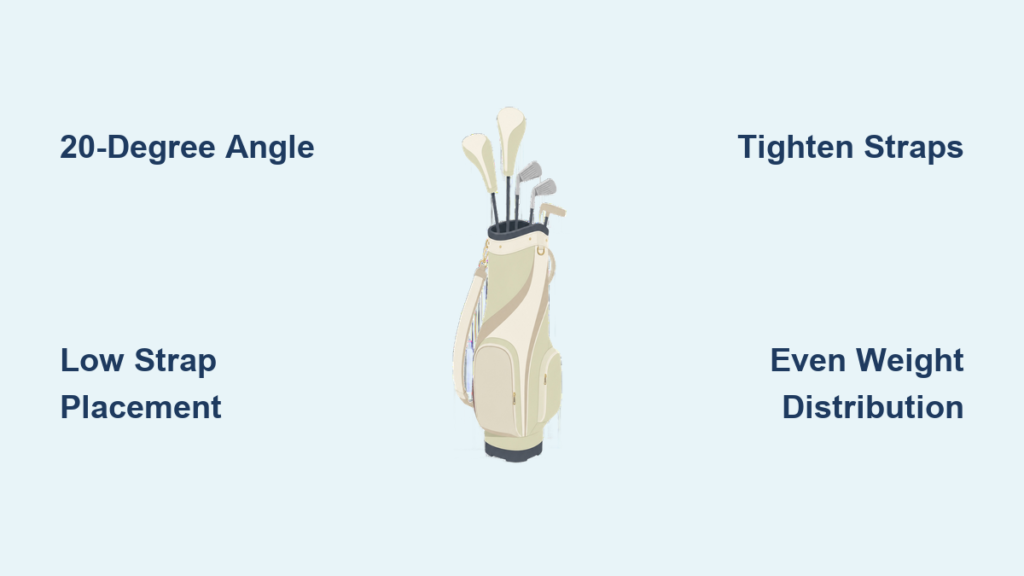
Walking the course with a heavy golf bag can quickly turn a relaxing round into a physical ordeal if the bag is positioned incorrectly. Many golfers experience shoulder fatigue, uneven weight distribution, or the frustration of clubs rattling loose with every step. Understanding how to carry a golf bag properly is the key to staying comfortable and protecting your equipment through all 18 holes.
The main source of discomfort usually comes from poor angling and strap configuration. Carrying the bag parallel to the ground might seem intuitive, but it often causes clubs to shake loose and creates distracting noise. Tilting the bag too steeply creates a different set of problems, shifting your center of gravity and putting excess pressure on one shoulder. This guide breaks down the optimal angles, strap setups, and walking techniques used by experienced caddies and veteran walkers so you can carry your bag with confidence.
Find the Optimal Bag Angle
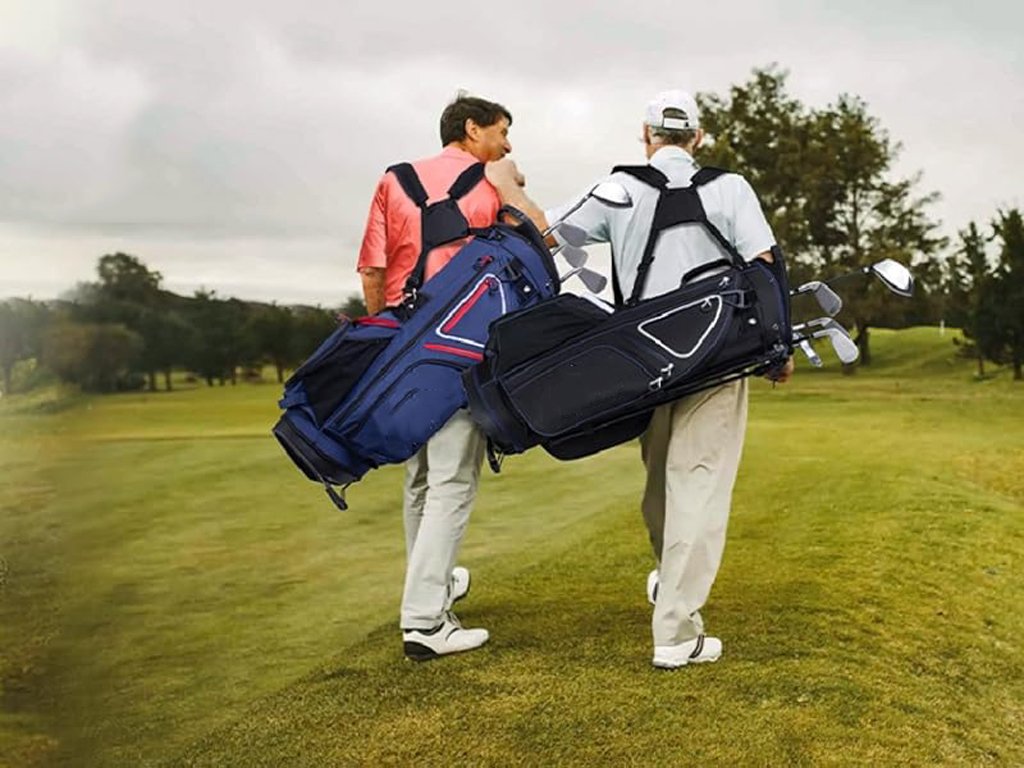
The angle at which your golf bag hangs against your back is the single most important factor in preventing club loss and reducing fatigue. While there is no universally perfect position, extreme angles consistently cause more problems than moderate ones.
Why Parallel Positioning Causes Problems
Carrying the bag completely parallel to the ground is a common beginner mistake. In this position, gravity does not press the clubheads firmly into the bottom of the bag, allowing them to bounce vertically as you walk. The result is constant rattling, distracting noise, and a higher risk of clubs working their way out of the top. A horizontal bag also feels wider and more awkward when navigating crowded fairways or tight spaces between groups.
The 20-Degree Sweet Spot
Most experienced carriers find that an angle of around 20 degrees relative to the ground provides the best balance. This slight tilt uses gravity to your advantage, pushing the clubs gently into the base of the bag where they stay secure. At 20 degrees, the bag hangs naturally without pitching forward or feeling unstable. Golfers who experiment with different positions often report that 20 degrees feels noticeably more stable than steeper or flatter angles.
Adjust for Club Length and Bag Size
Standard adult clubs in a standard bag generally perform well at the 20-degree mark. However, smaller bags create different dynamics. When adult clubs are placed in a junior-sized bag, the longer shafts extend well beyond the top opening, and the whole setup tends to want to pitch forward. In these cases, you must be extra careful about the tilt angle to keep the clubs from sliding free.
Use the Single Strap Method Like a Caddie
Many veteran golfers and former caddies prefer the single-strap approach because it allows freedom of movement during the swing. When configured correctly, this traditional method is reliable and comfortable across long rounds.
Anchor the Bag Low on Your Back
With a single strap, place the padded section of the bag between your lower back and your rear end. This low positioning lowers your center of gravity, making the bag feel lighter and more stable. Keeping the bag down also prevents it from riding up between your shoulder blades, which restricts movement and causes upper back tension.
Set the Angle at 25 Degrees
Single-strap carriers often prefer a slightly steeper angle than dual-strap users, usually around 25 degrees. At this angle, the bottom of the bag points slightly forward while the clubheads trail behind you. This configuration keeps the bulk of the weight off your shoulder blade and prevents the bag from swinging into your legs as you walk.
Stick with One Shoulder
Consistency matters with the single-strap method. Most long-time users carry exclusively on the right shoulder, having conditioned that side to handle the load. By keeping the clubs forward and the strap on the same shoulder every time, you develop a predictable rhythm that is easier to sustain over 18 holes than constantly switching sides.
Configure Dual Strap Systems for Even Support

Dual-strap systems work like backpacks, distributing weight across both shoulders. While some golfers find them awkward at first, proper setup turns them into a great option for reducing localized muscle strain.
Distribute Weight Across Both Shoulders
The main benefit of a dual-strap system is balanced load distribution. When adjusted correctly, the weight is shared between both shoulders, preventing the fatigue that comes from hauling a heavy bag on one side. This is especially helpful for golfers with existing back or shoulder issues, or anyone carrying a full set of clubs over hilly terrain.
Stop the Rattling
A common complaint about dual-strap bags is that they ride higher on the back, which causes the clubs to rattle with each step. This usually comes from loose straps or poor internal organization. Tighten the straps enough to hold the bag snug against your body without restricting breathing, and consider a slight forward tilt to help the clubs settle deeper into the bag.
Treat It Like a Backpack
If you have ever worn a hiking backpack comfortably, you can carry a dual-strap golf bag. The mechanics are identical. Once the straps are sized to your torso and the bag is balanced, the system provides a stable, hands-free carry that requires very little effort to maintain.
Diagnose and Fix Shoulder Fatigue
Shoulder fatigue is usually a symptom of poor setup rather than a lack of fitness. Identifying the cause lets you make quick adjustments that pay off across an entire round.
Look for Uneven Weight Distribution
If you feel all the weight concentrating on a single point, your muscles are overworking to stabilize the load. With dual straps, check that both sides are equally tensioned. With a single strap, consider switching shoulders every few holes to give your muscles a break.
Check Strap Placement
The strap should sit on the fleshy part of your shoulder, not too close to your neck and not too far down your arm. A strap positioned correctly transfers weight efficiently, while one placed wrong creates pressure points and strain. Adjusting the strap length so the bag sits lower can instantly relieve shoulder tension.
Assess Bag Balance and Tilt
An unbalanced bag forces your body to hunch or twist to compensate for the weight shift. Make sure your clubs are pushed all the way down into the bag and that the tilt stays consistent with the 20-to-25-degree recommendation. Small adjustments here prevent the slow build-up of fatigue.
Keep Clubs Secure While Walking
Protecting your equipment is just as important as protecting your body. A few simple habits prevent the dreaded mid-round scramble to retrieve a fallen club.
Maintain a Slight Upward Tilt
The best way to keep clubs in the bag is to maintain a slight upward tilt at the top. You want the bag somewhere between fully horizontal and fully vertical. A slight tilt lets gravity hold the clubheads in the bottom of the bag while you walk. Modern stand bags are designed with strap geometry that naturally encourages this hanging angle.
Avoid Steep Forward Angles
Tilting the bag too far forward, especially past 45 degrees, increases the risk that long irons or woods will slide out, particularly when you stop suddenly or bend over to line up a putt. Keep the angle moderate for both comfort and club safety.
Be Careful with Junior Bags
If you carry a smaller or junior-sized bag, the longer adult shafts create extra leverage that can cause the bag to pitch forward. Pay close attention to the tilt and make sure the bag is angled back enough to counteract the long clubs. If the problem persists, carry fewer clubs or switch to a bag with a longer top.
Choose Between Single and Dual Straps
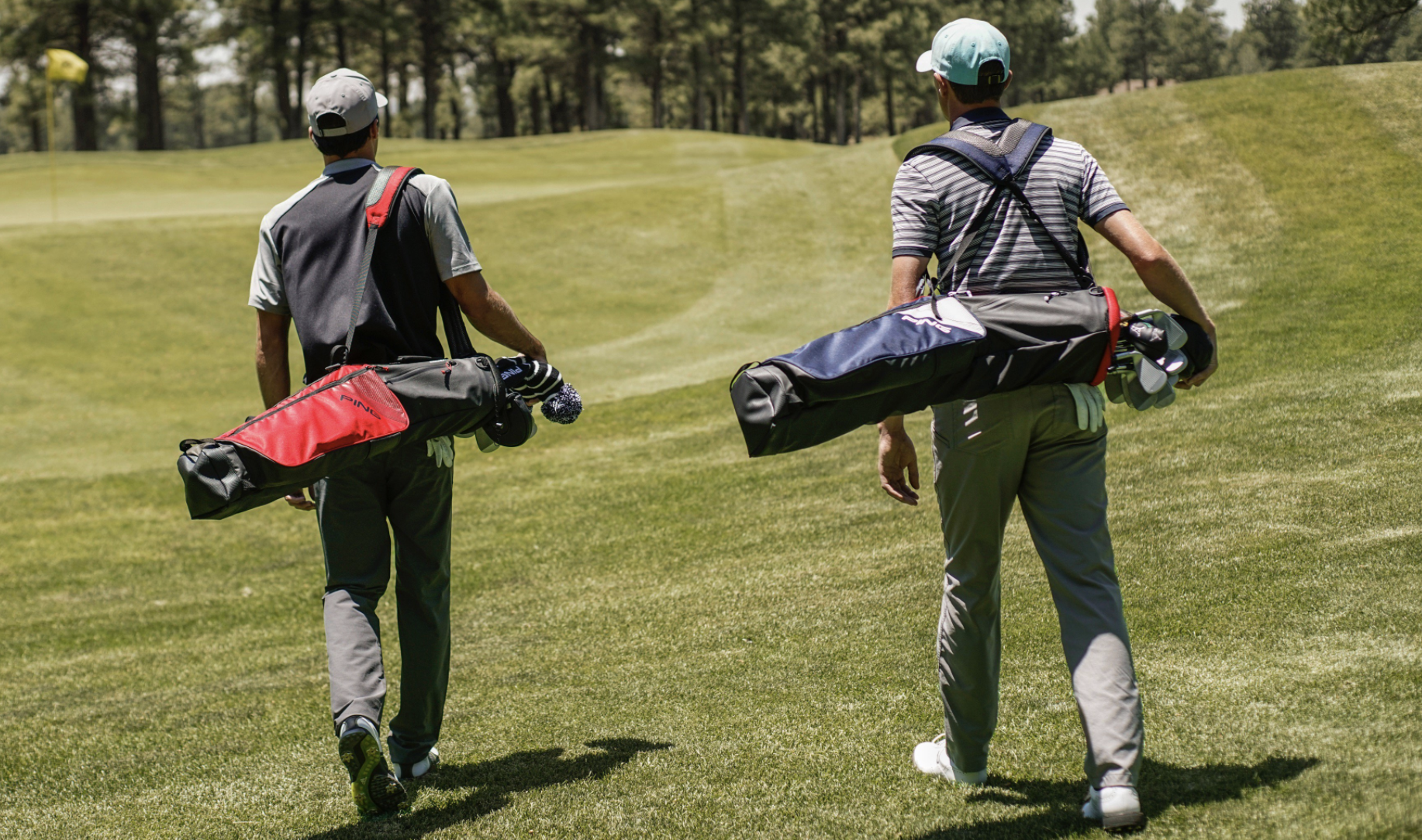
Both carry methods have valid advantages, and the right choice depends on your comfort, experience, and physical needs.
When the Single Strap Wins
Many traditionalists prefer the single strap for its simplicity and the way it lets the bag swing clear during the swing. Former caddies especially favor this method, having trained from a young age to carry heavy loads on one shoulder. If you value a free-swinging motion and a time-tested approach, the single strap remains a solid choice.
When the Dual Strap Wins
Dual straps shine for golfers who walk long distances or carry heavy setups. By spreading the load across both shoulders, they reduce the risk of muscle imbalance and make the walk feel easier. Modern designs have largely solved the rattling problem, making this a great option for anyone focused on endurance.
Trust Your Own Comfort
The best method is the one that feels natural and causes the least strain. What works for a seasoned caddie might not work for a casual weekend player. Experiment with different angles and strap configurations until you find what suits your body and your game.
Walk with Proper Form
How you walk while carrying is just as important as how the bag is attached. Good form lets the bag move with your body instead of against it.
Keep the Straps Tight
Loose straps allow the bag to swing away from your center of gravity, wasting energy and throwing off your balance. Adjust the straps so the bag feels like an extension of your body, moving in sync with your stride rather than bouncing independently.
Align the Bag with Your Lower Back
Periodically check that the bag is resting against your lower back rather than riding up high. A low-hanging bag is more stable and places less twisting force on your spine. This position also helps preserve the 20-degree angle that keeps your clubs secure.
Relax Your Shoulders
Many golfers unconsciously hike their shoulders up toward their ears to support the weight. This tension leads to rapid fatigue. Consciously drop your shoulders and let the straps do their job. If you cannot relax, the straps need loosening or the angle needs adjusting.
Troubleshoot Common Carry Problems
Even a well-configured setup can run into issues during a round. These quick fixes help you solve problems on the fly.
Fix Constant Rattling
If clubs are shaking with every step, your bag is likely too horizontal. Increase the tilt slightly to let the clubs settle deeper. Organizing long clubs together and short clubs together can also reduce internal movement.
Relieve Shoulder Strain
If one shoulder tires faster than the other, your load is unbalanced. With a single strap, try alternating shoulders every few holes. With dual straps, check that both straps are evenly tensioned. Sometimes simply loosening the straps so the bag hangs lower provides immediate relief.
Correct Awkward Bag Angles
A bag that feels awkward is usually fighting against your natural posture. Steep angles force you to lean or twist to compensate. Reset to a shallower tilt closer to 20 degrees. Also check that no heavy items in external pockets are pulling the bag off-center.
Frequently Asked Questions About How to Carry a Golf Bag
What is the best angle to carry a golf bag?
Most experienced golfers recommend an angle of around 20 degrees relative to the ground. This slight tilt keeps clubs secure without feeling awkward. Single-strap users often prefer 25 degrees for better balance.
Should I use a single strap or dual strap?
Both work well, and the choice depends on personal preference. Single straps offer freedom of movement during your swing, while dual straps distribute weight more evenly across both shoulders. Try both and choose what feels most comfortable.
How do I stop my clubs from rattling in the bag?
Maintain a slight upward tilt of around 20 degrees so gravity holds the clubheads in the bottom of the bag. Tighten your straps so the bag does not bounce with each step, and keep your clubs fully seated at the bottom.
Why does my shoulder hurt when carrying my golf bag?
Shoulder pain usually comes from uneven weight distribution, straps placed too close to your neck, or a bag positioned too high on your back. Lower the bag, adjust the strap placement, and check that the tilt angle is around 20 to 25 degrees.
How should a stand bag sit on your back?
The padded section should rest between your lower back and rear end. This position lowers your center of gravity and keeps the bag stable as you move. Avoid letting the bag ride up between your shoulder blades.
Is it bad to carry your golf bag?
Carrying your bag is great exercise and many golfers prefer walking to riding. The key is using proper technique, including the right angle, strap adjustment, and walking form, to prevent strain and discomfort.
Final Thoughts on Carrying Your Golf Bag with Ease
Mastering how to carry a golf bag comes down to three core principles: angle, strap configuration, and body awareness. Aim for a 20-to-25-degree tilt, choose between a single or dual strap based on comfort, and keep the bag positioned low against your lower back. These small adjustments eliminate rattling, prevent shoulder fatigue, and make walking the course far more enjoyable.
Before your next round, spend a few minutes experimenting with your strap length and bag angle in your backyard or at the practice range. Once you find the setup that feels right, stick with it consistently. Your body will adapt, your clubs will stay secure, and you will be able to focus entirely on your game from the first tee to the eighteenth green.