
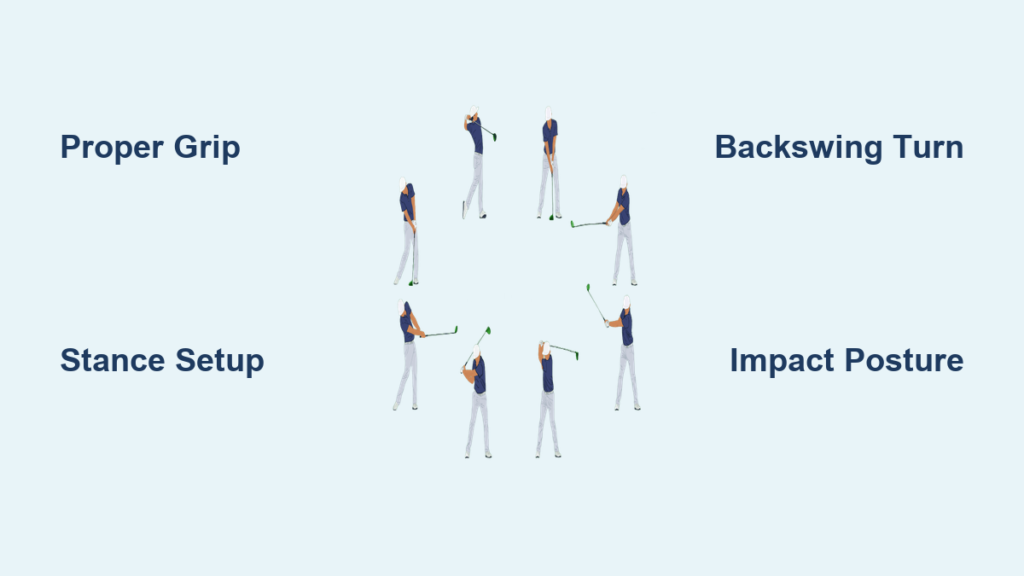
You’re standing on the first tee, gripping the club a little too tight, wondering why your ball just flew sideways into the trees again. If you’re new to golf, the swing can seem like a mystery, with too many moving parts, conflicting advice, and no clear starting point. But every pro was once here too. The key to a solid golf game starts with golf swing basics for beginners, which are simple, repeatable fundamentals that build confidence and consistency.
Mastering the golf swing does not require perfect technique overnight. It starts with understanding posture, grip, stance, and the basic motion that delivers the club to the ball effectively. This guide breaks down the essential components of a beginner-friendly swing, step by step. You will learn how to set up correctly, execute a smooth motion, and avoid the most common beginner mistakes. Whether you are practicing at the driving range or preparing for your first round, these fundamentals will help you build a swing that is repeatable, powerful, and surprisingly accurate.
Proper Grip for Control
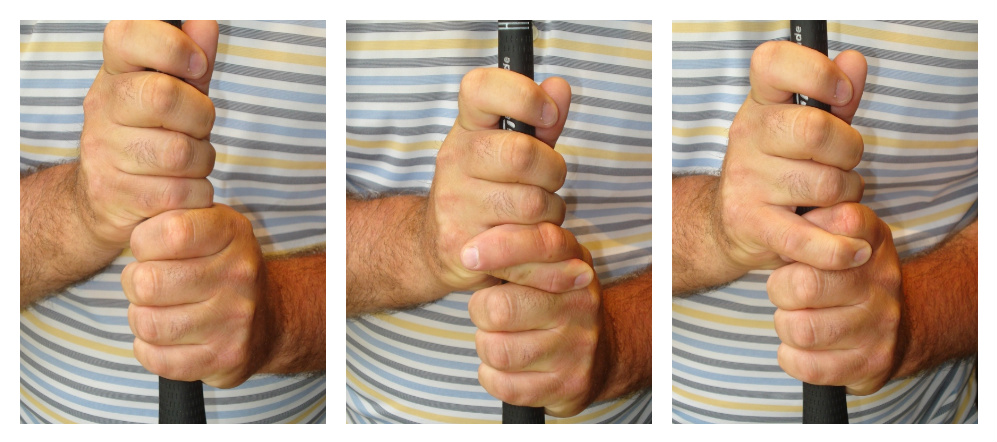
Your hands are the only connection between you and the club, making the grip the foundation of a good swing.
Choose the Right Grip Style
There are three main grip styles: overlapping (Vardon), interlocking, and baseball (ten-finger). Most beginners benefit from the overlapping or interlocking grip, as they promote hand unity and better control.
- Overlapping: The pinky of your trailing hand (right hand for right-handed golfers) rests on top of the fingers of your lead hand.
- Interlocking: The pinky of your trailing hand interlocks with the index finger of your lead hand.
- Baseball grip: All ten fingers are on the club, which is easier for kids or those with smaller hands.
How to Hold the Club Correctly
- Start with your lead hand (left for right-handed golfers). Place the club across the base of your fingers, not in the palm.
- The “V” formed by your thumb and index finger should point toward your trailing shoulder.
- Add your trailing hand, ensuring the grip runs diagonally across the fingers, not deep in the palm.
- Both “V’s” should align toward your trailing shoulder.
Pro Tip: If you cannot see any knuckles on your lead hand, your grip is likely too weak. Aim to see 1–2 knuckles for a neutral, effective grip.
Stance and Posture Setup

A balanced, athletic stance sets the stage for a powerful and repeatable swing.
Find the Right Stance Width
- For short irons: Feet shoulder-width apart or slightly narrower.
- For drivers: Slightly wider than shoulder-width to support more rotation.
Your knees should be slightly bent, and your weight balanced over the balls of your feet.
Perfect Your Posture
- Stand tall, then hinge forward from the hips. Avoid bending at the waist.
- Keep your back straight, chest up, and shoulders relaxed.
- Your arms should hang naturally, with a slight bend at the elbows.
- The club shaft should align with your lead arm, forming a straight line.
Common Mistake: Standing too close or too far from the ball forces compensations in the swing. If your arms are stretched or scrunched, adjust your distance.
The Backswing: Build Power Smoothly
The backswing sets the club on the right path for an on-target downswing.
Turn, Don’t Lift
Begin the backswing by rotating your shoulders and hips together. Let your lead arm and club move as one unit.
- Your lead shoulder should move under your chin.
- Your trailing knee should stay flexed and stable.
- Avoid lifting the club with your hands, as this causes an outside-in swing path.
Stop at the Top: Ideal Backswing Position
At the top of your swing:
– Your trailing elbow should point down, not out.
– The club should be parallel to the target line or slightly inside.
– Your weight should be mostly on the inside of your trailing foot.
Visual Cue: If you are filming your swing, check that the shaft points down the target line when parallel to the ground.
Transition and Downswing
The shift from backswing to downswing is where power and accuracy are made or lost.
Start with the Hips
The downswing begins with your lower body. Rotate your hips toward the target before your hands and arms drop.
- This sequence creates lag and maximizes clubhead speed.
- If your hands start first, you will likely “cast” the club and lose power.
Keep the Club on Plane
As you start down, the club should follow the same path it went on the backswing, staying on plane.
- Imagine a sheet of glass angled from the ball to your shoulders. The club should stay on or slightly inside this plane.
- An outside-in downswing leads to slices; an inside-out path can cause hooks.
Drill: Practice “step-and-swing” drills. Take a small step toward the target with your lead foot as you start the downswing. This forces proper sequencing.
Impact Position Fundamentals

Hitting the ball solidly starts with a strong impact position.
Forward Lean and Shaft Angle
At impact:
– Your lead hand should be ahead of the ball.
– The shaft should lean slightly forward (toward the target).
– Your head stays behind the ball, so do not lift up early.
This position compresses the ball for better distance and control.
Weight Transfer Complete
Your weight should now be shifting to your lead foot. Think of finishing over your front side.
Mistake to Avoid: “Hitting from the top” with arms only leads to thin or fat shots. Let your body rotation drive the strike.
The Follow-Through: Finish in Balance
A balanced finish is a sign of a well-executed swing.
Complete the Rotation
After impact, continue rotating your hips and shoulders until your chest faces the target.
- Your trailing foot should pivot onto its toe.
- Your lead heel may lift slightly.
- Your arms finish high, with the club over your shoulders.
Balance Check: If you can hold your finish for 3 seconds without wobbling, your swing is in sync.
Common Follow-Through Errors
- Falling off to the right (for righties): Caused by sliding instead of rotating.
- Low, weak finish: Indicates poor weight transfer or early release.
Practice Drills for Beginners
Repetition builds muscle memory. Use these simple drills to ingrain the right moves.
Towel Under the Arm Drill
Tuck a small towel under your trailing armpit and swing slowly. Keep the towel in place throughout.
- Builds connection between arms and body.
- Prevents “flying elbow.”
Gate Drill for Swing Path
Place two tees just wider than the clubhead on the ground, forming a “gate” along your target line.
- Swing back and through without hitting the tees.
- Teaches an on-plane swing path.
Half-Swing Routine
Practice 50% swings with a 7-iron. Focus on balance and rhythm, not distance.
- Builds consistency.
- Reduces over-swinging.
Common Beginner Mistakes to Avoid
Even small errors can derail your progress. Watch for these.
Slicing the Ball
A slice curves sharply from left to right (for right-handed golfers). Causes include:
– Open clubface at impact.
– Outside-in swing path.
– Weak grip.
Fix: Strengthen your grip slightly and focus on releasing the club through impact.
Topping or Fat Shots
- Topping: Hitting the top half of the ball, usually from lifting your head or posture.
- Fat shots: Hitting the ground before the ball, often from hanging back on the trailing foot.
Fix: Maintain spine angle and let your body rotation lift the ball.
Swinging Too Hard
Most beginners think power comes from arms and speed. But tension kills consistency.
Fix: Swing at 70–80% effort. Focus on smooth tempo and balance.
Equipment Tips for New Golfers
The right gear makes learning easier.
Choose Beginner-Friendly Clubs
- Game-improvement irons: Larger sweet spot, more forgiveness.
- Graphite shafts: Lighter and easier to swing.
- Hybrids: Replace long irons for easier launch.
Avoid buying used clubs without testing, since poorly fitted gear reinforces bad habits.
Get Fitted When Ready
Once you have practiced consistently, consider a club fitting. Proper length, lie angle, and shaft flex improve performance.
Building a Practice Routine
Consistency beats intensity when learning the golf swing.
Weekly Practice Plan
| Day | Focus Area | Time |
|---|---|---|
| Monday | Grip, stance, posture | 20 min |
| Wednesday | Half-swings and tempo | 30 min |
| Friday | Full swings with 7-iron | 45 min |
| Weekend | On-course or range play | 1–2 hrs |
Pro Tip: Use video feedback. Film your swing monthly to track progress.
Use Alignment Aids
- Place a club on the ground behind the ball to check your target line.
- Use alignment sticks or rods to train your body path.
Frequently Asked Questions About Golf Swing Basics for Beginners
How long does it take to learn a basic golf swing?
Most beginners start making solid contact within a few weeks of regular practice. Developing a consistent, repeatable swing usually takes several months of focused work.
What is the most common mistake beginners make?
A weak grip and poor posture are the most common beginner errors. These issues lead to slices, topped shots, and inconsistent ball striking.
Should I take lessons or learn on my own?
A few lessons with a qualified instructor accelerate progress dramatically. They help you fix bad habits early and build a proper foundation.
How often should I practice as a beginner?
Practicing 2–3 times per week for 30–60 minutes is ideal for building muscle memory without burnout. Quality matters more than quantity.
Do I need expensive clubs to start learning?
No. Beginner-friendly, affordable clubs are widely available. Focus on proper fit and forgiveness rather than brand or price.
Final Thoughts: Keep It Simple
Mastering golf swing basics for beginners is not about perfection. It is about progress. Focus on one element at a time: grip, then stance, then backswing. Celebrate small wins, like hitting the ball in the air or improving your balance.
Golf is a game of repetition and patience. The more you practice with purpose, the faster your swing will improve. Stick with the fundamentals, avoid rushing, and enjoy the journey. Before you know it, you will be hitting solid shots and maybe even lowering your score.
With the right foundation, anyone can learn to swing a golf club effectively. Return to these basics often, especially when your game feels off. They are not just for beginners. They are the core of every great golfer’s success.





