
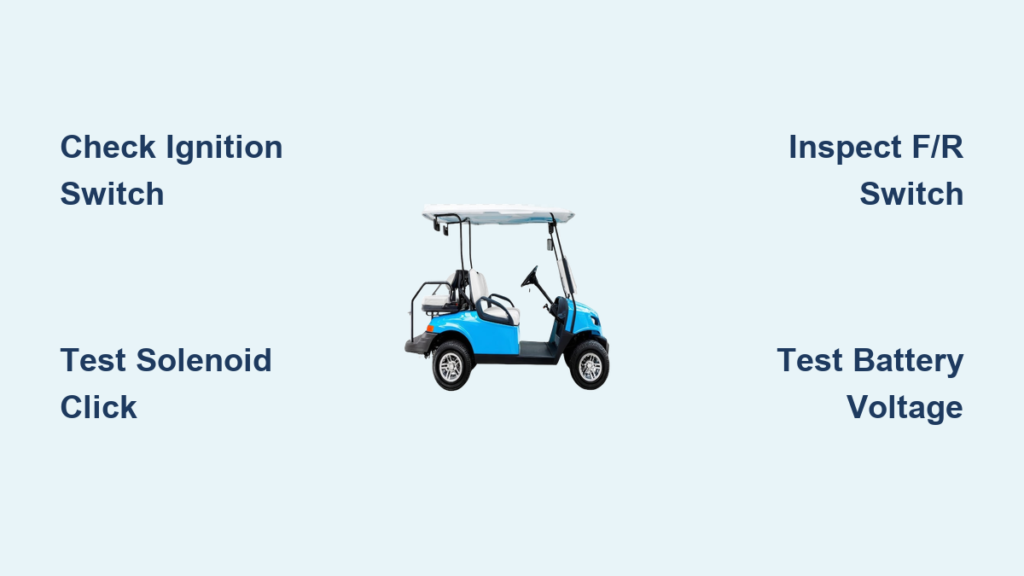
You turn the key expecting your golf cart to spring to life, but nothing happens. No crank, no hum, just silence from the motor. Yet the headlights and dashboard lights come on without a problem. This situation is frustrating, especially when you have somewhere to be. Since the lights work, you know the battery has at least some charge, which narrows down the problem significantly.
The issue likely sits in the starting circuit rather than the battery itself. This guide walks you through the most common causes and the exact order to check them. Even if you have never opened a golf cart before, these fixes are beginner-friendly and require basic tools you may already own.
Check the Key Switch and Ignition
When a golf cart won’t start but the lights work, the ignition switch is one of the first places to look. Power reaches the lights, but the signal may never make it to the starter circuit.
Test the Ignition Switch Output
Grab a multimeter and set it to DC volts. Connect the black probe to a grounded metal surface, then touch the red probe to the output terminal on the switch, often labeled “S” or “starter.” Turn the key to the start position.
If the meter reads zero volts, the switch has failed internally. Many switches still power accessories like lights but break at the start position due to worn contacts.
- Pro tip: Wiggling the key in the start position can temporarily restore contact if the switch is worn.
- Common mistake: Assuming a working dash light means the switch is fine. Accessories and the starter often use different circuits.
Replacement switches cost between $20 and $50 and take roughly 15 minutes to install on most models.
Inspect the Solenoid for Failure
The solenoid works like a heavy-duty relay, sending battery power to the motor when you turn the key. When you flip the switch, you should hear a clean click from this component.
Listen for the Click
Turn the key to start and listen near the battery pack or motor area for a distinct click. Silence usually means the solenoid is not receiving the signal or has failed internally.
- Small control wires for looseness or corrosion
- Voltage at the small terminals (should read 12V with the key turned)
If voltage reaches the small terminals but the solenoid does not click, the part is bad. Solenoid failure is common across Club Car, EZ-GO, and Yamaha models.
- Difficulty: Easy, roughly 10 minutes
- Cost: $30 to $80
- Visual cue: A burnt smell or pitted metal on the terminals
Bypass Test for Confirmation
Briefly touch a screwdriver across the two large solenoid terminals. If the motor engages, the solenoid is confirmed faulty. Only attempt this with the cart in neutral and the parking brake fully set.
Test the Forward and Reverse Switch

A faulty or stuck forward/reverse switch can stop your golf cart from starting even when everything else works perfectly. Many carts refuse to start unless the lever is firmly in a defined position.
Check Switch Engagement
Make sure the switch sits cleanly in neutral, forward, or reverse. A position between gears often prevents startup on many models.
Test the switch with a multimeter set to ohms. Probe the terminals while moving the switch through its positions. No continuity in any position means the switch has failed.
Clean dirty contacts with electrical contact cleaner and a soft brush. Replace the switch if internal springs feel weak or cracked.
- Pro tip: Jiggling the F/R lever can temporarily restore connection, which is a strong sign the part is wearing out.
Examine the Battery Pack and Cables

Even when the lights work, a weak or unbalanced battery pack can block startup. Lights draw far less power than the motor, so a marginal pack can run accessories without spinning the drive system.
Measure Individual Battery Voltages
Test each battery in the pack with your multimeter. Healthy readings look like this:
- 6V batteries should show around 6.3V at rest
- 12V batteries should show around 12.6V at rest
- Anything below 5.5V (for 6V) or 11V (for 12V) signals a failing battery
Replace weak batteries in matched pairs. If the entire pack is more than three or four years old, consider a complete replacement to keep performance consistent.
Clean Cable Terminals Thoroughly
Loose or corroded connections interrupt the heavy current the starter demands. Focus on these spots:
- Battery terminals
- The main ground strap from the battery pack to the frame
- Cables connecting the solenoid, controller, and motor
Look for green or white crust on any terminal. Disconnect the cables, scrub the terminals with a baking soda and water mix, then reconnect everything snugly.
Diagnose the Motor Controller
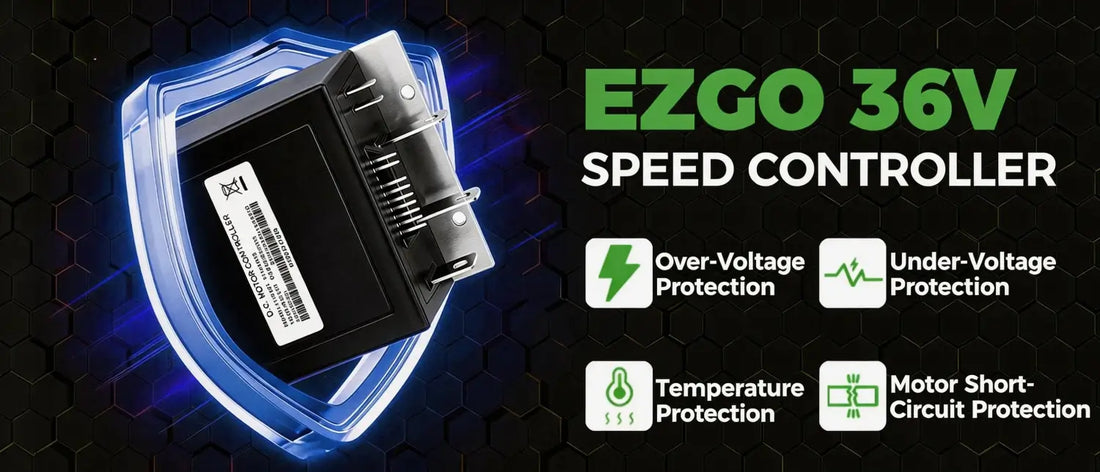
The controller manages power flow from the batteries to the motor. When it fails, the cart refuses to start while the lights still work normally.
Check for Error Codes
Some EZ-GO and Club Car models flash error codes through the controller or display. Common patterns include:
- 2 flashes: Throttle input problem
- 4 flashes: Controller overheating
- 6 flashes: Internal controller fault
Consult your owner’s manual for the exact code meanings on your model.
Verify the Throttle Signal
Press the accelerator pedal while testing the throttle microswitch with a multimeter. The switch should close when pressed. No signal points to a wiring issue or a failed switch.
A bad throttle can mimic a dead controller, so rule this out before replacing expensive parts. If every input checks out but the controller still produces no output, replacement may be necessary. Controllers run between $200 and $500, so confirm cheaper causes first.
Inspect the Brake Interlock Switch
Many golf carts refuse to start unless the brake pedal is pressed. This safety feature prevents accidental movement and is a frequent failure point.
Test the Brake Switch Continuity
Locate the switch near the brake pedal assembly. With the meter set to continuity, probe the two wires and press the brake pedal. A working switch produces a beep or shows zero resistance.
No continuity means the switch needs adjustment or replacement. Parts typically cost between $15 and $25.
- Quick test: Press the brake firmly while turning the key. If the cart starts, the switch is out of alignment rather than broken.
Evaluate the Motor and Drive Belt
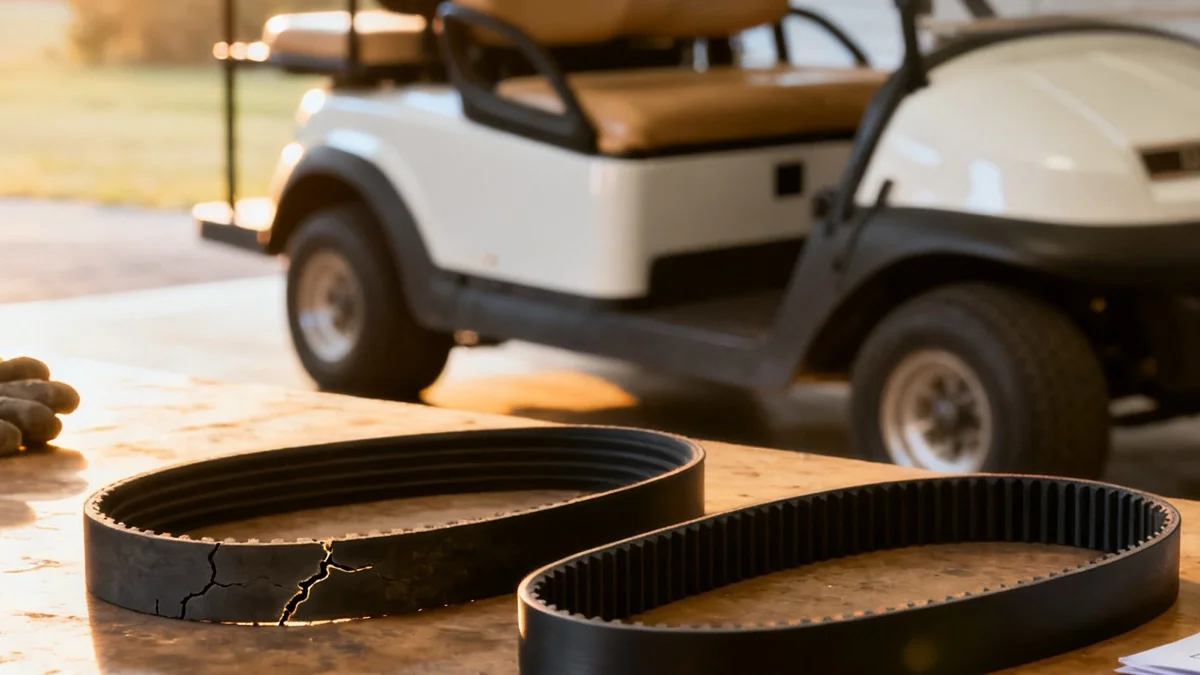
Mechanical problems can look exactly like electrical failures. A seized motor or broken belt will stop your cart even when power is flowing normally.
Spin the Motor by Hand
Disconnect the battery cables, then try rotating the motor shaft by hand. A frozen shaft suggests a burnt-out or seized motor that needs professional service.
Inspect the drive belt for cracks, fraying, or stretching. A broken or slipped belt will spin freely without engaging the drivetrain. Replacement belts cost between $20 and $40 and take about 20 minutes to swap.
A seized motor can stress the electrical system, so address mechanical issues promptly to avoid secondary damage.
Review Onboard Chargers and Reset Buttons
Some carts include resettable breakers or thermal cutoffs that trip under heavy load. These safety devices shut down the start circuit while leaving accessories powered.
Reset the Circuit Breaker
Find the breaker near the controller or battery pack. It usually has a small button on top. Press the button to reset if it has popped out, then wait 10 seconds before trying the key again.
If the breaker trips immediately on the next start attempt, you likely have a short circuit or motor overload. Stop testing and inspect the wiring before continuing.
Unplug the Charger
Most carts disable the drive system when the charger is plugged in. Unplug the charger fully before turning the key. Leaving the charger connected overnight is a common reason carts refuse to start in the morning.
Prevent Future No-Start Problems
A few minutes of routine maintenance can save you from future breakdowns and keep your cart reliable year-round.
Monthly Inspection Checklist
Run through this quick list every month:
- Clean battery terminals with a wire brush
- Tighten all visible electrical connections
- Confirm the solenoid clicks when the key turns
- Lubricate the forward/reverse switch pivot
- Check tire pressure and drive belt condition
Seasonal Battery Care
Proper battery maintenance extends pack life and prevents cold-weather failures:
- Water flooded batteries every two to three months with distilled water
- Use a smart charger to prevent sulfation during long storage
- Store the cart in a cool, dry place if you will not use it for weeks
When to Call a Professional
If you have checked the solenoid, ignition switch, battery pack, forward/reverse switch, and brake switch without success, the problem may run deeper. Internal motor winding failures or a dead controller require advanced diagnostics.
- Professional diagnosis cost: $75 to $150
- Best for: Older carts, complex electrical systems, or warranty-covered models
Frequently Asked Questions About a Golf Cart That Won’t Start
Why do my lights work but the engine won’t crank?
Your battery has enough charge to run low-draw accessories like lights, but the starting circuit demands far more power. A weak battery pack, failed ignition switch, or bad solenoid can block that heavier current while leaving lights working normally.
Can a bad solenoid cause no-start but working lights?
Yes. The solenoid connects battery power to the motor when you turn the key. If it fails, power never reaches the motor, but the lights remain on because they draw from a separate, lower-current circuit.
How do I know if my golf cart solenoid is bad?
Listen for a click when you turn the key. No click with good voltage at the small terminals confirms a bad solenoid. You can also briefly bypass it with a screwdriver to test, though only with the cart in neutral and the parking brake set.
Will a weak battery still power the lights?
Yes. Lights draw very little current compared to the motor, so a marginal battery can light up the dashboard while failing to spin the drive system. Always test each battery individually before assuming the pack is healthy.
Could the forward/reverse switch stop the cart from starting?
Yes. Many carts require the switch to be in a defined position before they will start. A worn or misaligned switch can break the start circuit even when the battery and solenoid are perfectly fine.
Key Takeaways for Fixing Your Golf Cart
Start your diagnosis with the click test at the solenoid, then move methodically through the ignition switch, forward/reverse switch, and battery pack. Most no-start issues with working lights trace back to a single failed component, often the solenoid or ignition switch, and can be resolved in under an hour.
Keep a multimeter and basic hand tools in your garage, and you will handle most electrical issues without a service call. If you have run through every check and the cart still refuses to start, contact a certified golf cart technician to test the motor and controller with professional equipment.





