
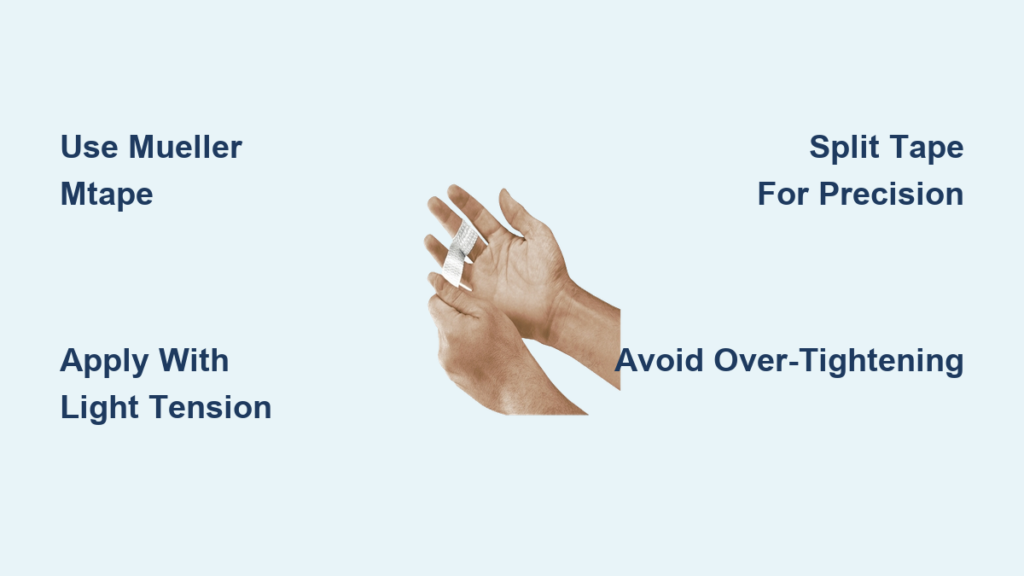
If you’ve ever felt a sharp sting from a callus or cut mid-swing, you know why so many golfers tape their fingers. Whether you’re protecting a sensitive joint, preventing blisters, or managing skin irritation from constant grip pressure, finger taping offers a small fix with a big payoff. The challenge? Finding tape that holds through 18 holes, sweat, and repeated swings without tearing, slipping, or cutting off circulation. Many players start with standard medical tape, only to watch it fall apart after a few holes. This guide breaks down the best tape options recommended by real golfers, how to apply them properly, and why certain choices outperform others when durability matters.
Best Tapes for Golf Finger Protection

Mueller MTape and Golf Tape
Mueller tape consistently earns praise from golfers for its balance of strength, flexibility, and low cost. Mueller MTape is a classic white athletic tape, 1.5 inches wide, that splits easily in half lengthwise for precise finger wrapping. It adheres well, resists fraying, and often stays put for days if left undisturbed. Another strong option is Mueller Golf Tape, specifically designed for grip areas, with enough stretch to flex comfortably across knuckles. Both are available at sporting goods stores for around $3 per roll.
Pro Tip: Split the 1.5″ tape lengthwise as you unroll it. You get two narrow strips perfect for fingers with zero waste.
Leukotape P for Maximum Hold
Leukotape P is a heavy-duty sports tape known for aggressive adhesion and long-lasting durability. Slightly elastic, it sticks to itself and holds firm through swings and sweat. While less forgiving than stretchier tapes, its staying power makes it ideal for high-friction zones like the trailing hand’s ring finger.
Use Case: Best for chronic calluses or open spots that need rigid protection without slippage.
Climbing and Gym Tape
Climbers deal with repetitive friction, tight grips, and skin tears, making their gear a smart crossover for golf. Metolius Climbing Tape and Pullup & Dip finger tape are cotton-reinforced, extremely strong, and built to endure serious stress. Users note these tapes rarely rip and often require scissors to remove. They conform well to finger contours and handle moisture better than standard cloth tapes.
Warning: These tapes are not stretchy. Apply carefully to avoid restricting blood flow.
Self-Adherent Wrap (Cohesive Bandage)
Also called cohesive bandage or vet wrap, Self-Adherent Wrap sticks to itself rather than skin or hair. This makes it easy to apply and remove without sticky residue. It’s stretchy, breathable, and ideal for sensitive skin or temporary coverage. While not as abrasion-resistant as cloth tapes, it works well for protecting healing cuts or minor blisters without adding bulk.
Best For: Short-term use or when skin sensitivity rules out sticky adhesives.
Equine or Veterinary Tape
One budget-friendly hack: horse leg tape. At roughly $1 per roll, it performs like premium human athletic tape. Durable and self-adhering, it’s designed to stay on through movement and moisture. Simply cut it to about ¾” width for finger use.
DIY Hack: Use kitchen scissors to pre-cut 10–15 inch strips for quick access on the course.
Why Standard Medical Tape Often Fails
3M Nexcare Cloth Tape Weaknesses
While widely available, 3M Nexcare cloth tape frustrates many golfers because it rips easily during play. Its fabric backing frays with repeated flexing, especially at joint creases. Though breathable and comfortable at first, it loses integrity after sweat exposure or grip friction.
Real Golfer Feedback: “It did the job, but found that it ripped somewhat easily from time to time.”
Waterproof Plastic Tape Issues
The waterproof plastic version of Nexcare performs even worse. Unlike cloth tape, it doesn’t stretch and tends to peel at the edges due to lack of conformity. It also traps moisture, increasing the risk of skin breakdown underneath.
Key Limitation: Non-porous materials don’t breathe. Avoid them for long rounds in heat.
How to Apply Finger Tape Correctly
Prep the Finger Surface
Before taping, clean and dry the finger thoroughly. Dirt, oil, or moisture reduces adhesion. If taping over a callus or cut, ensure the area is intact and apply antiseptic if needed. Avoid lotions or hand sanitizer right before taping.
Visual Cue: Skin should look matte, not shiny.
Wrap With Proper Tension
Start below the problem joint and wrap upward with even, light tension. Never pull tight, as this restricts circulation and causes numbness or swelling. Use 4–5 overlapping turns, covering the sensitive spot completely.
Check Circulation: Press the fingertip after taping. It should turn white and return to pink within 2 seconds.
Secure the End on Top
Finish with the tape end on the dorsal (top) side of the finger, not the underside where it contacts the grip. This prevents premature peeling. If using non-stretch tape, smooth the end firmly with your thumb.
Pro Move: Run the taped finger across your palm. If it snags, rewrap.
Split Wide Tape for Precision

Most athletic tapes (1.5″ or 2″) are too wide for fingers. Split them lengthwise before use. This saves money, reduces bulk, and gives better control during application.
Tool Tip: Use a utility blade or scissors to pre-cut rolls at home.
Common Mistakes to Avoid

Over-Tightening the Wrap
Wrapping too tightly to “make it stay” can lead to numbness, tingling, or reduced swing feel. Tape should protect, not compress.
Fix: If your finger feels cold, tingly, or swollen, remove and reapply with less tension.
Using KT Tape on Small Areas
KT (kinesiology) tape works well for backs, shoulders, and legs but is not ideal for fingers. It’s too broad and lacks structural support for small, high-friction zones. However, cutting 6-inch strips in half lengthwise can make it workable near knuckle folds.
Best Use: Only for mild support near flexible joints, not full protection.
Ignoring Grip Mechanics
Many finger issues come from grip mechanics. A sloppy overlap or interlock grip can cause the pinky nail to dig into the ring finger’s knuckle, leading to calluses or cuts. Taping helps, but adjusting grip pressure may solve the problem long-term.
Swing Insight: If you tape the trailing hand’s ring finger, check if your little finger slides down during the downswing.
Prevent Future Irritation
Match Tape to Your Need
| Issue | Best Tape Choice |
|---|---|
| Callus protection | Mueller MTape or Leukotape P |
| Open cut or blister | Self-adherent wrap |
| Chronic skin tearing | Climbing tape (Metolius) |
| Sensitive skin | Cohesive bandage (no adhesive) |
| Budget-friendly bulk | Equine tape or split athletic tape |
Rotate Tape Types by Condition
Use heavier tapes (like Leukotape) only when needed. For daily play, switch to lighter, breathable options to let skin recover. Give taped areas a break between rounds to prevent maceration from trapped moisture.
Consider Glove Fit and Wear
A worn-out or ill-fitting glove increases friction. Replace gloves every 15–20 rounds, or sooner if the palm shows thinning. Some golfers wear two gloves temporarily to reduce pressure on taped fingers.
Expert Note: A snug glove can eliminate the need for taping altogether.
Frequently Asked Questions About Taping Fingers for Golf
What Tape Do Most Golfers Use for Finger Protection?
Mueller MTape and Mueller Golf Tape are the most commonly recommended options. Both are affordable, strong, and flexible enough to wrap around knuckles without restricting movement.
Is Leukotape P Good for Golf Finger Taping?
Yes. Leukotape P offers aggressive adhesion and stays put through sweat and repeated swings. It’s especially useful for chronic calluses or spots where other tapes slip.
Can I Use Climbing Tape on My Golf Fingers?
Absolutely. Climbing tapes like Metolius and Pullup & Dip are extremely durable and handle moisture well. They aren’t stretchy, so apply them carefully to avoid cutting off circulation.
Why Does 3M Nexcare Tape Rip So Easily?
The cloth backing frays with repeated flexing, especially around joints. Once sweat enters the picture, the tape loses integrity quickly, leading to tears mid-round.
How Tight Should I Wrap My Fingers for Golf?
Wrap with light, even tension. The tape should protect the skin without compressing the finger. If you feel numbness, tingling, or cold, remove it and reapply with less pressure.
Should I Tape Over a Blister Before Playing Golf?
For minor blisters, self-adherent wrap works well because it cushions without sticking to damaged skin. For open or painful blisters, allow healing time before returning to play.
Final Thoughts on Taping Fingers for Golf
Taping fingers for golf comes down to choosing the right material, applying it correctly, and understanding what’s causing the irritation in the first place. From Mueller’s affordable athletic tape to rugged climbing and equine wraps, the best options balance durability, comfort, and ease of use. Avoid common pitfalls like over-tightening or using tapes that aren’t suited for small joints. With the right technique, your tape should stay put for 18 holes, protect sensitive skin, and never interfere with your swing. Try a few options, pre-cut some strips, and find what works best for your grip and game.





