You’re standing on the first tee, club in hand, heart pounding like a drum. The fairway looks narrower than it did from the cart path. Your palms are sweaty, your breath shallow, and that simple swing you’ve practiced a thousand times suddenly feels foreign. If this sounds familiar, you’re not alone. How to calm nerves before golf is one of the most common challenges players face, whether you’re a beginner or a seasoned amateur.
Golf is as much a mental game as it is physical. Unlike fast-paced sports where momentum carries you forward, golf forces you to pause between shots, between breaths, between thoughts. That silence can amplify anxiety. But the good news? Nerves aren’t a life sentence. With the right techniques, you can steady your mind, slow your heartbeat, and step up to the tee with quiet confidence.
In this guide, you’ll learn proven, practical strategies to calm nerves before golf, from pre-round mental routines to breathing techniques used by professionals. These aren’t abstract theories. They’re actionable tools you can use today to transform tension into focus and turn shaky starts into strong performances.
Establish a Pre-Shot Routine
A consistent pre-shot routine is one of the most effective ways to calm your mind and anchor your focus before each swing. When your body knows what comes next, your brain stops searching for threats and settles into a familiar rhythm.
Visualize the Shot First
Before you even pick your club, close your eyes for a second and see the shot in your mind. Picture the ball flight, the landing spot, and the roll. This mental rehearsal activates the same neural pathways as the physical motion, priming your body for success.
Visualization isn’t about perfection. It’s about clarity. Even if you’re nervous, seeing the shot clearly gives your brain a roadmap, reducing uncertainty and calming overthinking.
Use Trigger Words
Choose one or two short, positive words like “smooth” or “focus” to say silently before you swing. These trigger words act as mental cues that shift your attention from fear to performance.
For example:
– “Smooth” reminds you to relax your grip and tempo.
– “Line” keeps your focus on the target, not the trouble.
Repeat your word during your routine to build consistency and confidence. Over time, this word becomes a signal that tells your body it’s time to perform, not panic.
Control Your Breathing
When nerves hit, your breathing becomes quick and shallow. Reclaiming your breath is the fastest way to signal safety to your brain. Your breath is the one thing you can control instantly, even when everything else feels uncertain.
Practice Box Breathing
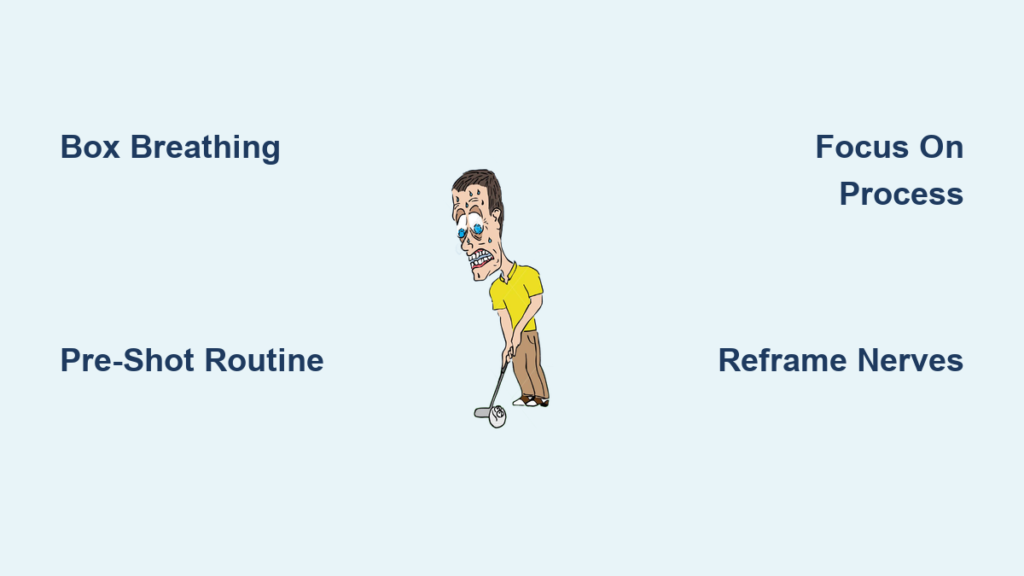
Box breathing is a technique used by athletes and military personnel to stay calm under pressure. Here’s how to do it:
- Inhale for 4 seconds through your nose.
- Hold your breath for 4 seconds.
- Exhale slowly for 4 seconds.
- Pause for 4 seconds before repeating.
Do this 3 to 4 times before your first tee shot or between holes when anxiety builds. It resets your nervous system and sharpens focus by forcing your body into a slower, more deliberate rhythm.
Breathe Before Every Shot
Make deep breathing part of your pre-shot routine. Take one slow breath, inhale through the nose, exhale through the mouth, right before you address the ball. This simple act clears mental clutter and stabilizes your hands.
The key is consistency. The more you pair breathing with your setup, the more your body learns to associate that breath with calm readiness.
Focus on Process, Not Outcome
Worrying about score, impressing others, or avoiding a bad shot fuels anxiety. Shift your focus to what you can control. You can’t control the wind, the bounce, or your playing partners. You can control your tempo, your target, and your attitude.
Set Process Goals
Instead of “I need to shoot under 90,” aim for goals like:
– “Make smooth tempo on every swing.”
– “Pick a small target for each shot.”
– “Take three deep breaths between holes.”
Process goals keep you in the moment and reduce pressure. They give you something productive to think about when your mind wants to wander into worry.
Use the 10-Second Reset
After a bad shot, give yourself exactly 10 seconds to react. Shake your head, sigh, whatever you need. Then, physically turn your shoulders and walk forward with purpose.
This ritual prevents lingering frustration from infecting your next shot. It creates a clear boundary between the past and the present, which is essential for staying calm over 18 holes.
Warm Up with Purpose

A rushed warm-up increases nerves because you arrive at the first tee feeling unprepared. A structured one builds confidence by giving you evidence that your game is ready.
Start with Short Game
Begin your practice session with putting and chipping. These calm, repetitive motions ease tension and help you find rhythm before moving to full swings.
Making a few putts early boosts confidence more than hammering drivers off the range. The feel of the ball coming off the putter face is a quiet reassurance that travels with you to the first tee.
Simulate Real Conditions
On the range, don’t just hit ball after ball. Pretend each shot is on the course:
– Pick a target.
– Go through your full routine.
– Walk to the next ball like you’re approaching your next shot.
This mental rehearsal reduces the shock of transitioning from practice to play. When the real round begins, your body recognizes the pattern and responds with familiarity instead of fear.
Use Music Strategically
What you listen to before a round can shape your mindset more than you realize. Your brain picks up cues from your environment, and music is one of the fastest ways to influence your emotional state.
Choose Calming or Energizing Tracks
- To relax: Instrumental, lo-fi, or nature sounds help quiet a racing mind.
- To energize: Upbeat but not chaotic music with steady beats can boost confidence.
Avoid songs that spike your heart rate too much. Your goal is readiness, not overstimulation. The right playlist should make you feel capable, not amped up.
Limit Screen Time Before Playing
Scrolling through messages or news feeds floods your brain with distractions. Instead, spend 5 to 10 minutes in silence or listening to your pre-game playlist.
This mental space prepares you for focus. It lets your mind settle into the pace of the course rather than carrying the chaos of the outside world onto the first tee.
Adopt a Champion’s Body Language
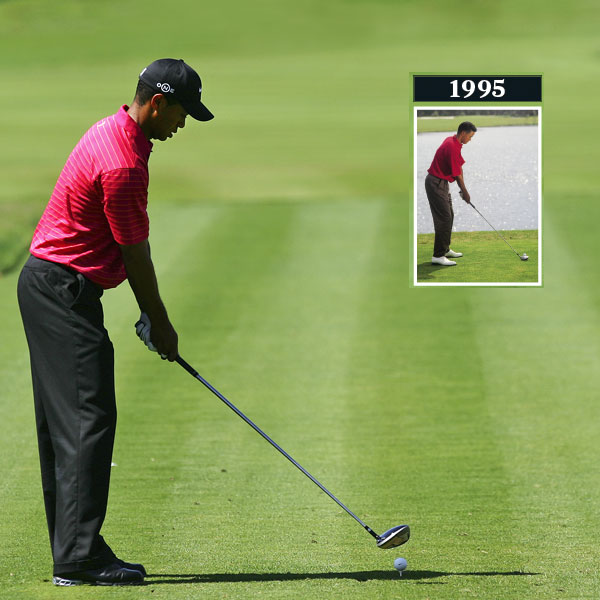
Your body influences your mind more than you might think. The way you stand, walk, and hold your shoulders sends signals to your brain about how you’re feeling, and those signals shape your performance.
Avoid Slumped Shoulders
It’s natural to hunch when stressed, but this posture signals defeat to your brain. Instead, keep your chest open, shoulders back, and head up, even after a bad shot.
This isn’t just for show. Upright posture increases oxygen flow and reduces cortisol, the stress hormone. Standing tall tells your nervous system that you’re in control, even when you don’t feel like you are.
Smile Between Shots
Forcing a smile, even when you don’t feel like it, tricks your brain into releasing endorphins. It sounds simple, but smiling on the course can break tension and lighten your mood.
Try it on your next bad hole. The physical act of smiling interrupts the stress response and reminds you that golf is still a game.
Practice Under Pressure
Nerves spike when stakes feel high. The best antidote is to simulate pressure in practice so your system learns to function when it matters.
Play Mini-Games on the Range
Turn practice into play with challenges:
– “Make 5 putts in a row from 6 feet.”
– “Hit 8 out of 10 fairways to win a free round.”
These create mild pressure, helping you get used to performing with a little stress. Over time, your body learns that pressure is just another part of the game, not a threat.
Bet a Friend a Dollar
A small wager, like a dollar or a drink, adds real stakes without overwhelming you. It teaches you to manage nerves when something small is on the line.
The goal isn’t the money. It’s the experience of feeling your heart rate rise and still executing your routine. That practice pays off when the stakes are higher.
Know That Nerves Are Normal
Even pros feel butterflies. The difference is that they don’t fight them. They use them.
Reframe Nerves as Excitement
Your body reacts to excitement and anxiety the same way: faster heartbeat, tingling, alertness. So instead of thinking “I’m nervous,” say “I’m excited.”
This simple reframe turns fear into fuel. Try saying: “I love this feeling. It means I care.” You’ll notice the shift in your posture and your attitude almost immediately.
Accept Imperfection
Golf is unpredictable. Bad shots happen. The player who calms down fastest wins the round.
Remind yourself: “One bad shot doesn’t ruin my game. My reaction does.” This acceptance frees you from the impossible standard of perfection and lets you play with a lighter mind.
Frequently Asked Questions About Calming Nerves Before Golf
What is the best breathing technique for golf nerves?
Box breathing is highly effective. Inhale for 4 seconds, hold for 4 seconds, exhale for 4 seconds, and pause for 4 seconds. Repeat 3 to 4 times before your first tee shot to reset your nervous system.
How long before a round should I start calming my nerves?
Start your mental preparation 30 to 45 minutes before your tee time. Use this window for light stretching, deep breathing, and visualization. Arriving mentally prepared prevents last-minute panic.
Can listening to music actually help my golf game?
Yes. Calming or steady-beat music before a round lowers heart rate and reduces anxiety. Choose tracks that make you feel capable and relaxed, not overly stimulated.
What should I do immediately after a bad shot to stay calm?
Use the 10-second reset. Give yourself 10 seconds to react, then physically turn and walk forward with purpose. This stops frustration from carrying into your next shot.
Is it normal to feel nervous before every round of golf?
Absolutely. Even professionals experience nerves. The key is not to eliminate them but to manage them with routines, breathing, and reframing. Nerves mean you care, and that’s a good thing.
How can I practice handling pressure before a real round?
Play mini-games on the range with small stakes, like making 5 putts in a row or hitting 8 of 10 fairways. Adding a small wager with a friend also simulates real pressure in a low-risk setting.
Key Takeaways for Calming Your Golf Nerves
Calming nerves before golf isn’t about eliminating anxiety. It’s about managing it with tools that work. Build a consistent pre-shot routine, practice box breathing, and focus on process goals instead of outcomes.
Warm up with purpose, use music strategically, and adopt confident body language. Simulate pressure in practice so your system learns to perform under stress. And remember, nerves are normal. Reframe them as excitement and accept that imperfection is part of the game.
The next time your heart races before a round, you’ll know exactly what to do. Breathe, visualize, and step up with quiet confidence. Nerves mean you’re ready. Now go play.