
You’ve just returned from the course, and your golf bag is a mess. Clubs are tangled, pockets overflow, and accessories sit stuffed wherever they fit. Sound familiar? A cluttered golf bag does more than frustrate you. It can damage your clubs, slow your pace, and hurt your focus. Knowing how to arrange a golf bag properly turns chaos into calm. Whether you use a carry bag, cart bag, or staff-style model, organizing with purpose helps you find gear fast, protect your equipment, and stay locked in on the game.
This guide covers how to sort clubs by type and frequency of use, assign gear to the right compartments, and balance your setup for easy access. You’ll learn best practices for every bag type, common mistakes to avoid, and pro tips to keep your setup tournament-ready round after round.
Sort Clubs by Type and Use

Before anything goes into your bag, start with your clubs. How you group them decides how easily you can reach them mid-round.
Group Irons, Woods, and Putters by Category
Divide your clubs into three main groups: woods (driver and fairway woods), irons (3-iron through pitching wedge), and putter. Most golf bags feature a divided top with 5 to 7 sections. Use these to separate club types. Typically:
- Front or center slots hold the putter and woods, which you use least per hole.
- Side or back slots hold irons and wedges, which you reach for most often.
This setup prevents scratching and lets you grab the right club without fumbling.
Order Irons from Long to Short
Within the iron section, arrange clubs in ascending order based on your dominant hand. For right-handed players, place the 3-iron on the left and work up to the pitching wedge on the right. This mirrors how you approach shots and speeds up selection. If you play left-handed, reverse the order so the shortest iron sits on the right.
Pro Tip: Keep this order consistent every round. Muscle memory kicks in when your hands know exactly where each club lives.
Protect Clubheads with Covers
Always use headcovers for your driver, fairway woods, and hybrids. Covers prevent scratches and help you spot clubs quickly. Place covered clubs in their designated slots so they don’t crowd the uncovered irons.
Use Pockets Strategically

Most golf bags have between 4 and 9 pockets. Smart pocket use prevents overstuffing and keeps essentials within reach.
Store Balls and Tees in Front Pockets
The smaller front zippered pockets work best for high-use items like golf balls, tees, and divot tools. Keep at least two sleeves of balls easily accessible. Tuck a magnetic ball marker or small pouch inside for quick grabs during putts.
Avoid mixing balls with gloves or snacks. Dirt transfers easily and creates a mess.
Reserve Middle Pockets for Apparel
Larger center pockets are ideal for clothing like rain gear, extra shirts, hats, and gloves. Fold garments neatly and lay them flat to avoid bulging the bag. If your bag has a ventilated shoe pocket, use it for wet or dirty shoes to keep the rest of your gear clean.
Never overload this section. Excess weight shifts your bag’s center of gravity and makes carrying uncomfortable.
Keep Electronics in Secure Compartments
GPS devices, rangefinders, and phones belong in padded or water-resistant pockets near the top or side. These pockets often feature soft lining to prevent scratches. Coil cables and chargers tightly, and store them in a small case to avoid tangles.
If your bag lacks a dedicated tech pocket, slip a small ziplock bag inside a main compartment for protection.
Balance Weight Distribution
A poorly packed bag strains your back and disrupts your swing tempo when walking.
Place Heaviest Items Near the Top
Counter to instinct, your heaviest items like shoes and rain gear should go in upper compartments. This places the weight close to your shoulders when carrying, which lowers the pivot point and reduces strain on your hips and lower back.
Lighter items such as snacks, towels, and scorecards can go in lower pockets.
Avoid Overloading One Side
Distribute weight evenly across left and right pockets. If you store your rangefinder on the right, balance it with a water bottle or extra glove on the left. Uneven loading causes the bag to tilt, especially on carts.
Test balance by lifting the bag by the strap handles. Does it lean to one side? Adjust until it hangs level.
Maintain Cleanliness and Accessibility
An organized bag stays functional only with regular cleaning and upkeep.
Empty and Wipe Down Weekly
After each round, empty every pocket and remove debris like sand, grass, and moisture. Use a damp cloth to wipe down interior and exterior surfaces. Leave the bag open and upright to air dry and prevent mildew.
This routine extends the life of zippers, fabric, and seams.
Label Pockets for Quick ID
Use small tags or colored stitching to mark what each pocket holds. For example:
- Red tag: tees and balls
- Blue tag: rain jacket
- Green tag: gloves
Labels help when grabbing gear mid-round or packing in low light.
Customize by Bag Type
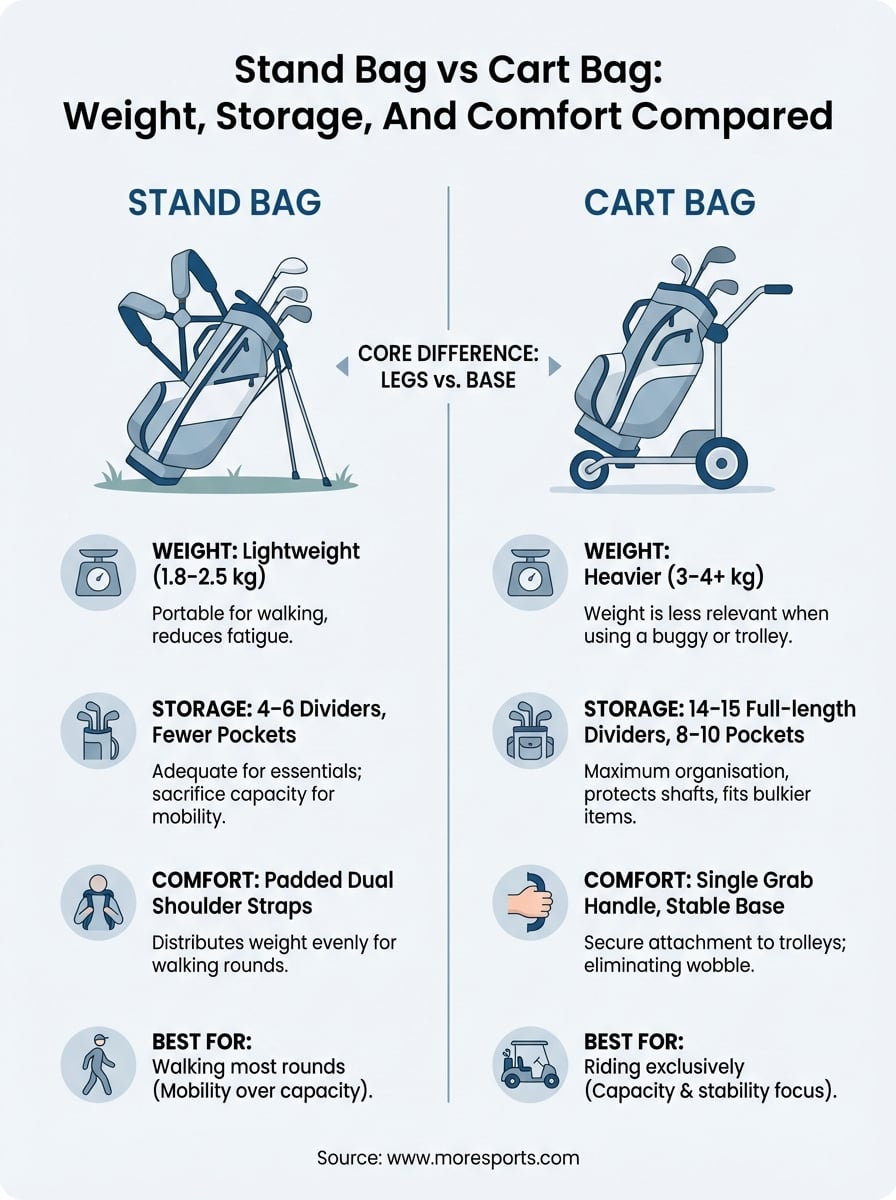
Different bags require different organization strategies.
Carry Bags: Maximize Minimal Space
With fewer pockets and lighter frames, carry bags demand strict prioritization.
- Bring only essential clubs (10 to 12 max)
- Store balls and tees in the single front pocket
- Attach a towel clip to the strap for quick access
- Keep snacks or your phone in an outer mesh sleeve
Every ounce matters when walking 18 holes, so prioritize lightness and balance.
Cart Bags: Leverage Extra Compartments
Cart bags offer more space and structure. Take full advantage by dedicating sections for specific gear.
- Use one large pocket for golf shoes
- Store umbrellas or rangefinders in side pockets
- Assign a water-resistant pocket to electronics
- Hang towels on external clips or lower loops
Weight isn’t a concern here, so focus on separation and protection.
Staff Bags: Organize Like a Pro
Staff bags are large and deep, built for tour players and caddies.
- Assign specific pockets to caddie tools like yardage books and spare grips
- Use internal dividers to group clubs by category
- Store personal items such as wallets and keys in lockable compartments
- Keep medical supplies or sunscreen in labeled side zips
These bags lack back support, so they’re best suited for cart use.
Prevent Common Mistakes
Even seasoned players make errors that sabotage organization.
Don’t Mix Wet and Dry Gear
Storing a wet towel with gloves or electronics invites mold and damage. Hang wet items to dry or use a separate waterproof pouch.
Avoid Overpacking
More gear doesn’t mean better play. Only bring what you’ll use. Extra shirts, multiple hats, and backup equipment add bulk and slow you down.
Stick to these basics:
- 14 clubs or fewer
- 6 tees and 4 balls
- 1 glove and 1 towel
- Rain gear only when needed
- Snacks and water
Never Force Clubs into Wrong Dividers
Forcing a driver into a narrow iron slot bends shafts and damages grips. Match each club to its correct compartment size.
Optimize for Your Playing Style
Your ideal setup depends on how you play the game.
Walking Players: Prioritize Balance and Access
If you carry your bag, comfort is everything.
- Use a dual-strap system for even shoulder load
- Place frequently used clubs like the 7-iron and wedge in easy-reach slots
- Keep a water bottle in a side sleeve for hydration without stopping
A well-balanced carry bag feels lighter and reduces fatigue over long rounds.
Cart Users: Focus on Separation and Protection
When riding, you can carry more gear, but keep it orderly.
- Store liquids in leak-proof containers
- Use hard-shell cases for rangefinders
- Separate dirty items like golf shoes from clean ones
Easy access means less fumbling and more time focused on your next shot.
Tournament Players: Follow Pro Layouts
Competitive golfers need consistency and redundancy.
- Arrange clubs in the same order every round
- Pack backup grips and gloves in labeled side pockets
- Include a small repair kit with a divot tool and extra pins
Familiarity with your setup reduces stress under tournament pressure.
Frequently Asked Questions About Golf Bag Organization
How many clubs should I carry in my golf bag?
You can carry up to 14 clubs during a sanctioned round, but many recreational players carry 10 to 12. Fewer clubs reduce weight and simplify decision-making on the course.
Where should I put my putter in the golf bag?
Place your putter in a front or center slot at the top of the bag. This position makes it easy to grab on the green without digging through other clubs.
What goes in the smallest pocket of a golf bag?
The smallest pocket is ideal for tees, ball markers, and divot tools. These items are small and used frequently, so quick access matters.
Should I use headcovers on all my clubs?
Headcovers are essential for woods, hybrids, and the putter. They prevent scratches and reduce noise when clubs rub together during transport.
How often should I clean out my golf bag?
Empty and wipe down your bag after every round or at least once a week. Regular cleaning prevents mildew, protects zippers, and keeps your gear in top condition.
Can I organize my bag differently for cart use versus walking?
Yes. For walking, prioritize weight distribution and easy access to high-use clubs. For cart use, focus on separating items into dedicated pockets and protecting electronics in padded compartments.
Final Thoughts on Arranging Your Golf Bag
A well-organized golf bag saves time, protects your investment, and improves your performance. Start by sorting clubs logically, then assign gear to pockets based on frequency of use and weight. Balance the load to reduce strain, and tailor your setup to match your bag type and playing style.
Make bag organization part of your post-round routine. Wipe it down, empty the pockets, and reset the layout so your next round starts smoothly. With a consistent system in place, you’ll step onto the course ready, focused, and fully equipped to play your best.