
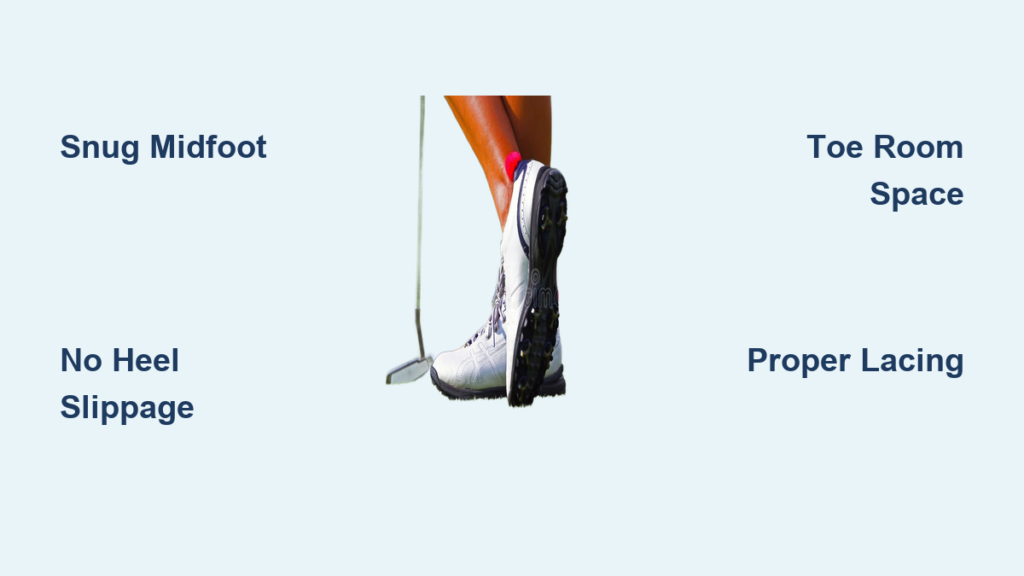
If you’ve ever finished 18 holes with sore feet, blisters, or felt unstable during your swing, the culprit is likely not your swing mechanics but your shoe fit. Understanding how tight golf shoes should be can transform your comfort, stability, and overall performance on the course. Shoes that are too loose allow your foot to slide during rotation, robbing you of power. Shoes that are too tight restrict blood flow and cause pain that builds with every step.
The ideal fit feels like a firm handshake: secure and supportive without ever crossing into painful pressure. Unlike running shoes, golf footwear must lock down your heel and midfoot while still letting your toes move naturally. This guide walks you through every aspect of proper tightness, from walk tests to lacing tricks, so your next pair feels custom-made.
Snug Across the Midfoot Without Squeezing
Feel Secure Without Pressure
Your golf shoes should feel snug across the midfoot and heel, giving you a locked-in sensation without pinching anywhere. Picture a firm handshake: present and confident, never crushing. When you stand or walk, your foot should not slide side to side or lift at the heel. This stability is essential during the golf swing, where rotational forces shift your weight rapidly.
You should still be able to wiggle your toes freely. If your toes press against the front of the shoe or feel cramped, the fit is too tight. Likewise, avoid shoes that feel loose in the heel, as this causes blisters and reduces swing control. The goal is minimal internal movement paired with long-lasting comfort.
Use the Walk Test to Confirm Fit
Wondering exactly how tight golf shoes should feel? Try this walk test in the store or at home:
– Lace up the shoes fully, just as you would on the course.
– Walk naturally on a hard surface and then on a slight incline.
– Watch for heel slippage, toe pressure, and arch discomfort.
If your heel lifts more than a quarter-inch, the shoe is too big or laced incorrectly. If you feel numbness in your toes or pressure on the ball of your foot, the shoe may be too narrow or too short. Aim for zero slippage and zero pain.
Lock Down Your Heel and Arch
Prevent Heel Slippage During Swings
One of the clearest signs of poor fit is heel slippage. Your heel should stay firmly planted whether you’re walking or swinging. A slipping heel causes blisters and disrupts balance during the backswing and follow-through.
To lock down your heel:
– Confirm the heel cup fits snugly around your ankle bone.
– Make sure the back of the shoe does not pinch or rub.
– Try the “toe push” test: stand against a wall and push your toes forward. Your heel should remain firmly seated inside the shoe.
Some golfers worry about minor heel lift, but a small amount of movement (1/8 to ¼ inch) can be normal in new shoes and often settles with wear. If movement exceeds that or causes discomfort, consider a narrower width or a different model.
Match the Arch Support to Your Foot Type
Arch support plays a major role in how tight your golf shoes feel. The shoe’s insole and midsole should match your foot’s arch type, whether low, neutral, or high. An unsupported arch creates pressure points and leads to mid-round fatigue.
- Flat-footed players often need more structured support to control overpronation.
- High-arched feet usually benefit from extra cushioning to absorb impact.
Many modern golf shoes include removable insoles, letting you insert custom orthotics if needed. If you feel pressure along the arch or a hot spot forming, the shoe may be too tight in that zone or simply lacking proper support.
Give Your Toes Room to Move
Leave Space at the Front of the Shoe
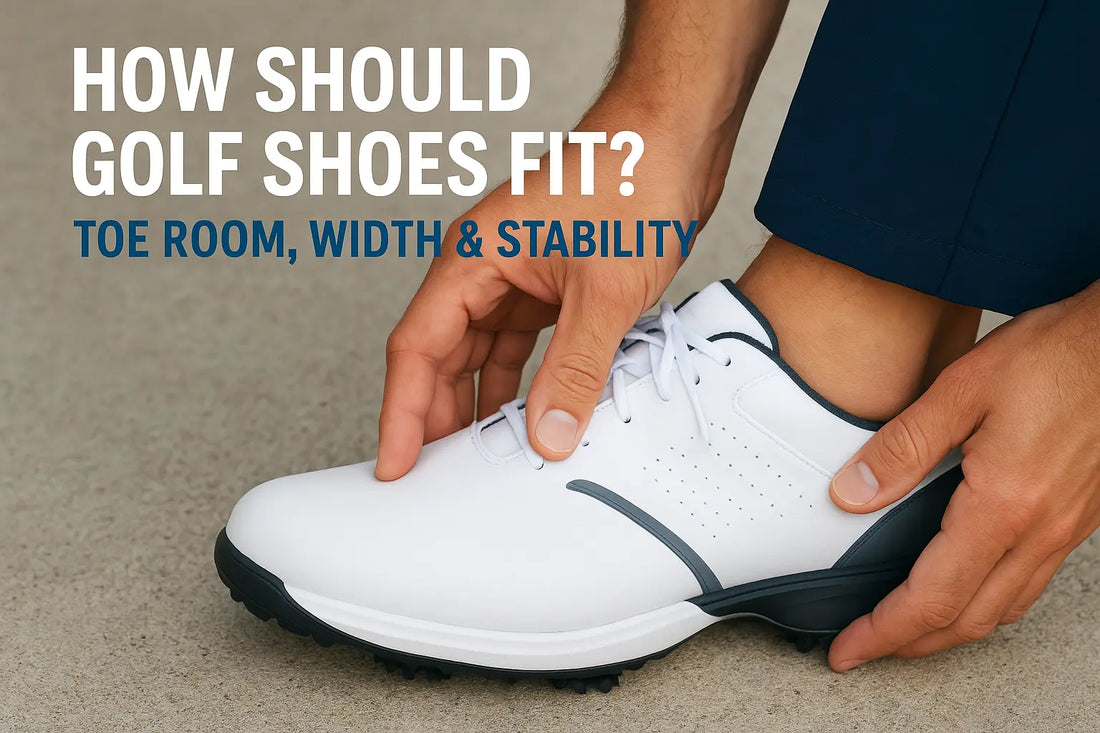
Your toes need about a thumbnail’s width (¼ to ½ inch) of space between the end of your longest toe and the front of the shoe. This gap allows for natural swelling during long rounds and prevents bruised or black toenails, a common issue when golf shoes are too short.
When trying on shoes:
– Stand up and check the space at the toe box.
– Wiggle your toes and confirm full mobility.
– Avoid shoes where your toes press against the end when walking downhill.
Remember, feet can swell up to half a size during physical activity and in warm weather. Always try on golf shoes later in the day when your feet are at their largest, and wear the same socks you plan to use on the course.
Avoid Narrow Toe Boxes
Even with the right length, a narrow toe box can make golf shoes feel painfully tight. Look for models with wider forefeet if you have naturally broad feet or feel pressure on the sides of your toes. Many brands offer wide-width options (2E, 4E) that make a meaningful difference in comfort.
If your little toe rides against the edge of the shoe, discomfort is just the beginning. Over time, nerve irritation and calluses can develop, turning every round into a painful experience.
Customize Tightness With Smart Lacing
Adjust Tension by Zone
Most golf shoes feature multiple eyelets, letting you customize tightness across different parts of the foot. Use these lacing techniques to fine-tune your fit:
– Tighten the midfoot for added stability.
– Loosen the top eyelets if you have high arches or feel pressure on top of your foot.
– Apply a “heel lock” lacing method to prevent slippage.
This zone-specific control lets the shoe feel snug where you need support (midfoot and heel) while staying comfortable everywhere else.
Try These Proven Lacing Patterns
A few simple lacing tricks can solve common fit problems:
– Skip-lacing: Skip an eyelet on the sides to relieve pressure.
– Window lacing: Create a gap over a hot spot to reduce friction.
– Heel-lock lacing: Use the extra loops at the top to cinch the heel down.
These adjustments can turn a “close but not quite” fit into a perfect one, helping you achieve ideal tightness without buying new shoes.
Compare Spiked and Spikeless Fit
Spiked Shoes Deliver a Locked-In Feel
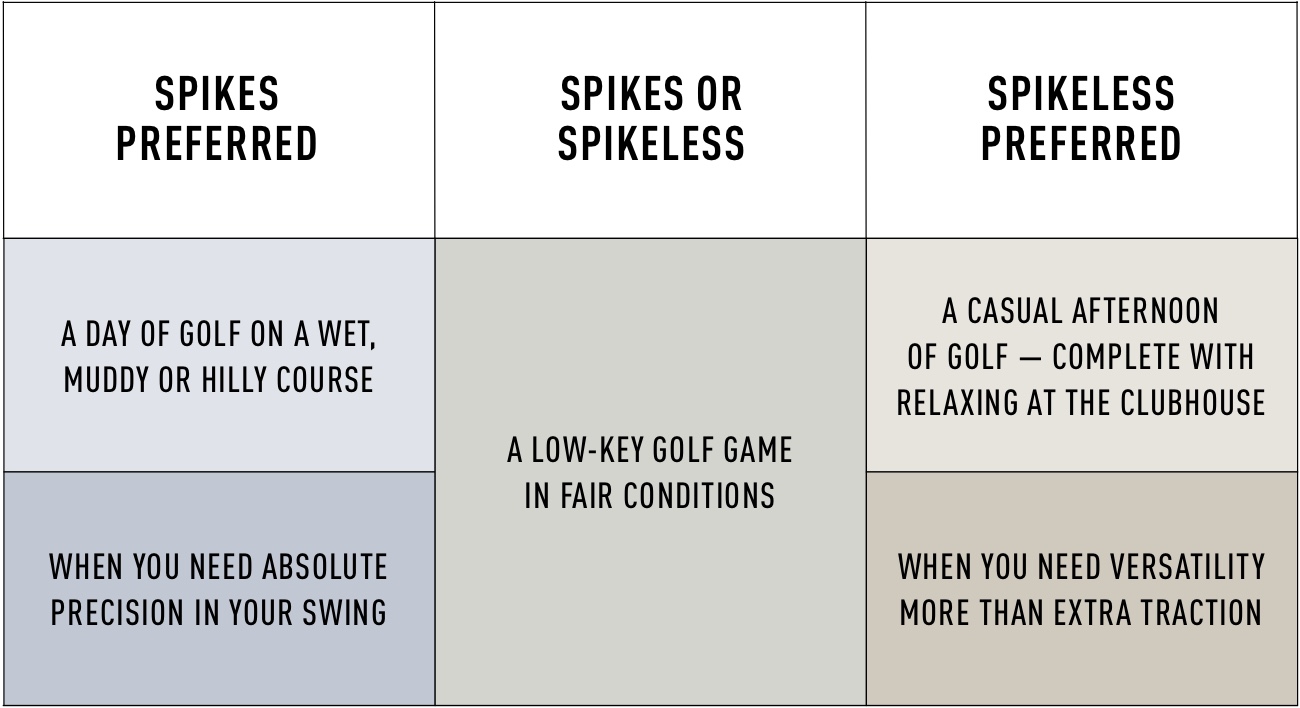
Traditional spiked golf shoes often have a tighter, more structured fit thanks to rigid outsoles and support-focused design. Cleats enhance traction, allowing the upper to sit snugly without sacrificing stability. Many players prefer this locked-in feel for maximum control during powerful swings.
Spiked shoes may feel tighter out of the box but typically mold slightly to your foot over time, softening the initial fit.
Spikeless Shoes Trade Support for Comfort
Spikeless golf shoes feel more like athletic sneakers, with flexible soles and casual styling. They often offer a roomier fit and prioritize all-day comfort, making them popular for walking the course or wearing off the greens.
However, this comfort can reduce lateral support. If you play aggressively or swing fast, make sure your spikeless shoes still provide adequate midfoot containment to prevent foot movement during rotation.
Buy Shoes the Smart Way for the Right Fit
Shop Late in the Day
Feet naturally swell throughout the day, so try on golf shoes in the afternoon or evening. This ensures you fit shoes to the size your feet actually are during a round, not their rested morning size.
Wear the same socks you plan to wear on the course. Thicker socks can easily change the fit by a half size.
Trust Feel Over the Size Label
Shoe sizes vary widely between brands and even between models from the same brand. A size 10 in one line might fit like a 9.5 in another. Always fit by feel, not by the label.
If you must make a judgment call, size up rather than down. It’s far easier to tighten a slightly loose shoe with lacing or insoles than to fix one that’s too small.
Test on an Incline
Golf courses rarely offer flat terrain, so test your shoes on a slightly inclined surface. Walk up and down and watch your foot’s behavior:
– Does your heel stay put?
– Do your toes press forward when going downhill?
This mimics real course conditions and exposes fit issues that flat floors miss.
Know What to Expect During the Break-In Period
Expect Minor Tightness at First
Most golf shoes feel slightly tighter when brand new. A short break-in period of 3 to 5 rounds is normal, especially with spiked or leather models. During this time, the materials soften and conform to your foot shape.
That said, shoes should never be painful from day one. Pinching, numbness, or hot spots will not improve with wear. They almost always get worse.
Leather Stretches, Synthetics Do Not
- Leather golf shoes stretch slightly over time, especially in width, and mold to your foot.
- Synthetic uppers have minimal stretch, so what you feel on day one is close to how they will always fit.
If you are between sizes and choosing leather, some golfers opt to go slightly snug, knowing it will loosen. With synthetics, aim for a perfect fit immediately.
Replace Shoes When the Fit Fades
Watch for These Warning Signs
Even the best-fitting golf shoes lose their snugness over time. Look out for:
– Noticeable heel slippage that was not there before.
– Worn-out insoles that no longer support your arch.
– Outsoles that are smooth, cracked, or worn down.
As the midsole compresses and the upper loosens, shoes that once felt perfect may feel sloppy. This affects both comfort and performance.
Don’t Wait Until They Fall Apart
If your feet tire faster or you develop new pressure points, replacement is probably due. Most golf shoes last 1.5 to 3 years with regular play, depending on materials and care.
Waiting for total breakdown puts your swing and your feet at risk. Replace shoes proactively to maintain stability and avoid injury.
Frequently Asked Questions About Golf Shoe Fit
How do I know if my golf shoes are too tight?
Your golf shoes are too tight if you feel numbness in your toes, pressure on the ball of your foot, or pinching along the sides or top. You should always be able to wiggle your toes freely and walk without pain. If circulation feels restricted, loosen the laces or try a wider size.
Should golf shoes feel tight at first?
Golf shoes should feel snug from the start, but never painful. A slight break-in period of a few rounds is normal, especially with leather models. If the shoes hurt on day one, they will not magically feel better later. Always prioritize comfort over a “tough it out” approach.
How much toe room do golf shoes need?
Leave about ¼ to ½ inch of space between your longest toe and the front of the shoe, roughly equal to a thumbnail’s width. This room prevents toenail bruising and accommodates natural swelling during a round. Always check toe space while standing, not sitting.
Are spikeless golf shoes looser than spiked ones?
Spikeless golf shoes often have a roomier, more athletic fit compared to spiked models. Spiked shoes typically offer a tighter, more structured feel for maximum stability. If you prefer a snug fit, spiked shoes may suit you better. If comfort is your priority, spikeless designs deliver more flexibility.
When should I replace my golf shoes?
Replace your golf shoes when you notice new heel slippage, worn insoles, smooth outsoles, or increased foot fatigue. Most golf shoes last between 1.5 and 3 years with regular use. Don’t wait for the soles to fall apart, as worn shoes hurt your swing mechanics and increase injury risk.
Key Takeaways for Choosing the Right Golf Shoe Tightness
The right tightness in golf shoes balances security and comfort from the first step to the last. Your shoes should feel snug in the heel and midfoot, allow free toe movement, and stay stable through every swing. Use lacing techniques to fine-tune pressure points, shop late in the day for accurate sizing, and always prioritize fit over the number on the box.
Before your next round, take 10 minutes to re-evaluate the fit of your current shoes. Walk on an incline, check for heel slippage, and confirm your toes can wiggle freely. If anything feels off, adjust your lacing or consider a replacement. Properly fitted golf shoes give you the foundation for a more powerful, more consistent swing, and they keep your feet healthy round after round.





